
Bamburgh Castle
A major coastal castle in Bamburgh, Northumberland, Bamburgh Castle has origins in the early medieval kingdom of Bernicia and later Norman and Victorian rebuilding; today it is a prominent historic site and visitor attraction.
Overview
Bamburgh Castle stands on a rocky headland overlooking the North Sea at Bamburgh, Northumberland. Perched above a wide sweep of beach, it is one of the most recognisable coastal fortresses in England. The site combines imposing defensive walls and a dominant keep with later domestic buildings; it is protected as a Grade I listed building. The castle is closely associated with the local town of Bamburgh, Northumberland and figures frequently in accounts of the region's history.
Image gallery
10 Images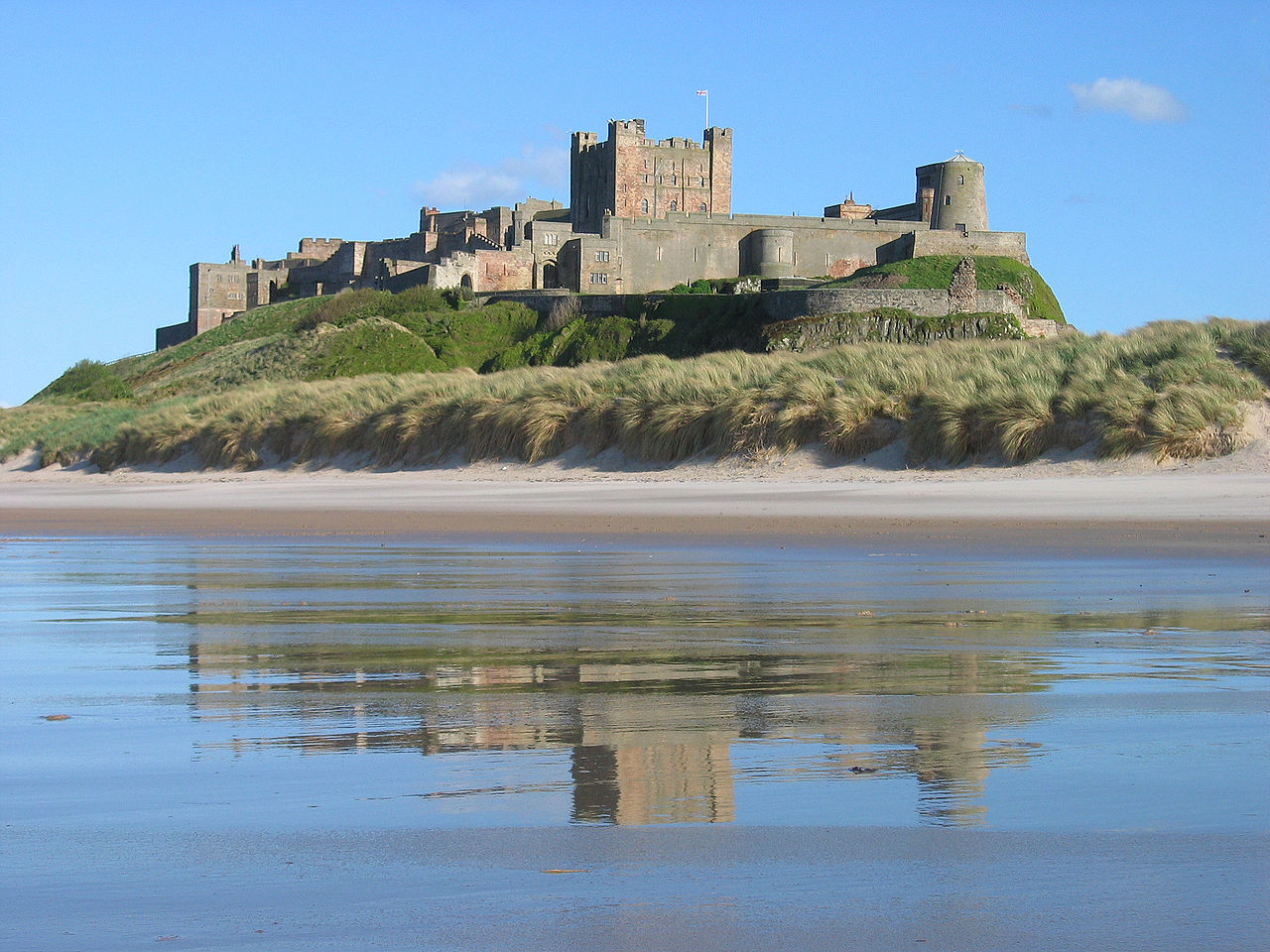


History and development
The headland was fortified in the early medieval period and became an important seat in the kingdom often referred to as Bernicia and later Northumbria. Successive occupants rebuilt, strengthened and adapted the defences over centuries. Following the Norman conquest, the site took on many characteristics of a medieval fortress and stronghold. In the 18th and 19th centuries parts of the structure fell into decline until substantial restoration work in the Victorian era returned much of the castle to use as a residence and public attraction.
Architecture, collections and features
The castle complex mixes military and domestic architecture: curtain walls, towers, a central keep and ranges of living quarters and service buildings. Inside, visitors encounter furnished rooms, armour and displays interpreting the castle's long past. Archaeological finds from the site have shed light on early medieval life in the region and on later military and domestic phases.
Modern use and significance
Today Bamburgh Castle functions both as a private estate and a public heritage site, open to visitors for tours, exhibitions and events. Its dramatic coastal setting makes it a focal point for cultural tourism and local identity. The name has also been used in other contexts: during the Second World War the Royal Navy commissioned a ship bearing the castle's name, reflecting the fortress's symbolic status in national memory and seafaring traditions across the United Kingdom; see the naval connection to the Royal Navy for more.
Notable facts
- Long continuity of occupation from the early medieval period to the present.
- Restoration in the Victorian period shaped much of the castle's present appearance.
- Operates as both a private residence and a visitor attraction with exhibitions and events.
Bamburgh Castle remains an important landmark on England's northeastern coast, valued for its architectural presence, layered history and enduring role in regional culture.
Related articles
Author
AlegsaOnline.com Bamburgh Castle Leandro Alegsa
URL: https://en.alegsaonline.com/art/8642
Sources
- camelotintl.com : "Camelot International - British History - Bamburgh Castle"
- bamburghcastle.com : "Bamburgh Castle - Official History"
- bamburghresearchproject.co.uk : "Bamburgh Research Project - History"
- nnouk.com : "Northumberland in film and tv"
- sir-lancelot.co.uk : "Sir Lancelot Website - Joyous Gard"