
Barcelona Cathedral (Cathedral of Santa Eulalia)
Gothic cathedral in Barcelona's Gothic Quarter, seat of the archbishop and mausoleum of Saint Eulalia. Built 13th–15th centuries with a 19th‑century façade; notable cloister, chapels and medieval art.
The Barcelona Cathedral, formally the Cathedral of the Holy Cross and Saint Eulalia and commonly called La Seu, is the principal Gothic cathedral in the heart of Barcelona and the episcopal seat of the city's archbishop. It occupies a prominent position in the Gothic Quarter and is widely regarded for its cohesive medieval plan and its role as a religious, cultural and historical landmark of Catalonia. Although other famous churches in Barcelona, such as the Sagrada Família, draw international attention, La Seu remains the official cathedral of the archdiocese and the repository of local devotional traditions. General information about the cathedral and its services is available through visitor resources, and its civic context is often discussed in guides to Barcelona and Catalonia.
Image gallery
10 Images





Architecture and interior
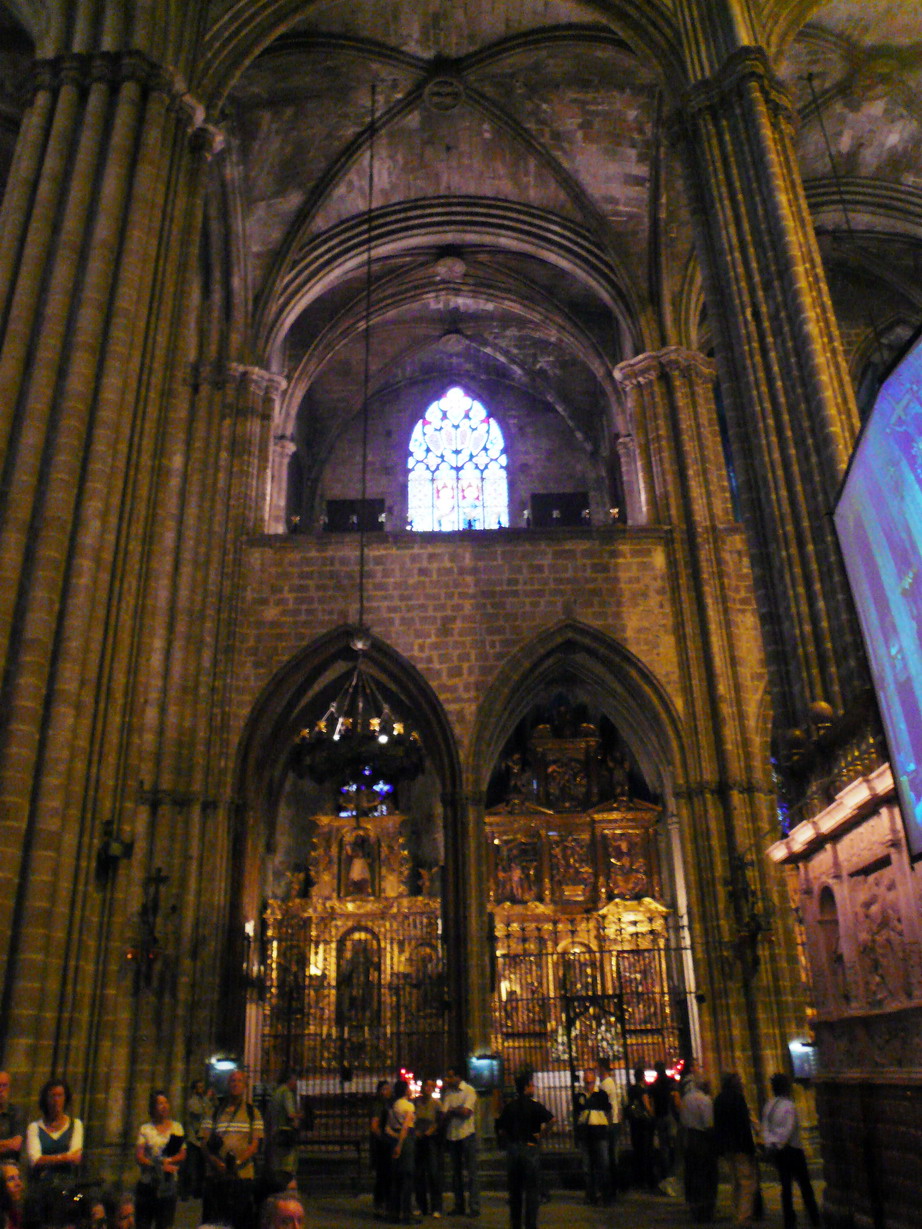
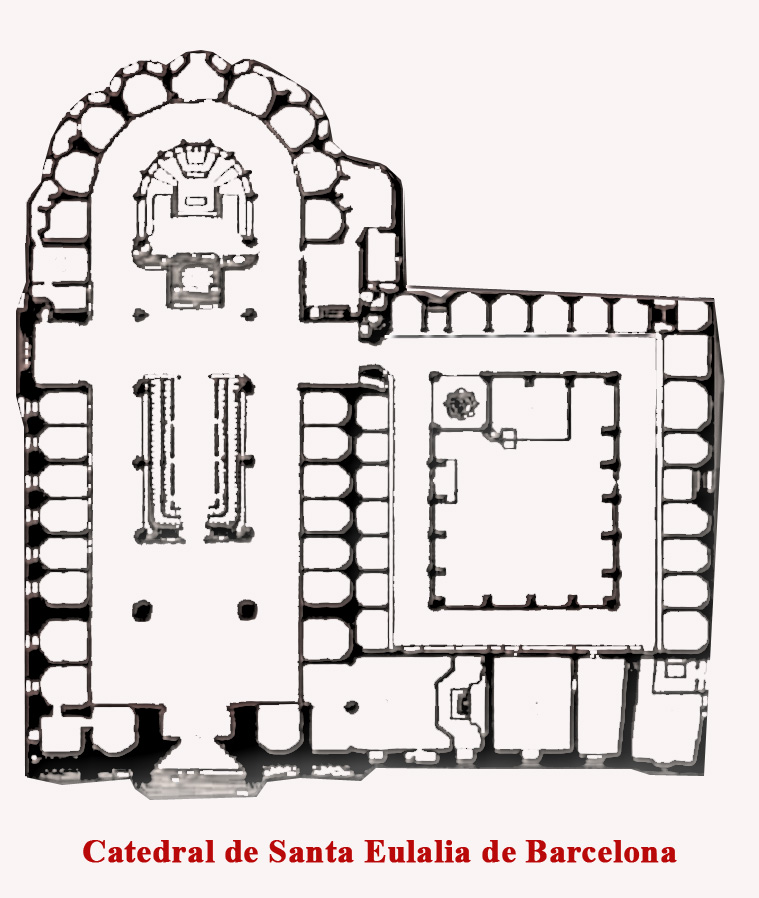
The cathedral is a largely Gothic building whose main construction phases took place between the 13th and 15th centuries. Its plan follows the conventional Latin cross layout, with a nave flanked by aisles, an ambulatory with radiating chapels and a high choir area. Many interior elements—such as carved choir stalls, altarpieces, stone vaulting and stained glass—reflect medieval craftsmanship that was supplemented by later restorations. The façade that visitors typically see on the square is a neo‑Gothic frontage added in the 19th century to unify the exterior appearance, matching the Gothic character of the body of the church while restoring a sense of medieval urban presence.
History and development
A succession of sacred buildings has occupied the cathedral site since antiquity. Archaeological and documentary evidence indicates earlier Roman and Visigothic churches stood here before a major medieval cathedral was begun in the 1200s. The long construction span, interrupted by changing political and economic conditions, resulted in a mix of original medieval fabric and later interventions. The 19th‑century works aimed to recover a Gothic aesthetic and complete façade details that had been left undeveloped in earlier centuries. For context on the site's longer past, see introductions to Barcelona's religious history and pre‑Roman foundations at Visigothic and medieval Barcelona.
Notable elements and chapels
Inside the cathedral are numerous chapels, devotional works and relics that reflect Barcelona's devotional life. The building is dedicated to Saint Eulalia, a young Christian martyr traditionally associated with the city; her crypt lies beneath the choir and is a focal point for pilgrimage and local devotion. One chapel houses a cross known locally as the "Christ of Lepanto," reputedly associated with a vessel that fought at the Battle of Lepanto (1571); popular legend recounts that the body of the figure shifted to avoid a cannonball during the battle, a tale preserved in local storytelling and in the chapel's display. For material on these objects and their lore consult museum and cathedral descriptions at art and relic references and cathedral inventories at church guides to Barcelona.
Cloister, geese and tradition
One of the cathedral's most distinctive features is its enclosed Gothic cloister, a tranquil gardened quadrangle with a central fountain and mature plantings that provides a quiet counterpoint to the busy streets outside. The cloister is famous for the white geese kept there; thirteen geese are maintained in memory of Saint Eulalia, who is traditionally said to have been thirteen years old at her martyrdom. The cloister's combination of sculpted capitals, medieval funerary monuments and the living presence of the geese make it a widely photographed and much‑loved part of the complex. Readers interested in liturgical practice and cloister design can follow links to monastic architecture and cathedral cloister studies at cloister resources.
Significance and visiting
The Barcelona Cathedral is important both as an active seat of worship and as a monument to the city's medieval-Christian heritage. It continues to host religious ceremonies, concerts and civic events while also attracting scholars interested in Gothic art, Catalan history and medieval urbanism. Visitors typically combine a visit to the cathedral with exploration of the surrounding Gothic Quarter, where narrow streets reveal layers of Roman, medieval and modern Barcelona. For practical visitor information, opening hours and guided tour options consult the cathedral's visitor pages and local tourism resources at cathedral visitor information and broader Barcelona cultural guides available through city resources.
- Dedication: Saint Eulalia (co‑patron of Barcelona)
- Construction: Principal Gothic phases, 13th–15th centuries; façade completed in the 19th century
- Highlights: crypt of Saint Eulalia, Gothic cloister with thirteen geese, numerous chapels and medieval furnishings
Questions and answers
Q: What is the Cathedral of Santa Eulalia?
A: The Cathedral of Santa Eulalia, also called La Seu, is the Gothic cathedral seat of the Archbishop of Barcelona, Spain.
Q: Is the Sagrada Família a cathedral?
A: No, the Sagrada Família is not a cathedral.
Q: When was the Cathedral of Santa Eulalia constructed?
A: The cathedral was constructed from the 13th to the 15th century.
Q: Was there a church in that location before the construction of the cathedral?
A: Yes, there was a Visigothic church there before.
Q: Who is Eulalia of Barcelona?
A: Eulalia of Barcelona is the co-patron saint of Barcelona. According to Catholic tradition, she was a young virgin who suffered martyrdom during Roman times in Barcelona. The body of Saint Eulalia is entombed in the cathedral's crypt.
Q: What is the Christ of Lepanto side chapel in the Cathedral of Santa Eulalia?
A: The Christ of Lepanto side chapel contains a cross from a ship that fought at the Battle of Lepanto (1571). The body of the cross is shifted to the right, and Catalan legend says that the body swerved to avoid getting hit by a cannonball.
Q: What is the significance of the thirteen white geese in the Gothic cloister of the Cathedral of Santa Eulalia?
A: The secluded Gothic cloister of the cathedral is where thirteen white geese are kept, as Eulalia was 13 when she was murdered, according to legend.
Tags
Related articles
Author
AlegsaOnline.com Barcelona Cathedral (Cathedral of Santa Eulalia) Leandro Alegsa
URL: https://en.alegsaonline.com/art/8923
Sources
- nationalcatholicreporter.org : "To build a cathedral is immense, crazy work"