
Basilica of Saint-Denis: Gothic origin, royal necropolis, and musical heritage
A historic basilica north of Paris, birthplace of Gothic architecture and the traditional burial place of French royalty, notable for its architecture, royal tombs, and a celebrated Cavaillé-Coll organ.
Overview
The Basilica of Saint-Denis stands in the northern suburb of Saint-Denis, just outside Paris in France. Long associated with the French monarchy, the church has been a principal burial place for monarchs and members of the royal family. In the modern era it serves as the cathedral of the diocese of Saint-Denis and remains an active place of worship, heritage, and tourism.
Image gallery
10 Images


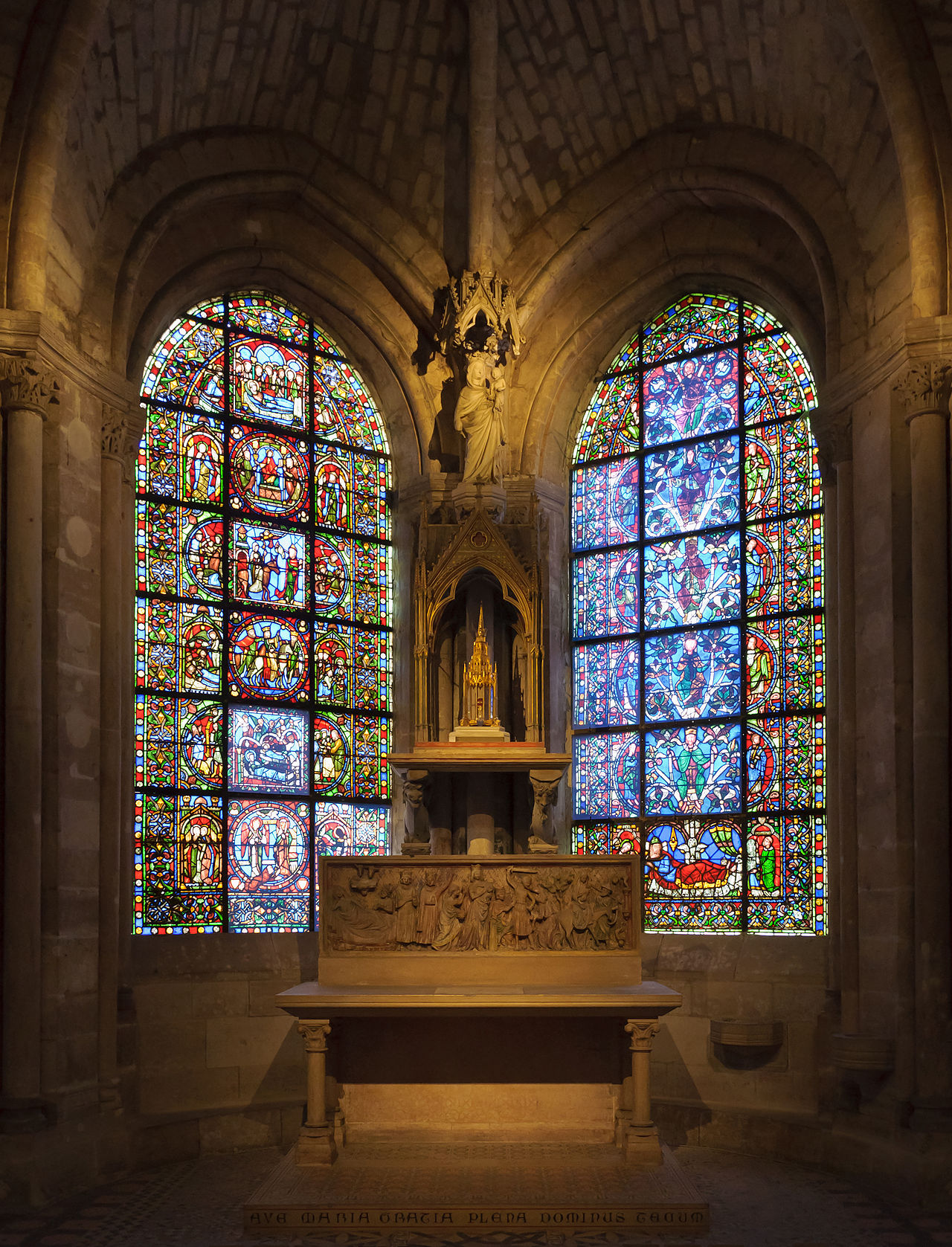

Architectural significance
Originally built in a Romanesque style, the church was transformed in the 12th century under the leadership of Abbot Suger. Suger's rebuilding—begun with the west façade and the eastern choir—introduced architectural ideas that are widely regarded as among the first expressions of Gothic design. Construction and successive modifications continued into the 13th century, producing a complex that blends Romanesque massing with early Gothic elements.
Key features
- Pointed arches and an emphasis on vertical lines that admit more light.
- Ribbed vaulting and structural innovations that allowed larger windows.
- A collection of sculpted funerary monuments and tomb effigies belonging to medieval and later nobility.
- Stained glass and decorative programs intended to convey theological and dynastic messages.
Royal necropolis and historical role
The basilica functions as France's best-known royal necropolis. For centuries it was the ceremonial burial site for kings, queens and princes, which made it a repository of funerary art and dynastic memory. The church's role in national ritual and monarchical identity made it a focal point in both medieval devotion and later historical interest. Over time it has been subject to vandalism and recovery—particularly during the upheavals of the French Revolution—and has undergone restoration to preserve its monuments.
Religious origin and patronage
Named for Saint Denis, the patron and legendary first bishop of Paris, the site has been a place of pilgrimage and local devotion for many centuries. The church's dedication and continuous liturgical function link it to long-standing religious traditions that coexist with its public role as a national monument.
Music, organ, and modern custodianship
The basilica is also known for its musical heritage. It houses an early instrument by the celebrated builder Aristide Cavaillé-Coll, an organ of notable scale and tonal resources built during the 19th century and often described with roughly 4,200 pipes. The instrument helped usher in a romantic organ repertoire in France. The long-serving titular organist Pierre Pincemaille (1987–2018) expanded the profile of the instrument through recitals and recordings.
Visiting and preservation
Today the basilica is cared for as both a living church and a heritage site. Conservation work addresses stone, sculpture, stained glass and the organ, balancing liturgical use with public access. Visitors can study architectural detail, funerary sculpture and the organ tradition, while researchers examine the site's role in art history and national memory. For further institutional or visitor information consult local guides and diocesan resources.
More on the basilica · Paris context · France · royal burials · Saint-Denis suburb · cathedral status · diocese · diocese of Saint-Denis · Saint Denis, patron · Romanesque origins · Abbot Suger · 13th-century work · Cavaillé-Coll organ · Pierre Pincemaille
Questions and answers
Q: Where is the Basilica of Saint-Denis located?
A: The Basilica of Saint-Denis is located in the suburb of Saint Denis, which is in the north of Paris, France.
Q: What is the Basilica of Saint-Denis famous for?
A: The Basilica of Saint-Denis is famous for its architecture and as the burial place for many Kings of France.
Q: What is the current function of the Basilica of Saint-Denis?
A: Since 1966, the Basilica of Saint-Denis is the cathedral of the diocese of Saint-Denis.
Q: Who is Saint Denis and why is the basilica named after him?
A: Saint Denis is the patron saint of France and the first Bishop of Paris. The Basilica is named after him.
Q: When was the Basilica of Saint-Denis built?
A: The Basilica of Saint-Denis was a Romanesque building, but in 1136 Abbot Suger began replacing the building, bit by bit, beginning with the west front and then with a new east end. The east end is said to be the first building in the Gothic style. It was not completed until the 13th century.
Q: What is the significance of the organ in the basilica?
A: The current organ of the basilica is the first organ built by Aristide Cavaille-Coll. With 4200 pipes, it contains a lot of innovations, opening the romantic area. The French organist Pierre Pincemaille, titular between 1987 and 2018, set up lots of recitals and recorded 8 CDs with this instrument.
Q: How far is the Basilica of Saint-Denis from Paris?
A: The Basilica of Saint-Denis is located in the Greater Paris area, about 5 kilometres (3.1 mi) from Paris.
Related articles
Author
AlegsaOnline.com Basilica of Saint-Denis: Gothic origin, royal necropolis, and musical heritage Leandro Alegsa
URL: https://en.alegsaonline.com/art/9246