
SA80: British bullpup service rifle family
SA80 is the British Army's family of bullpup small arms including the L85 rifle and L86 light support weapon; known for compact design, accuracy and a history of upgrades to improve reliability.
Overview
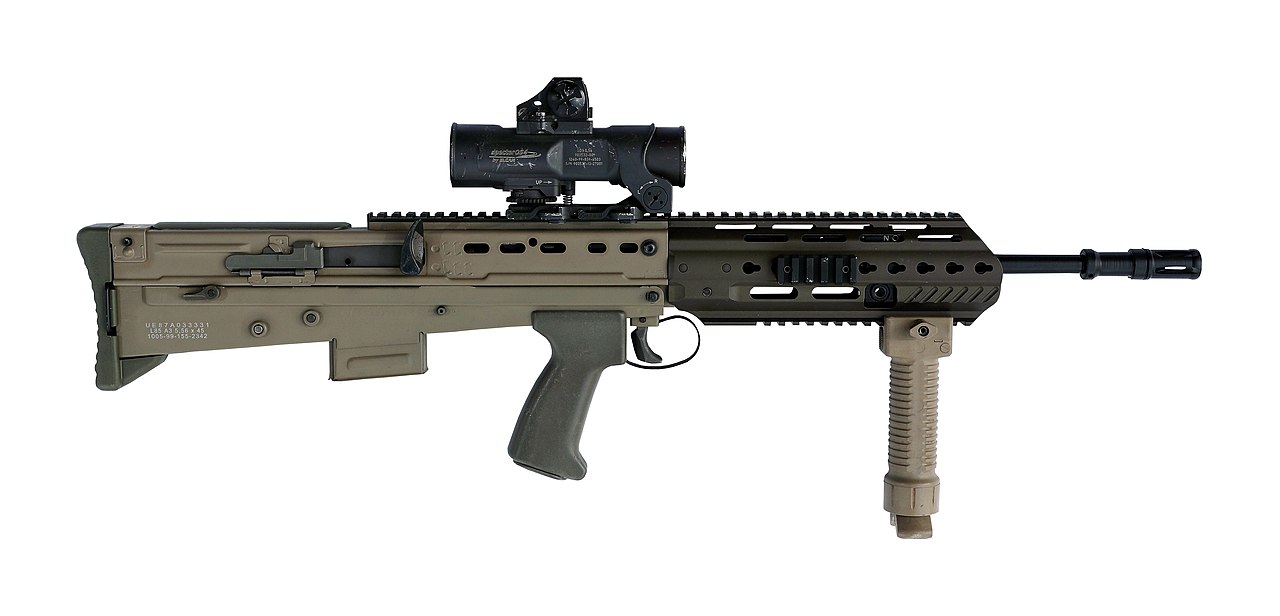
The SA80 (Small Arms for the 80s) is a family of 5.56×45mm NATO small arms that serves as the standard personal and squad-level weapon system for the British Army and Royal Marines. All members of the family use a bullpup layout, placing the magazine and action behind the trigger to combine a full-length barrel with a shorter overall weapon length.
Image gallery
10 Images




Design and characteristics
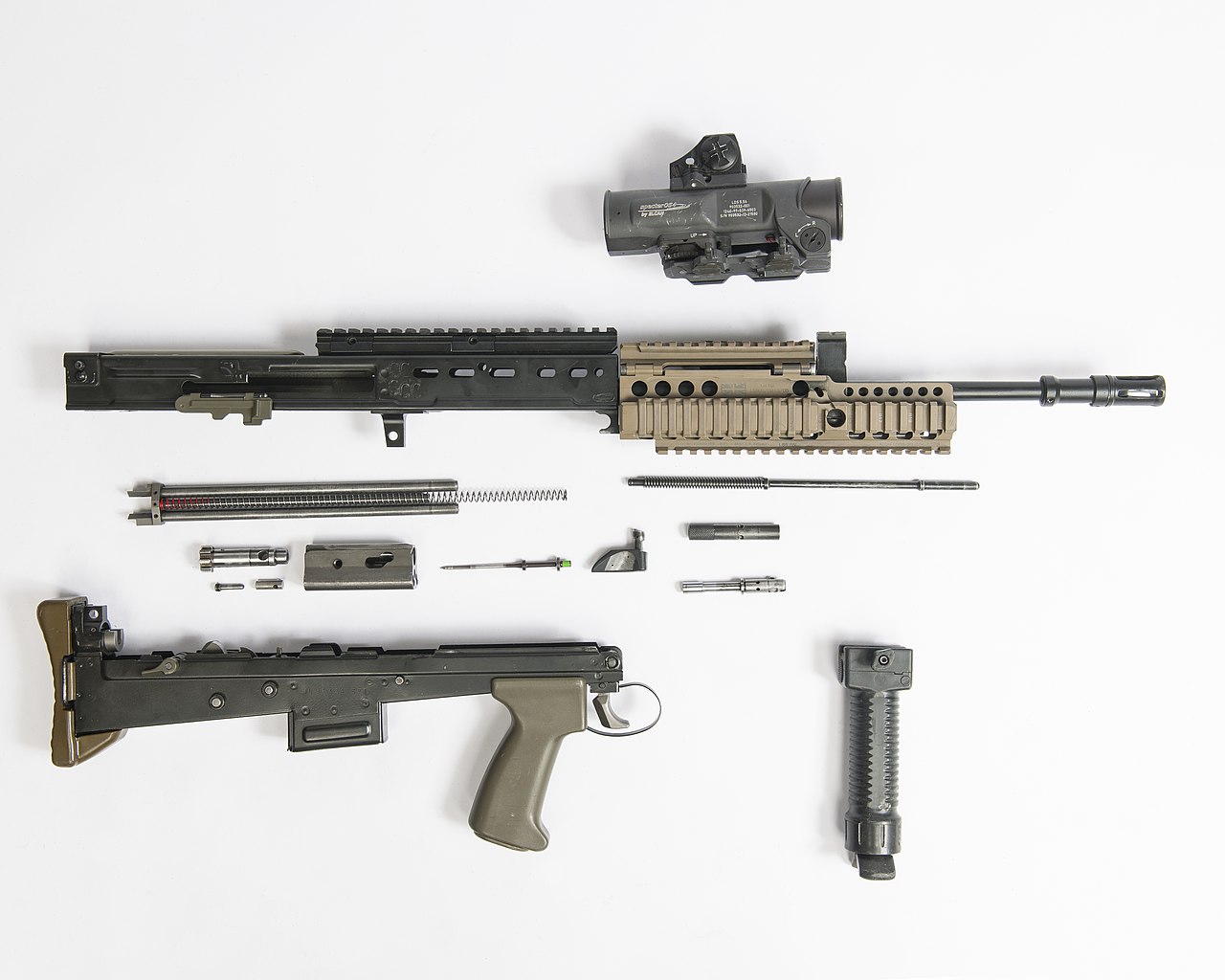
Bullpup construction gives the SA80 series a compact footprint for infantry, vehicle crews and airborne forces while retaining barrel length for ballistic performance. Typical characteristics include a gas-operated mechanism, a detachable box magazine, integrated sights on an upper receiver, and an overall balance that differs from conventional designs. The bullpup layout yields advantages in length and maneuverability but also presents challenges such as ergonomics for magazine changes, potential difficulties for left-handed shooters, and different balance and handling compared with traditional rifles.
Major variants
- L85 – the standard individual automatic rifle and the principal assault rifle in the family; often referred to as the L85 or L85A1/A2.
- L86 Light Support Weapon (LSW) – a heavier-barrelled, longer‑profile support variant intended for sustained aimed fire within fire support groups.
- Carbine and compact variants – shortened versions intended for vehicle and aircrew use; a carbine type has been adopted for helicopter and vehicle crews to improve maneuverability.
- Cadet and training variants – a semi-automatic, non‑combat configuration (commonly referenced as the L98 series) has been produced for cadet forces and marksmanship instruction.
History and development
The SA80 project began in the late 1970s and early 1980s as the United Kingdom sought a modern, compact 5.56mm service weapon. It entered service with British units during the 1980s. Over time the design received attention for both its accuracy in aimed fire and for some field reliability issues. Because of its compact size combined with a full‑length barrel, some marksmanship procedures and training were adapted to reflect the weapon's characteristics.
Service use, reliability and upgrades
In operational service the SA80 family proved capable of accurate, controlled fire, but early models suffered from stoppages and sensitivity to environmental conditions and maintenance regimes. To address these problems the rifles underwent systematic redesigns and refurbishment programs. A major improvement program in the 2000s contracted work to firms including Heckler & Koch and involved collaboration with British industry partners to revise the gas system, extractors, magazines and other components. These upgraded examples are commonly described with the A2 suffix. Not every older variant was necessarily converted, and the family has continued to evolve with accessory rails and sighting systems.
Importance and distinctions
The SA80 family illustrates the trade-offs of bullpup rifles: compactness and preserved barrel length versus altered ergonomics and logistics. Its principal combat variants (the L85 rifle and L86 LSW) remain the recognizable core of British small arms doctrine, while compact and cadet versions broaden the family's utility. For further official information see publications and resources provided by the British Army; additional technical and historical summaries can be found through manufacturer and defence analysis sources linked below: L85 details, carbine variant, aircrew equipment notes.
Related articles
Author
AlegsaOnline.com SA80: British bullpup service rifle family Leandro Alegsa
URL: https://en.alegsaonline.com/art/85044