
Baldwin County, Georgia
County in central Georgia with Milledgeville as its seat; notable for its history as a former state capital, college presence, and historical sites. Population about 46,000 at the 2010 census.
Overview
Baldwin County lies in the central part of the U.S. state of Georgia. It has a long civic history and a mix of urban and rural communities. According to the 2010 census the county was home to about 46,337 people. The administrative center and largest city is the county seat, Milledgeville, which anchors much of the county’s cultural and economic life.
Image gallery
2 Images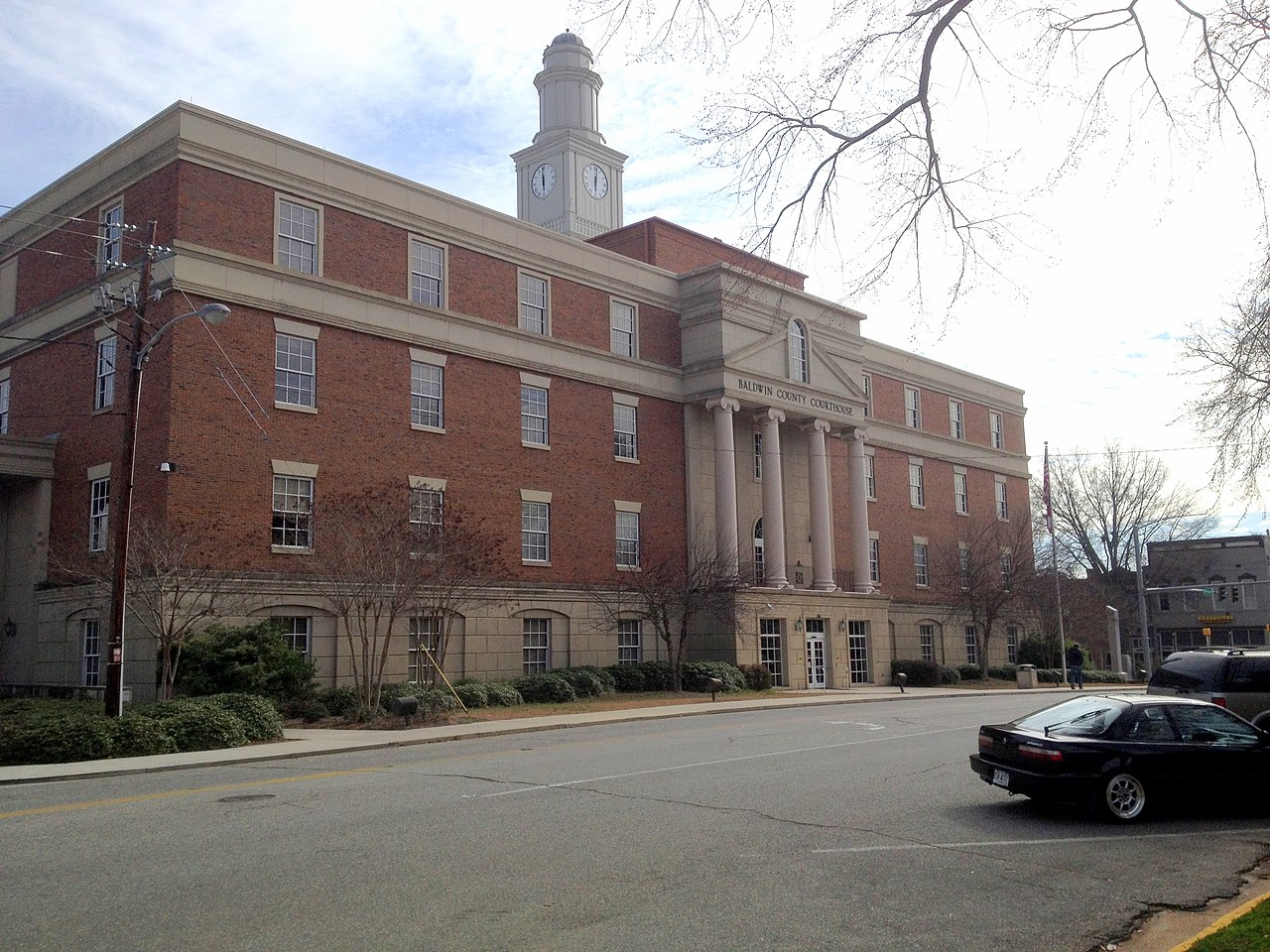

History
Baldwin County was established in the early 19th century and named for Abraham Baldwin, a signer of the U.S. Constitution. Its county seat, Milledgeville, served as Georgia’s state capital for much of the antebellum period and retains numerous historical buildings from that era. The area was originally inhabited by Native American peoples and later developed through agriculture, government functions, and local industry.
Geography and environment
The county occupies a portion of central Georgia and features gently rolling terrain and river valleys. Its proximity to the Oconee River and nearby waterways influences local recreation and land use. The climate is typical of the region, with warm summers and mild winters, supporting mixed hardwoods and agricultural activity in surrounding rural areas.
Economy and institutions
Baldwin County’s economy is diverse for a mid-sized county: public institutions, education, healthcare, small manufacturing, and services all play roles. Milledgeville hosts a regional public university and state facilities that contribute to employment and cultural life. Local businesses and civic organizations support community needs while preserving historical sites.
Notable places and culture
- Historic downtown Milledgeville with period architecture and museums.
- Former state government buildings and the Old Governor’s Mansion, tied to the county’s role in Georgia history.
- Educational campus(s) and cultural institutions that provide arts and public programs.
Baldwin County blends historical significance with a present-day community focus. Visitors often come for historical tours, college events, and outdoor recreation along local rivers and parks. For further local information and official resources consult county and municipal guides and the linked references above.
Related articles
Author
AlegsaOnline.com Baldwin County, Georgia Leandro Alegsa
URL: https://en.alegsaonline.com/art/8473