
Rougefay (Pas-de-Calais commune)
Rougefay is a small rural commune in the Pas-de-Calais department of northern France, formerly part of the Nord‑Pas‑de‑Calais region, noted for agricultural landscape and local historic features.
Rougefay is a small commune situated in the north of France. Administratively it lies in the Pas-de-Calais department, historically within the former region Nord‑Pas‑de‑Calais and now part of the broader Hauts‑de‑France area. Its rural setting and low population density make it typical of many villages on the northern plain.
Image gallery
2 Images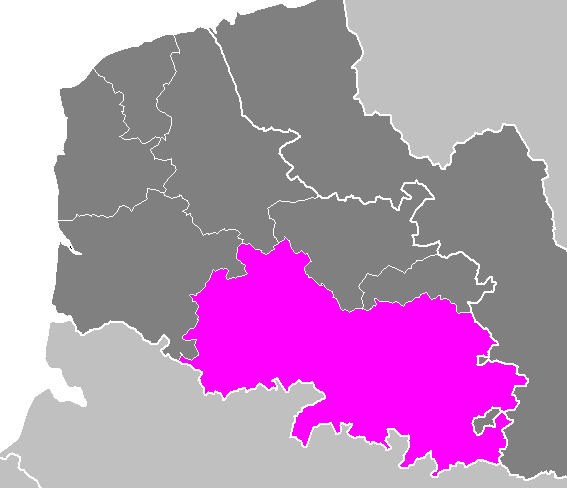

Geography and setting
Rougefay occupies agricultural land characterized by open fields, small woodlands and gently rolling terrain. The commune is connected by minor roads to nearby market towns and lies within reach of regional transport corridors that serve northern France. The locality's climate and soils favor mixed farming and arable cultivation.
Administration and services
Local government in Rougefay follows the standard French municipal system: a mayor and municipal council oversee services, local planning and community life. As part of Pas‑de‑Calais it is integrated within departmental services and often cooperates with neighboring communes through an intercommunal structure for shared utilities and amenities. For official matters see the departmental or regional information pages about the region and about the department.
History and name
The village has deep rural roots typical of northern France. Documentary references for many such places date back to the medieval period, and local buildings often reflect construction phases over centuries. The place name Rougefay likely derives from local landscape or historic family names rather than modern appellations; precise etymologies are best confirmed in specialized regional studies or archives covering the north of France.
Economy, landmarks and culture
The economy is dominated by agriculture, small enterprises and services that support residents. Landmarks commonly include a parish church, a mairie (town hall), a war memorial and examples of traditional rural architecture. Typical points of interest include:
- a village church or chapel with historic elements;
- memorials from twentieth‑century conflicts;
- rural lanes and public green spaces used for local festivals and walking.
Visitors usually come for quiet countryside walks, local history and proximity to larger towns. Practical information, events and administrative contacts are available via regional or departmental portals and local notices; for general references consult the linked resources above or local municipal publications about the commune.
Related articles
Author
AlegsaOnline.com Rougefay (Pas-de-Calais commune) Leandro Alegsa
URL: https://en.alegsaonline.com/art/84316