
Rootkit: stealth software for persistent, unauthorized access
A rootkit is software (often malicious) that hides its presence and maintains secret, persistent control over a computer or device. This article explains types, history, detection, and mitigation.
A rootkit is a class of software built to conceal the presence and activities of programs, processes, files or network connections on a computer or device. Rather than describing a particular infection method, the term refers to the goal of stealth and persistence: a rootkit enables an attacker to keep secret control over a system, often with elevated or kernel-level privileges. Rootkits can be installed locally by physical access, dropped by other malware such as trojans, or delivered remotely through exploits.
Image gallery
2 Images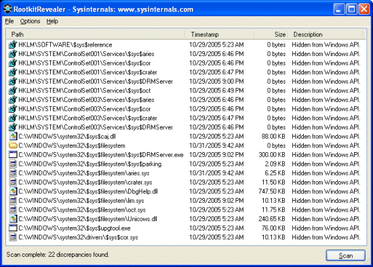

Characteristics and common types
Rootkits are distinguished by what they hide and where they operate. Common categories include:
- User-mode rootkits — modify or replace standard user-level programs and libraries to intercept system calls and hide processes or files.
- Kernel-mode rootkits — run with operating-system kernel privileges and alter core components for deeper concealment.
- Bootkits and MBR/UEFI rootkits — infect the boot loader, master boot record or firmware to gain control before the OS starts.
- Firmware and hypervisor rootkits — embed in device firmware or virtualization layers to survive OS reinstallations and evade typical scanners.
History and notable examples
The name stems from the Unix term "root" (the administrative account) and a "kit" of tools. Rootkit techniques have existed since early multiuser systems; more visible public incidents highlighted risks to consumers and enterprises. In the mid-2000s a widely publicized case involved copy‑protection software that installed hidden drivers on users' machines, demonstrating how benign‑looking software could create persistent, hidden components. In modern threat landscapes advanced persistent threats (APTs) and criminal groups sometimes employ rootkit techniques for long-term espionage or control.
Uses, risks and distinctions
Rootkits are primarily about concealment and persistence rather than replication. They are often used to:
- Maintain covert backdoors for remote access;
- Hide data exfiltration, credential theft, or keylogging;
- Mask other malware components (bots, miners, spyware) from security tools.
Unlike viruses or worms, a rootkit does not have to self-replicate; it augments other malware or a compromised account by ensuring ongoing, hidden access.
Detection and mitigation
Detecting rootkits is difficult because they manipulate the same mechanisms used by security tools. Effective approaches include offline integrity checks, memory and forensic analysis, comparing raw disk contents with OS-reported files, and using trusted boot chains or hardware-based attestation. When a system is suspected of being compromised, the most reliable remediation may be to power down, back up essential data cautiously, reimage or reinstall the operating system, and if firmware was affected, reflash or replace hardware. Preventive measures focus on least-privilege policies, timely patching, reputable software sources, secure boot mechanisms and endpoint protection tuned to behavior analysis.
For practical guidance on investigating and responding to suspected rootkits, see security advisories and technical resources such as security guidance and detailed analysis from reputable incident-response teams at malware analysis resources.
Related articles
Author
AlegsaOnline.com Rootkit: stealth software for persistent, unauthorized access Leandro Alegsa
URL: https://en.alegsaonline.com/art/84065