
Rock pigeon (Columba livia): overview, behavior, and relationship with people
The rock pigeon (Columba livia), often called the rock dove or common pigeon, is a widespread bird of the family Columbidae found in wild, domestic and feral forms across cities and coasts.
The rock pigeon, Columba livia, is a stout, medium-sized bird belonging to the family Columbidae. Wild populations originally nested on sea cliffs and rocky outcrops, while domesticated lines and their descendants now thrive in towns and cities worldwide. Because of long association with humans and extensive selective breeding, the species shows a wide range of plumage colors and patterns but retains typical pigeon features such as a compact body, short bill and relatively long wings.
Image gallery
10 Images


Physical characteristics
Rock pigeons are immediately recognizable by their rounded heads and the iridescent sheen often visible on the neck. They have comparatively long necks, a smooth forehead, and a stout bill with a small fleshy cere at the base. Plumage in feral birds is highly variable, from the slate-gray ‘‘wild type’’ to mottled, white, or dark morphs created through domestication. Flight is strong and direct, aided by broad wings and a tapered tail.
Behavior and diet
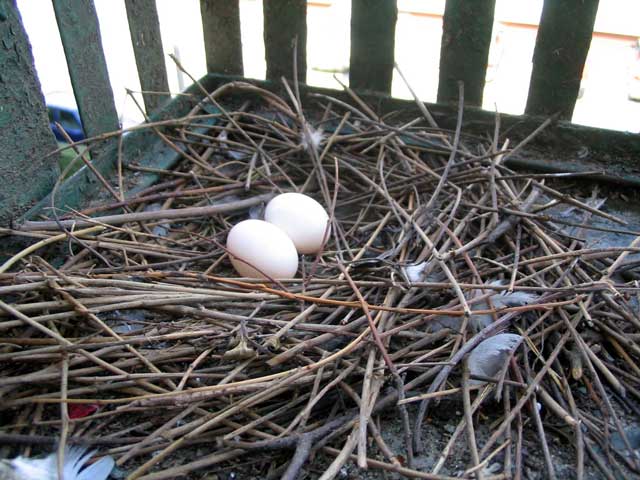
These birds are omnivorous and opportunistic feeders. In natural settings they eat seeds, grains and small invertebrates; in urban areas they frequently scavenge human food scraps. Observers often see pigeons taking discarded snacks such as French fries, entering service areas outside a fast food restaurant, or seeking handouts from people during a picnic in the park (picnickers). Pigeons nest on ledges, under bridges or in abandoned buildings, using simple platforms of twigs and debris.
History and domestication
Rock pigeons have been associated with humans since antiquity. They were one of the earliest bird species to be domesticated for food, message carrying and sport. Selective breeding produced homing pigeons, fancy exhibition types and utility strains. Many urban ‘‘city pigeons’’ are feral descendants of escaped or released domestic birds; they have dispersed globally with human settlements.
Human interactions and cultural roles
Attitudes toward rock pigeons vary. They are valued for their role in pigeon racing and as historical message carriers, yet considered pests in some urban settings because of droppings and nesting in built structures. Pigeons have also appeared widely in art, literature and scientific research, illustrating their cultural and practical significance.
Distinctions and conservation
Distinguishing a true wild rock dove from feral pigeons often relies on habitat and plumage: wild birds usually show the ancestral gray-blue pattern and inhabit coastal cliffs, while feral birds display diverse coloration and live in towns. The species is not globally threatened; however, isolated wild populations may be affected by habitat change and hybridization with feral birds. For more taxonomic and family-level information see Columba livia and broader resources on Columbidae.
- Key traits: compact body, long neck, variable plumage.
- Common behaviors: flocking, scavenging, strong flight.
- Human links: domestication, racing, urban ecology.
Related articles
Author
AlegsaOnline.com Rock pigeon (Columba livia): overview, behavior, and relationship with people Leandro Alegsa
URL: https://en.alegsaonline.com/art/83535