
Rotifers (Phylum Rotifera): microscopic aquatic animals
Rotifers are microscopic, mainly freshwater animals of the phylum Rotifera. They have a ciliated corona and a mastax, show diverse lifestyles, often reproduce by parthenogenesis, and play key ecological roles.
Overview
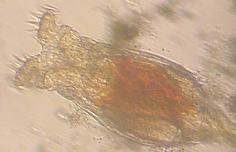
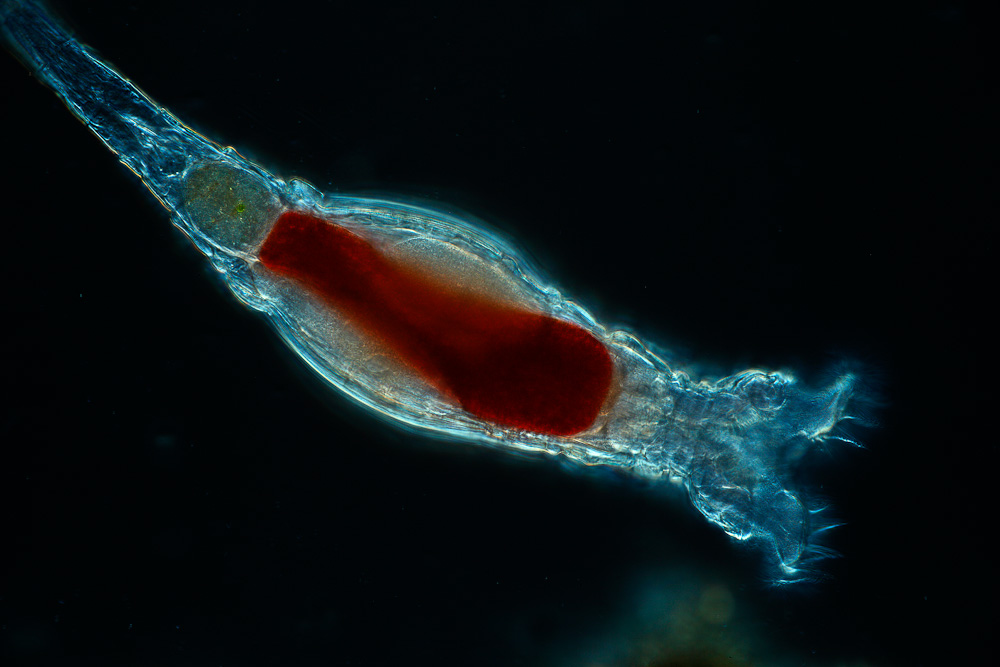
Rotifers are a group of tiny, mostly freshwater animals classified in the phylum Rotifera. Typically visible only with a microscope, they range from about 50 µm to over 500 µm in length. Many are planktonic, but others crawl, live attached to substrates, or form simple colonies. Their common name comes from the wheel-like ciliated structure on the head called the corona.
Image gallery
10 Images



Anatomy and lifestyle
Distinctive features include a ciliated corona used for feeding and locomotion, and an internal jaw-like organ called the mastax containing hard elements called trophi. Rotifers feed on bacteria, algae and detritus; a few are predatory. Habits vary: free-swimming species tumble through the water, some inch along by contracting their bodies, and sessile species live in tubes or gelatinous coverings.
Reproduction and survival
Reproductive strategies vary across major groups. Many monogonont rotifers alternate between asexual (parthenogenetic) and sexual phases, producing durable resting eggs. Bdelloid rotifers are famous for long-term asexuality: populations are entirely female and reproduce by parthenogenesis. Several rotifers can survive desiccation by entering dormant states, allowing them to persist in ephemeral pools.
Ecological role and uses
Rotifers are important components of freshwater plankton, transferring microbial production to larger invertebrates and fish larvae. They are used in aquaculture (e.g., Brachionus species) as live feed and serve as model organisms in ecology, toxicology and evolutionary studies. Their sensitivity to environmental change makes them useful indicators of water quality.
Notable facts
- Corona and mastax define their feeding and movement.
- Some groups tolerate drying and can colonize new habitats via wind or animals.
- Bdelloid rotifers show unusual evolutionary patterns that attract scientific interest.
Related articles
Author
AlegsaOnline.com Rotifers (Phylum Rotifera): microscopic aquatic animals Leandro Alegsa
URL: https://en.alegsaonline.com/art/84281
Sources
- books.google.com : The Cambridge Natural History
- ucmp.berkeley.edu : "Introduction to the Rotifera"
- reefkeeping.com : "Nano-Animals, Part I: Rotifers"
- jbpc.mbl.edu : Welch, Mark
- plosbiology.org : plosbiology.org/article/info:doi/10.1371/journal.pbio.0050087
- plosone.org : plosone.org/article/info:doi/10.1371/journal.pone.0000671
- news.sciencemag.org : "Bdelloids surviving on borrowed DNA"