
River Dart (Devon, England)
A river in southwest England rising on Dartmoor, the River Dart flows through deep valleys to Dartmouth and the English Channel; known for its scenic moorland headwaters, tidal estuary and recreational uses.
The River Dart is a well-known waterway in the county of Devon. Its headwaters are on the granite plateau of Dartmoor, and the river descends through wooded valleys before reaching the sea at Dartmouth, where its estuary opens into the English Channel. The Dart is valued for both natural character and human activity along its length.
Image gallery
9 Images





Course and main parts
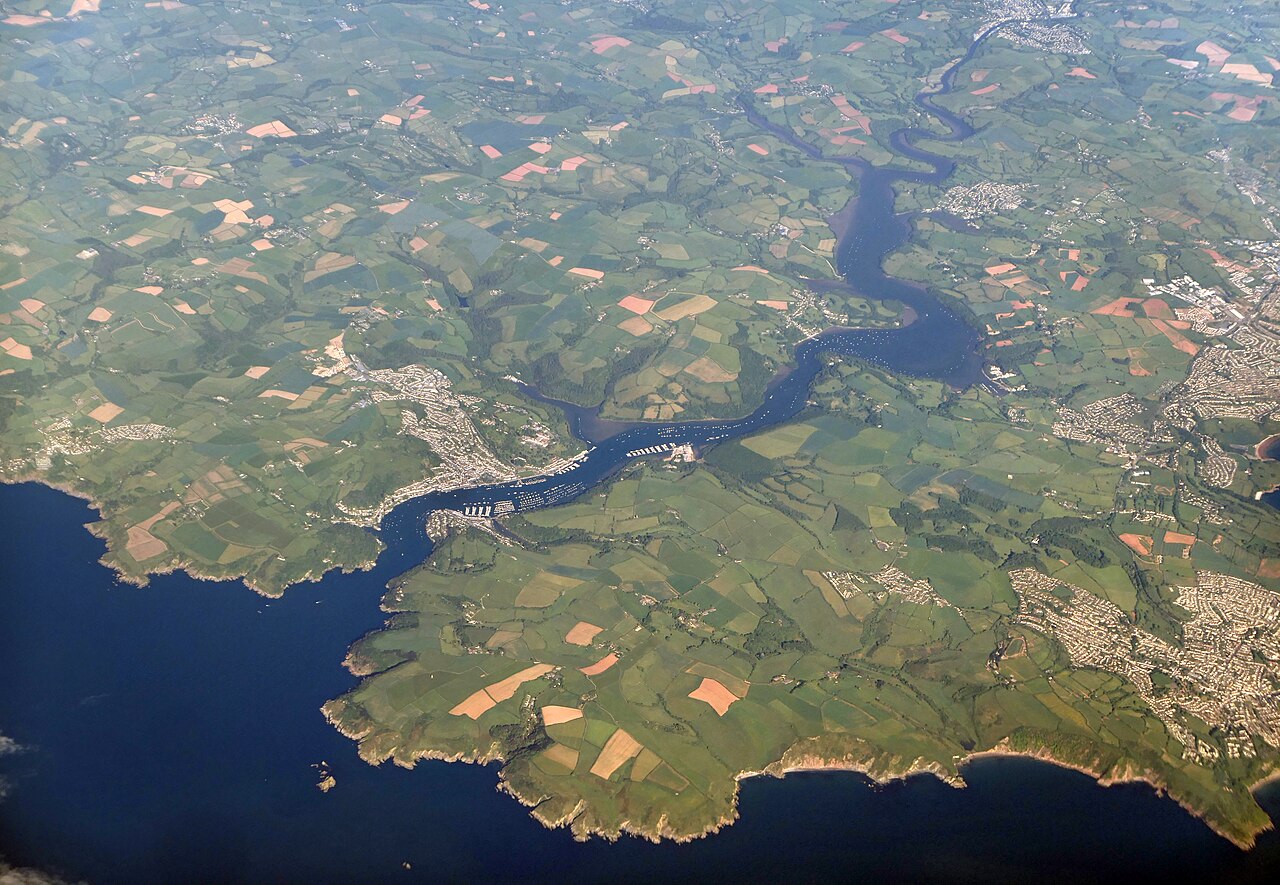
The Dart is formed where two principal tributaries, the East Dart and West Dart, meet near a moorland confluence. From there it flows south, passing towns and villages including Buckfastleigh and Totnes, before widening into a tidal estuary that separates steep valley sides and approaches the coast at Dartmouth. The estuary is navigable and sheltered, with a mix of freshwater and tidal environments.
Ecology and geology
Originating on Dartmoor's granite, the river runs through upland moor, wooded valleys and cultivated lowlands. This variety of habitats supports fish such as trout and migratory salmon, as well as otters, kingfishers and a range of aquatic plants. Conservation efforts on and around the Dart aim to protect water quality, riparian woodlands and spawning grounds.
Human uses and cultural importance
- Navigation and port activity in the Dartmouth estuary, including small commercial craft and leisure boats.
- Recreation: kayaking, canoeing and river swimming on both upper sections and the estuary; walking along valley trails.
- Local economy: fishing, tourism and heritage attractions—historic towns, estates and shipbuilding traditions near the river.
The Dart has inspired local culture and tourism, with historic bridges, waterside towns and events that celebrate its maritime and riverine heritage. Nearby landmarks such as abbeys and country estates lie within the river’s catchment and contribute to its attraction.
Notable distinctions
Unlike some lowland rivers, the Dart combines upland moorland character with a tidal estuary within a relatively short distance, creating striking scenery and varied habitats. Its accessibility to outdoor recreation, together with towns that retain medieval and maritime links, makes the River Dart a distinctive element of Devon's landscape and a popular destination for visitors and residents alike.
Related articles
Author
AlegsaOnline.com River Dart (Devon, England) Leandro Alegsa
URL: https://en.alegsaonline.com/art/83092
Sources
- dartmoor-npa.gov.uk : web.archive.org/web/20071021080159/http://www.dartmoor-npa.gov.uk/aurawprdeco6
- dartharbour.org : "Commercial Vessels Guide"