
Wingspan: definition, measurement, and significance for birds and aircraft
Wingspan is the straight-line distance between wing tips. This article explains how it is measured for aircraft and birds, its aerodynamic importance, practical trade-offs, and notable uses and adaptations.
Wingspan is the distance from one wingtip to the other when wings are fully extended. It is a basic geometric measure used for both flying animals and aircraft. For engineering and comparison purposes the wingspan is typically taken as a straight-line measurement between the outermost points of the wings, regardless of wing sweep or local shape.
Image gallery
3 Images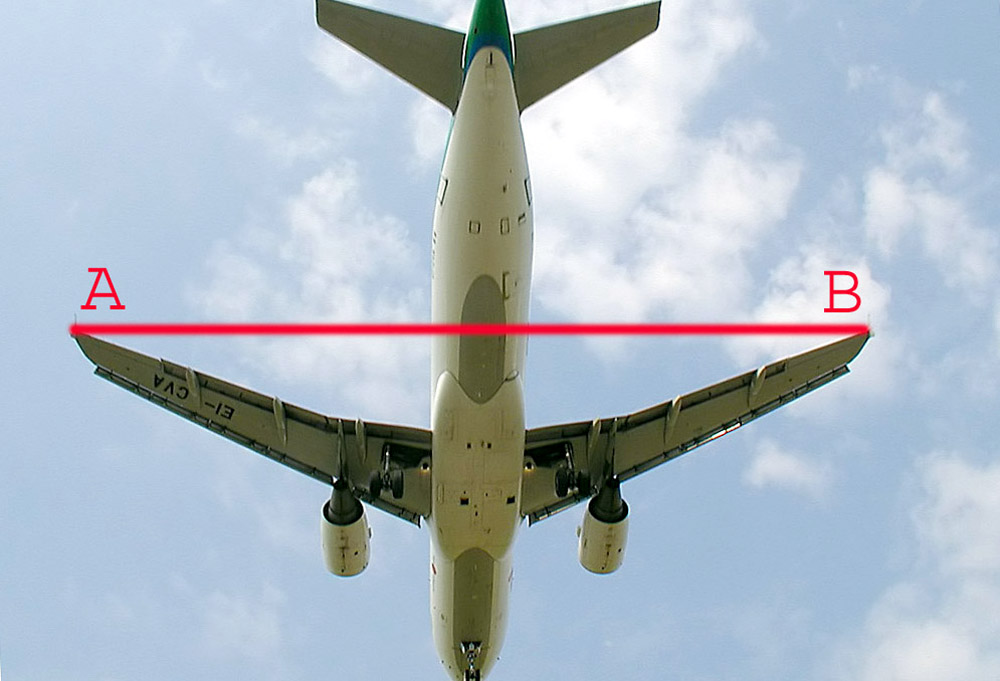


How wingspan is measured
Measurement conventions differ slightly between contexts but share the same core idea: the maximum tip-to-tip separation. For aircraft this means a straight-line measurement from wingtip to wingtip, independent of sweep, dihedral, or the presence of winglets. Practical measurements also account for features such as folding wings on carrier-based airplanes; folded positions are used for stowage, while the published wingspan refers to the unfolded configuration.
For birds, wingspan is measured on a specimen or cooperative live bird by extending both wings and measuring between the tips of the longest primary feathers. Field and museum techniques often involve laying a bird on its back and gently straightening the wings at the wrist and ankle joints before taking the measurement; this procedure ensures repeatable results for comparative studies. See also aircraft and bird measurement and typical measurement joints at the wrist and ankle.
Why wingspan matters
Wingspan directly influences aerodynamic performance and handling. A longer span generally raises the wing's aspect ratio (the span relative to the mean chord), which reduces induced drag and improves efficiency for sustained, low-power flight such as gliding or long-range cruising. Conversely, a shorter span tends to improve roll rate and maneuverability—advantages for fast, agile aircraft and predators that must turn rapidly.
Design trade-offs and adaptations
- Efficiency vs. agility: High-aspect-ratio wings suit sailplanes and long-range airliners; low-aspect-ratio wings suit fighters and many small birds.
- Structural weight: Longer wings require stronger structures, which can add weight and complexity unless advanced materials are used.
- Operational limits: Airports, hangars, and aircraft carriers impose wingspan limits; folding wings or wingtip devices are practical responses.
- Wingtip devices: Winglets or raked tips can mimic some benefits of extra span by reducing vortex-induced drag without increasing geometric span.
Historical and biological context
The importance of span was recognized early in aviation and in studies of bird flight. Improvements in materials and aerodynamic theory allowed designers to increase span and aspect ratio where efficiency was critical, while biological evolution produced a wide variety of spans adapted to different lifestyles—soaring seabirds and migratory species typically have long, narrow wings, whereas forest-dwelling or pursuit species have shorter, broader wings suited to rapid maneuvering.
Practical examples and notable facts
In practice, wingspan is a key specification used in aircraft catalogs, bird field guides, and regulatory documents because it affects hangar requirements, airport gate compatibility, and ecological function. When comparing species or aircraft, wingspan is most meaningful when considered alongside other parameters such as wing area, aspect ratio, and structural characteristics. Understanding wingspan and its trade-offs helps explain why different flyers look and behave so differently despite sharing the same essential challenge: generating lift efficiently while meeting mission-specific demands.
Related articles
Author
AlegsaOnline.com Wingspan: definition, measurement, and significance for birds and aircraft Leandro Alegsa
URL: https://en.alegsaonline.com/art/108585