
Rikki-Tikki-Tavi
A concise encyclopedia entry on Rudyard Kipling's short story 'Rikki-Tikki-Tavi', its plot, characters, themes, and adaptations including the 1975 animated special.
Overview
"Rikki-Tikki-Tavi" is a short story that appears in The Jungle Book and was first published in 1894. Written by Rudyard Kipling, the tale follows a young, brave mongoose who becomes part of a human family living in an Indian garden and defends them against dangerous cobras.
Image gallery
2 Images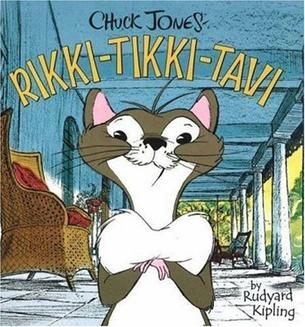

Plot summary
The narrative begins when the protagonist, a red mongoose named Rikki-Tikki-Tavi, is washed from his burrow in a flooded garden and rescued by a British family. He quickly establishes himself as a guardian of the household, forming friendships with local birds and animals while confronting the main antagonists, the cobras often identified as Nag and Nagaina. The story culminates in clever and tense encounters that hinge on the mongoose's natural instincts and courage.
Characters
- Rikki-Tikki-Tavi — the energetic young mongoose and central figure.
- Teddy — the small human boy of the household whom Rikki protects.
- Nag and Nagaina — the cobras who threaten the family and the garden.
- Darzee and others — supporting animal characters, including birds and a timid muskrat, who add local color and advice.
Themes and style
Kipling mixes adventure with naturalistic detail to create a story that is both suspenseful and accessible to younger readers. Prominent themes include courage, instinct versus reason, loyalty, and the dynamics between predators and prey. Although often classified as children's literature, the tale retains a serious tone and vivid danger that make it memorable to adult readers as well.
Adaptations and legacy
The story has been frequently anthologized and sometimes published as a standalone booklet. It has also inspired dramatizations and audiovisual treatments, including an animated special produced by an American studio and directed by Chuck Jones in 1975. These adaptations underline the tale's enduring appeal and its suitability for stage, radio, and screen.
Notable facts
Set in the Indian environment that informs much of Kipling's work, the story stands out within the collection for its direct conflict and clear moral of protection and bravery. First appearing in the late nineteenth century, it remains a staple of classic short fiction and is widely used in educational settings to introduce narrative tension and animal characterization.
Related articles
Author
AlegsaOnline.com Rikki-Tikki-Tavi Leandro Alegsa
URL: https://en.alegsaonline.com/art/82931