
Riddler (comics)
The Riddler is a Batman villain from DC Comics known for riddles, puzzles, and theatrical crimes that challenge Batman’s detective skills.
The Riddler, also known as Edward Nygma or Edward Nashton in some versions, is a recurring villain from the Batman universe published by DC Comics. He is best known for turning crime into a game of intellect: instead of relying on force, he leaves clues, riddles, and elaborate traps designed to test Batman’s reasoning.
Image gallery
5 Images

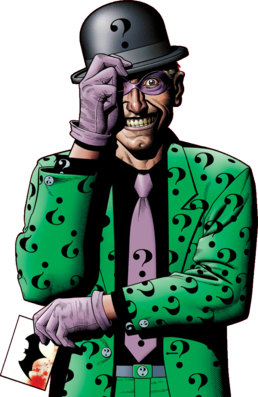


Character overview
In most portrayals, the Riddler is obsessed with proving that he is smarter than everyone else, especially Batman. His schemes often begin with a puzzle or a taunting message, and the answer usually points to his next move. This makes him one of the most distinctive Batman foes, since his crimes are as much mental challenges as physical threats.
His visual design is strongly tied to his theme. He is commonly shown wearing a green suit marked with question marks, along with a cane or walking stick shaped like a question mark. Some versions also give him a bowler hat or other theatrical accessories. The costume reinforces his habit of turning identity itself into a puzzle.
Origins and publication history
The character first appeared in Batman comics in 1948, created by writer Bill Finger and artist Dick Sprang. He emerged during an era when many Batman villains were defined by a single gimmick or motif, but the Riddler stood out because his gimmick was intelligence. Over time he became a classic part of the rogues’ gallery and a frequent opponent in detective-style stories.
Across different comic eras, the Riddler has been written in several ways: as a flamboyant master criminal, a cunning planner, a nuisance who cannot resist showing off, or even a more dangerous strategist. Some stories emphasize his need for attention, while others focus on his pride and rivalry with Batman. These variations have helped the character remain flexible and recognizable for decades.
Why the character matters
The Riddler is important because he highlights a core feature of Batman stories: the hero’s role as detective. While many villains threaten Gotham with violence, the Riddler forces Batman to solve problems under pressure. His riddles, codes, and hidden clues create a different kind of suspense, making him a memorable example of a criminal whose greatest weapon is his mind.
- Theme: puzzles, wordplay, and logic challenges
- Typical tools: clues, traps, and a question-mark cane
- Story function: a villain who tests Batman’s intelligence
Because of this, the Riddler has become one of the most recognizable characters in Batman comics and a lasting symbol of the clever, theatrical side of supervillainy.
Related articles
Author
AlegsaOnline.com Riddler (comics) Leandro Alegsa
URL: https://en.alegsaonline.com/art/82821
Sources
- hollywoodreporter.com : "'The Batman' Casts Paul Dano as the Riddler"