
Richard Hofstadter: American historian of political ideas and culture
Richard Hofstadter (1916–1970) examined American political culture, elites, and ideas in works such as Social Darwinism, The Age of Reform, and The Paranoid Style; two-time Pulitzer Prize winner.
Overview
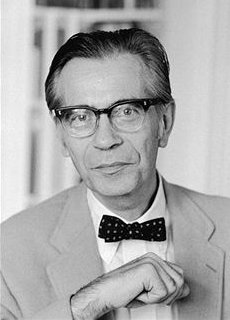
Richard Hofstadter (August 6, 1916 – October 24, 1970) was a prominent American historian and professor known for tracing how ideas, political rhetoric, and cultural anxieties shaped United States public life. Born in Buffalo, New York, Hofstadter spent much of his career at Columbia University, where he held the DeWitt Clinton Professorship of American History. His writing combined intellectual history, political biography, and cultural analysis to illuminate the patterns behind reform movements, conservatism, and anti-intellectual currents.
Image gallery
4 Images


Major works
Hofstadter produced several influential books and essays that remain widely read and debated. Key titles include:
- Social Darwinism in American Thought, 1860–1915 (1944) — a study of how biological metaphors influenced economic and social arguments.
- The American Political Tradition (1948) — a collection of interpretive biographies of major figures in U.S. political history.
- The Age of Reform (1955) — a synthesis of agrarian, populist and progressive movements that won him public attention and scholarly recognition.
- Anti-Intellectualism in American Life (1963) — an exploration of recurrent skepticism toward intellectuals and abstract ideas in American culture.
- "The Paranoid Style in American Politics" (1964) — an essay, later republished with related pieces, analyzing conspiratorial rhetoric and its function in political debate.
Hofstadter's books received major honors, including the Pulitzer Prize on two occasions, reflecting both academic and public impact.
Approach and recurring themes
Rather than producing narrowly empirical political histories, Hofstadter emphasized the role of ideas, symbols, and collective psychology. He often used literary and rhetorical analysis to explain why certain themes—fear of decline, distrust of experts, or appeals to moral certitude—recurred in American politics. His prose blended critique with irony, and he was willing to employ psychoanalytic metaphors and social-psychological concepts to interpret leaders and movements.
Reception, debates, and influence
Hofstadter influenced generations of historians, journalists, and public intellectuals who adopted his attention to rhetoric and cultural patterns. He is frequently associated with the "consensus" school because he highlighted continuities in American political life, but his work also contained sharp critiques of particular tendencies. Later scholars have debated his interpretations—some praising the wide-ranging synthesis and elegant prose, others arguing he underplayed conflict, class, or economic determinism. His essay on the "paranoid style" has become a standard reference in discussions of populism and conspiracy-minded politics.
Legacy and final years
Hofstadter's books continue to be taught in courses on American history, political thought, and cultural studies. His methods—close reading of texts, attention to rhetoric, and willingness to cross disciplinary lines—helped open intellectual history to broader cultural questions. He died in New York City on October 24, 1970, of leukemia, leaving a significant body of work that remains a touchstone for debates about American politics and public culture.
For further reading on Hofstadter's career and bibliography consult scholarly introductions, collected editions of his essays, and institutional profiles available through academic libraries and archives.
Related articles
Author
AlegsaOnline.com Richard Hofstadter: American historian of political ideas and culture Leandro Alegsa
URL: https://en.alegsaonline.com/art/82680