
Richard I of Normandy (Richard the Fearless, Duke 942–996)
Richard I (933–996), called the Fearless, ruled Normandy from 942 to 996. He consolidated Norman governance, shaped its feudal order, fostered monastic life and dynastic ties that connected Normandy to England.
Richard I of Normandy (933–996), commonly called Richard the Fearless (French: Sans Peur), was the ruler who guided Normandy through a formative half-century. He held the title Duke of Normandy from 942 until his death in 996 and is credited with transforming a region of Norse settlers and Frankish subjects into a more cohesive political entity.
Image gallery
6 Images
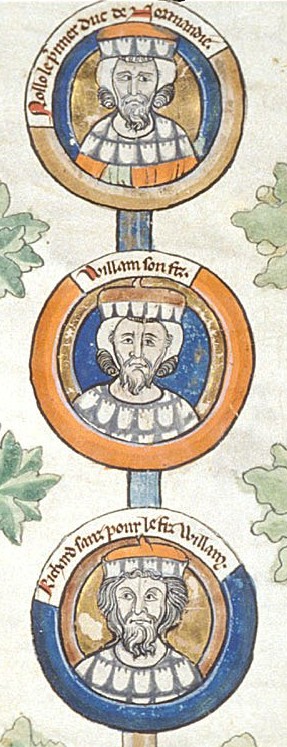

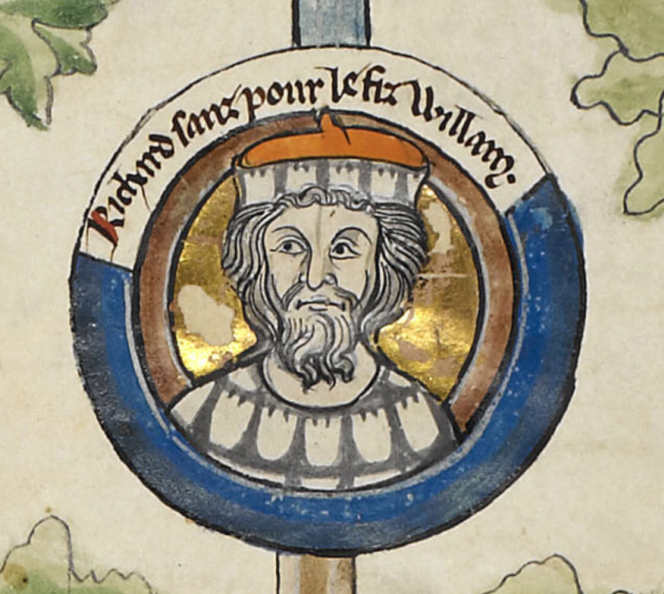


Early life and accession
Born into the dynasty founded by the Viking leader Rollo, Richard inherited leadership as a minor after the death of his father. The early years of his rule were marked by factional pressures and interventions from neighboring Frankish magnates. Over time Richard consolidated his position by balancing force, negotiation and marriage alliances, eventually securing firm control over Norman affairs.
Government and social structure
Richard introduced and reinforced practices that made Normandy resemble the emerging feudal polities of western Europe. He claimed overarching ownership of the land and distributed fiefs to loyal followers in return for military service and obedience. This network of bonds between duke and vassals brought greater internal stability and allowed local lords to administer justice and raise troops on behalf of the duchy.
Relations, religion and culture
Richard combined military readiness with diplomacy. He maintained contacts with West Frankish kings and other regional powers, and he encouraged the Christian institutions that anchored Norman society to the broader European world. Under his patronage monasteries and churches received endowments, which promoted learning, reform and economic development within the duchy.
Legacy and dynastic importance
Richard's long rule strengthened Normandy as an independent power in what is now northern France. He married into local aristocracy and established a family that would intermarry with other ruling houses. His children and grandchildren extended Norman influence: the ducal line he consolidated provided the generation that later forged close ties with England and beyond. One of his descendants, through subsequent generations, became a central figure in Anglo-Norman history.
Notable facts
- Nickname: "the Fearless" highlights his reputation for resolve and forstanding both martial and political challenges.
- Feudal foundations: his policies helped make vassalage and landed tenure the basis of Norman governance.
- Church patronage: his support for monasteries helped integrate Norman society into continental religious and cultural life.
For a concise view of his role within the wider region, see more on the office of the Duke of Normandy and the history of Normandy. Richard I remains a central figure in the pre-Conquest evolution of Norman institutions and identity.
Questions and answers
Q: Who was Richard I of Normandy?
A: Richard I of Normandy was a medieval ruler who was also known as Richard the Fearless.
Q: When was Richard I of Normandy's reign?
A: Richard I of Normandy was the Duke of Normandy from 942 to 996.
Q: How did Richard I of Normandy make Normandy into a feudal society?
A: Richard I of Normandy made Normandy into a feudal society by owning all the land and distributing it to his followers who remained loyal to him.
Q: What was the result of Richard I of Normandy's efforts in Normandy?
A: Richard I of Normandy's efforts made Normandy a much stronger power in Western France.
Q: What was Richard I of Normandy's nickname?
A: Richard I of Normandy was also known as Richard the Fearless in French, which is Sans Peur.
Q: How did Richard I of Normandy ensure loyalty from his followers?
A: Richard I of Normandy ensured loyalty from his followers by rewarding them with lands and titles, which incentivized them to remain loyal to him.
Q: What was Richard I of Normandy's lasting legacy?
A: Richard I of Normandy's lasting legacy was making Normandy into a feudal society and strengthening its power in Western France.
Related articles
Author
AlegsaOnline.com Richard I of Normandy (Richard the Fearless, Duke 942–996) Leandro Alegsa
URL: https://en.alegsaonline.com/art/82683