
La Paz — Bolivia's high-altitude seat of government
La Paz, formally Nuestra Señora de La Paz (Aymara: Chuqi Yapu), is Bolivia's seat of government. Perched in an Andean canyon at about 3,650 m, it is the world's highest de facto capital city.
Overview
La Paz is officially named Nuestra Señora de La Paz and is also known by its Aymara name Chuqi Yapu. It functions as the administrative and political centre of Bolivia, hosting the executive and legislative branches of the national government. The city sits within a steep valley of the Altiplano at roughly 3,650 m (about 11,975 ft) above sea level, a setting that shapes its climate, urban form and daily life. Because government functions operate there, La Paz is commonly described as the world’s highest de facto capital.
Image gallery
10 Images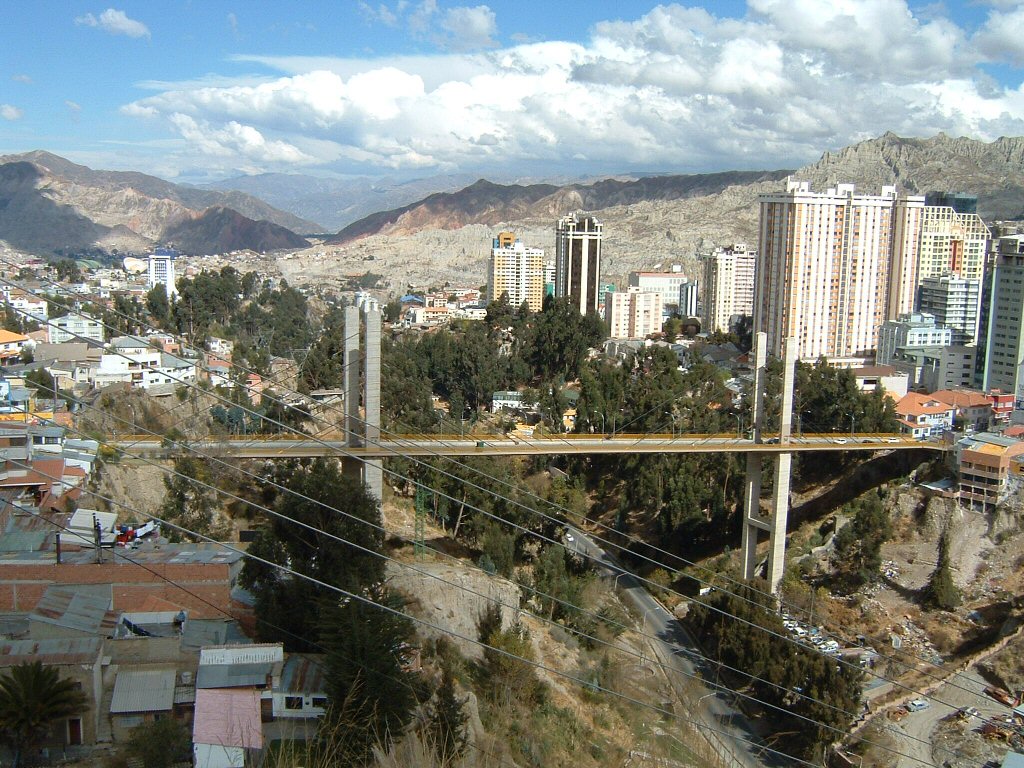


Geography and climate
The urban area follows the canyon carved by the Choqueyapu River and rises onto surrounding hills and plateaus. The topography creates sharp contrasts between the densely settled valley floor and the residential neighbourhoods climbing the slopes. Climate is cool and generally dry, with strong solar radiation by day and colder nights; temperature ranges and thin air influence construction, transport and public health.
History
Founded in the colonial period, La Paz developed as a regional commercial and administrative centre. Over centuries the city absorbed indigenous, mestizo and European influences. It has been central to Bolivia’s political life and has grown substantially since the 20th century, with expansion into satellite suburbs and new transport links to other regions.
Government and institutions
Although Bolivia’s constitutional capital is Sucre, La Paz hosts the presidential palace, many government ministries and the national legislature. Municipal government manages a large metropolitan area and works to coordinate services across steep terrain and widely varying neighbourhoods. National ceremonies and political demonstrations are frequent, reflecting the city’s importance in public affairs.
Culture and society
Cultural life in La Paz blends Andean traditions, indigenous languages and contemporary urban arts. Markets selling traditional foods, textiles and crafts are central to daily life; ceremonial festivals and religious observances mix Catholic and indigenous elements. Museums, theatres and street art reflect the city’s evolving identity while maintaining strong links to highland customs.
Economy and transport
The local economy combines public administration, commerce, services and light industry. Transport has adapted to steep slopes: in recent years an extensive urban cable-car network has become an important commuter system, complementing bus routes and road links. These systems aim to reduce travel time between hillside suburbs and the valley centre, while ongoing infrastructure projects seek to improve access and quality of life.
Landmarks and tourism
Visitors to La Paz encounter colonial-era plazas and churches, colourful street markets and vantage points with views of nearby snow-capped peaks. Popular attractions include traditional craft markets, historic neighbourhoods and museums that document indigenous cultures and the city’s colonial past. Tourism, together with government services, helps sustain local businesses and cultural sites.
Challenges and development
- High altitude affects health, building design and transportation systems, and influences agricultural zones in surrounding highlands.
- Rapid urban growth has created pressures on housing, water supply, sanitation and waste management in outlying districts.
- Air quality, traffic congestion and equitable service provision remain important planning concerns for municipal and national authorities.
- Efforts continue to balance economic growth, cultural preservation and environmental constraints in a city defined by dramatic terrain.
For readers seeking official information, municipal resources and national institutions provide updated data and guidance on visiting, residency and civic procedures; cultural organizations and local museums offer insight into the city’s history and living traditions.
Related articles
Author
AlegsaOnline.com La Paz — Bolivia's high-altitude seat of government Leandro Alegsa
URL: https://en.alegsaonline.com/art/55055
Sources
- bolivia.gob.bo : Breve Historia de nuestro país (pág.3)
- luchoporlapaz.com : "¿Quién es Luis Revilla?"
- world-gazetteer.com : "World Gazetteer"
- ww2.wkkf.org : "W.K. Kellogg Foundation: Overview – Bolivia: La Paz – El Alto"