
ReactOS — an open-source, Windows-compatible operating system
ReactOS is an open-source project that aims to reimplement the Windows NT architecture to run Windows applications and drivers without using Linux or Microsoft code.
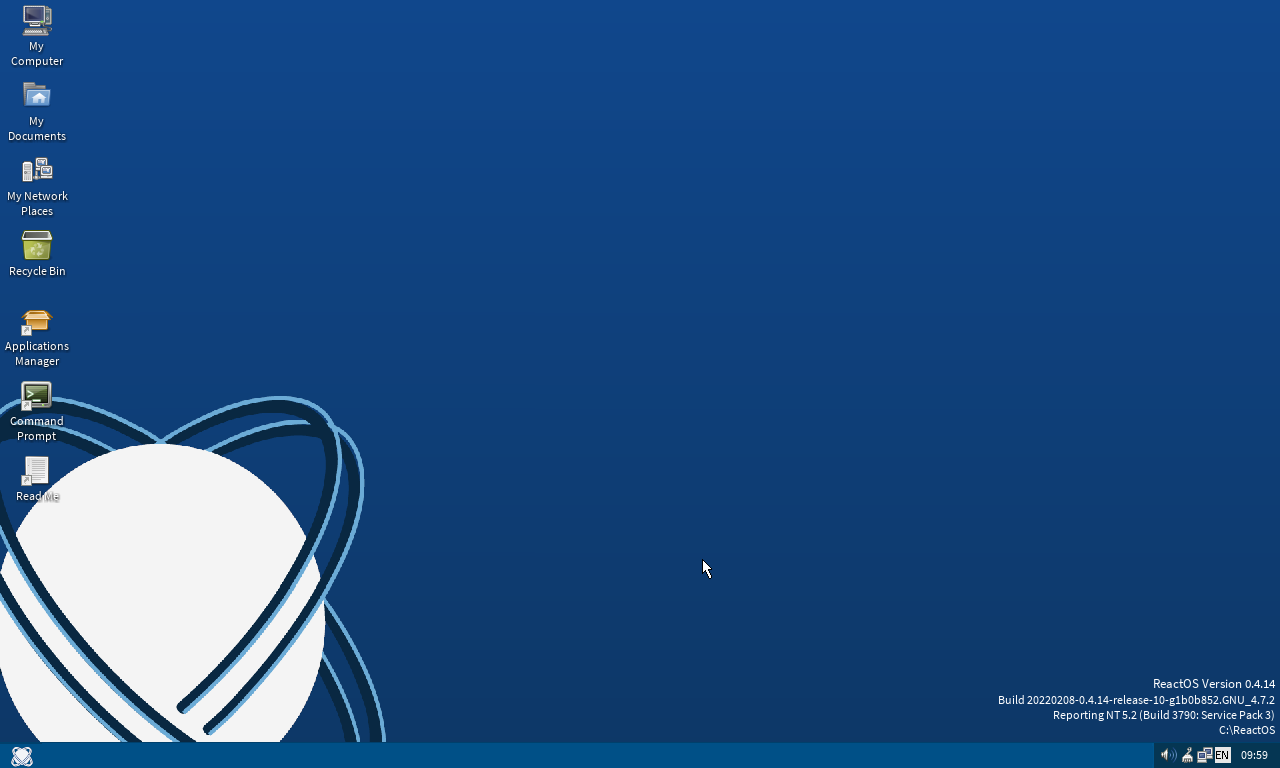
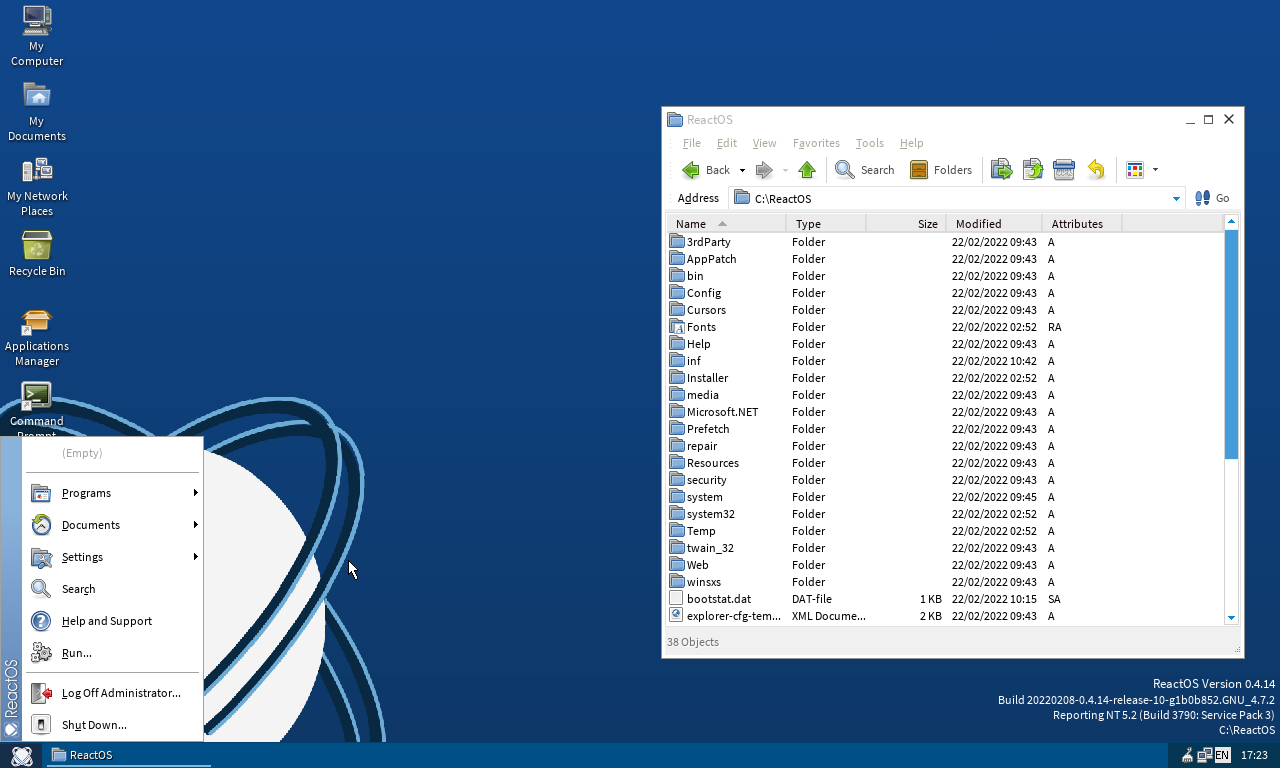
ReactOS is an open-source operating system project that aims to provide binary compatibility with Microsoft Windows applications and drivers. It is an independent reimplementation of the Windows NT architecture rather than a distribution of Linux or Unix. The project's goal is to allow software built for Windows to run unchanged on a clean-room, open-source kernel and userland.
Image gallery
9 Images





Overview and goals
The central objective of ReactOS is compatibility: to implement the Windows NT programming interfaces and device driver model so that common Windows programs and hardware drivers work natively. Developers focus on reproducing the behavior of key components such as the kernel, the Win32 API, system libraries, and user-mode services while keeping the codebase under open-source licenses and available in public repositories.
Characteristics and architecture
- NT-style kernel: ReactOS uses a microkernel/monolithic-hybrid architecture inspired by Windows NT design patterns, with its own kernel implementation rather than reusing existing Unix kernels.
- Win32 compatibility: The project implements Win32 APIs and components so that standard Windows applications can run with minimal modification.
- Driver support: ReactOS implements Windows driver interfaces to allow many Windows drivers to function, although driver coverage remains incomplete.
- Reuse of Wine code: Where appropriate, ReactOS reuses compatible user-mode code and libraries from the Wine project to accelerate compatibility with Windows applications.
History and development
Work on ReactOS began in the late 1990s with contributors aiming to create a free alternative to proprietary Windows releases. The project has been developed incrementally by a worldwide volunteer community and supported by organizations that promote open-source desktop software. Over many years ReactOS has advanced through alpha and beta milestones but has remained a long-term, actively developed effort rather than a finished commercial operating system.
Uses, limitations, and community
ReactOS is primarily used for experimentation, software testing, driver research, legacy application support, and education about operating system internals. Because its compatibility is partial and development is ongoing, it is not recommended as a drop-in replacement for Windows on production machines. The project maintains public resources for downloads, bug reports, and development discussion; interested users and contributors can find more information on the project's official site and community pages. Compatibility lists and application testing results are available through various project-maintained pages and databases (compatibility overview, test reports).
ReactOS aims specifically at compatibility with Windows NT-era software, including families like Windows Server 2003 and later variants in terms of API behavior, although exact feature parity is not guaranteed (compatibility targets). The project collaborates informally with related efforts such as Wine, which focuses on running Windows applications on Unix-like systems, sharing knowledge and code where licenses and technical fit allow.
Related articles
Author
AlegsaOnline.com ReactOS — an open-source, Windows-compatible operating system Leandro Alegsa
URL: https://en.alegsaonline.com/art/81439