
Puttin' On the Ritz
A popular American song by Irving Berlin (written 1927, published 1929) that became a standard in popular music and saw notable revivals including Taco's 1981 hit version.
Overview
Puttin' On the Ritz is a popular American song written by Irving Berlin in the late 1920s. The lyrics invite listeners who feel down to go "where fashion sits" and to "put on the Ritz," evoking the idea of dressing up and entering glamorous social spaces. The title and refrain captured a spirit of metropolitan elegance and became shorthand for stylish self-presentation.
Image gallery
4 Images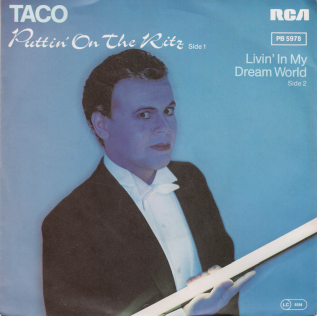



Origins and early history
Berlin completed the song in May 1927 and it was published in December 1929. The phrase "the Ritz" in the lyrics most likely refers to the Ritz Tower at 465 Park Avenue in New York City, a luxurious residential building constructed as an apartment hotel around the time the song was written. In its earliest years the number circulated in stage and cabaret performances and was adopted by popular entertainers of the era; among the early notable interpreters was Fred Astaire, who helped give the tune visibility through his performances.
Musical character and themes
Musically, the song is built as a showy popular tune suited to both vocal delivery and dance accompaniment. Its lyrics combine lighthearted encouragement with a wink at social display: dressing formally is presented as a remedy for gloom and a way to access fashionable company. Because of that blend of catchy melody and theatrical phrasing, the number quickly entered the repertoire of singers, dancers, and orchestras working in popular and jazz idioms.
Recordings, revivals and legacy
Over the decades "Puttin' On the Ritz" has been recorded and reinterpreted across styles, appearing in stage revues, films and recordings that treat it as part of the American popular songbook. A prominent later revival came in the early 1980s when the Dutch-born singer Taco recorded a synthpop, euro-disco–style version that paired modern electronic production with tap-dance–influenced presentation; that single reached the top ten in several countries and peaked at number four on the U.S. Billboard Hot 100. The song's adaptability has allowed it to remain familiar to successive generations.
Notable facts and distinctions
- Written in 1927 and published in 1929, the song is part of Irving Berlin's extensive catalog.
- "The Ritz" referenced in the lyrics most likely alludes to a New York City landmark, the Ritz Tower at 465 Park Avenue.
- It has been recorded in a wide range of arrangements—from orchestral and jazz renditions to disco and synthpop revivals—demonstrating its versatility.
Importance and continued use
Today "Puttin' On the Ritz" is recognized as a durable piece of 20th-century popular music. Musicians and entertainers still draw on its melody and imagery when evoking the interwar era's glamour or when playfully referencing the act of dressing up. Its presence in recordings, stage anthologies and media retrospectives has secured its place as a recognizable standard in American musical culture.
Related articles
Author
AlegsaOnline.com Puttin' On the Ritz Leandro Alegsa
URL: https://en.alegsaonline.com/art/80187
Sources
- billboard.com : "Puttin' On the Ritz"