
Quadrille: the four‑couple sequence dance of the 18th and 19th centuries
Quadrille is a historic sequence dance for four couples arranged in a square, popularized in 18th‑century France and 19th‑century England and a precursor to American square dancing.
Overview
The quadrille is a social sequence dance performed by four couples positioned at the sides of a square. Each couple follows a prescribed set of figures or movements in coordination with the others, so the dance proceeds as a linked series of patterns rather than improvised steps. Often lively and formal at once, the quadrille became a staple of ballroom entertainment and social gatherings in Europe and beyond. For a general definition, see sequence dance.
Image gallery
5 Images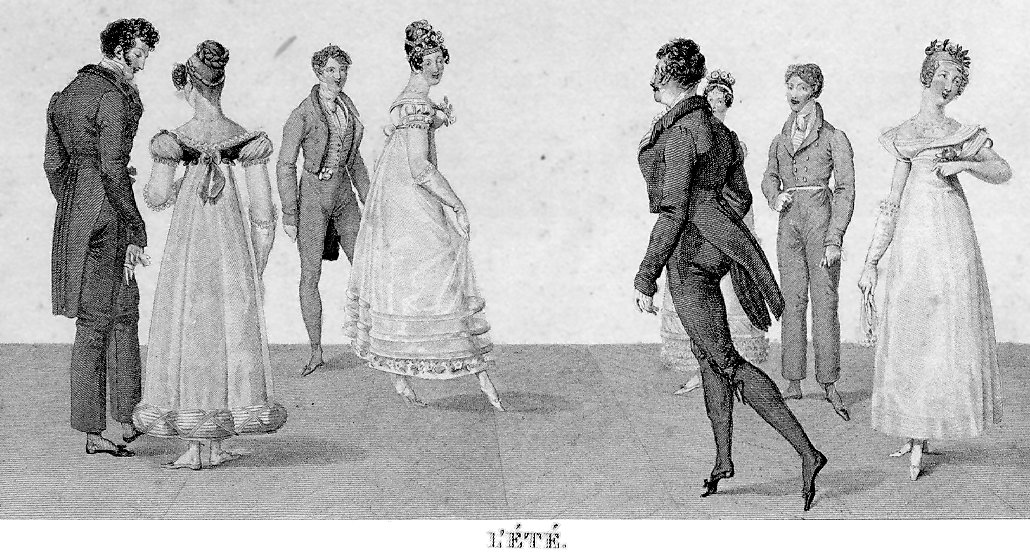


Structure and characteristics
Typical quadrilles are made of several named figures completed in a particular order. Couples advance, retire, cross, change places and form lines or circles as part of these figures. The formations emphasize symmetry and timing so that all four couples participate in complementary roles. Music for the quadrille is generally in a clear duple rhythm, with an introduction and repeated strains to mark each figure.
- Four couples in a square arrangement
- Multiple figures performed in a fixed sequence
- Music timed to match each figure
- Combination of set patterns and social interaction
Origins and historical development
The dance emerged in France around the mid‑18th century and was adapted into different national styles. It first became fashionable in France in the later 1700s and was introduced to English ballrooms early in the 19th century; records note its popularity in England by about 1813. Over the 19th century the quadrille evolved in tempo, accompaniment and figure names as it spread across Europe.
Spread, adaptations and notable occurrences
The quadrille influenced several regional folk and social dances. In North America it helped shape what became known as American square dancing, where callers and regional figures expanded the tradition for community dances. The quadrille also reached colonial societies; in Australia the dance was part of social life and—according to contemporary reports—the bushranger Ned Kelly once danced in a quadrille during the siege at Glenrowan. Its European roots are documented in accounts of fashionable France and later English ballrooms (France, England), while colonial references appear in sources about Australia.
Social role, music and revival
Quadrilles were central to formal balls, allowing a large number of guests to participate in coordinated social dancing. Typical accompaniment included string bands, pianoforte or small orchestras. Interest in historical dance and folk revival movements has preserved many quadrille figures; modern reconstructions often appear at historical events and community dance programs, where callers or leaders explain the sequence so contemporary dancers can participate.
Distinctions and legacy
Quadrilles are distinct from cotillions and some country dances by their four‑couple square layout and fixed sequence of named figures. Their legacy lives on in social square dances and in regional variants; collections of quadrille figures continue to be studied by historians and practiced by dance enthusiasts. For more on sequence‑dance traditions see sequence dance resources and regional histories linked above.
Related articles
Author
AlegsaOnline.com Quadrille: the four‑couple sequence dance of the 18th and 19th centuries Leandro Alegsa
URL: https://en.alegsaonline.com/art/80356
Sources
- credoreference.com : "Quadrille"