
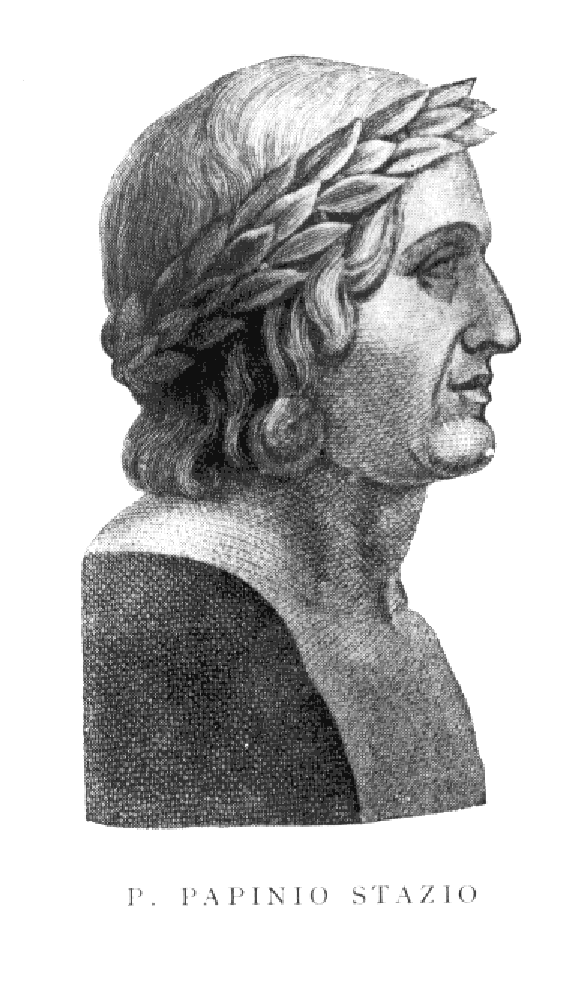
Statius (Publius Papinius Statius) — Roman poet of the Flavian period
Roman poet of the Flavian era, author of the epic Thebaid, the Silvae (occasional poems) and the unfinished Achilleid; noted for learned style and later influence, including in Dante's Divine Comedy.
Overview
Publius Papinius Statius (circa 45–96 CE) was a Latin poet active in the Flavian period of the Roman Empire. He is best known for a substantial epic and for a collection of occasional poems that illuminate literary tastes and social life at the imperial court. Statius occupies a distinctive place among Silver Age poets: admired in his lifetime and read by later generations, though his reputation has fluctuated with changing tastes.
Image gallery
4 Images


Major works
Statius produced three works that survive in substantial form and shaped his reputation.
- Thebaid — a lengthy epic, modeled on earlier Roman and Greek epics and composed in dactylic hexameter; it treats the cycle of Theban legend including the conflict of Oedipus's sons and the attack of the seven leaders on Thebes. The poem is conventionally dated and edited in antiquity; see notes on publication and reception in editions and commentaries.
- Silvae — a collection of occasional Latin poems (occasionalia) that celebrate patrons, commemorate events, and display rhetorical virtuosity. These pieces are valuable for their portraits of elite life and the mechanisms of poetic patronage at the court of Domitian.
- Achilleid — an incomplete epic on the youth of Achilles, left unfinished in the surviving manuscripts; its fragments show Statius's interest in mythic biography and in blending epic action with learned detail.
Life and historical context
Born in Naples and writing during the last decades of the first century CE, Statius worked in a literary environment shaped by Virgil and Ovid, and by the rhetorical schooling characteristic of the Silver Age. His connections to patrons and to the imperial household affected both subject matter and tone. The court of Domitian provided commissions and audiences; at the same time, poets managed praise and self-protection in a politically charged setting. Scholars often compare his narrative focus to Greek predecessors such as Aeschylus — for example, the Theban material bears a relationship to plays like Seven Against Thebes as well as to the broader Theban cycle in Greek tragedy (Aeschylus).
Style, themes, and poetic craft
Statius's verse combines dense allusion, vivid ekphrasis, and rhetorical flourish. His epic technique relies on extended similes, energetic battle scenes, and moral complexity among his characters. In his occasional poems he adapts hexameter and shorter meters to praise, condolence, and urban description; these pieces reveal everyday gestures of elite culture and the social uses of poetry. Readers note his erudition and his tendency toward polished, mannered expression typical of the Silver Age rather than the earlier Augustan simplicity.
Reception and legacy
During antiquity and the Middle Ages Statius was widely read and copied; his poems influenced later Latin poets and were transmitted in manuscript traditions. A particularly famous moment of reception occurs in medieval and Renaissance literature: Statius appears as a character in Dante Alighieri's Divine Comedy, where the Roman poet joins Virgil and Dante in part of the journey and is cast as an exemplar of poetry's moral possibilities. Modern scholarship examines his place between imitation and innovation, and continues to debate his political positioning and aesthetic aims. For further background and textual resources see library and reference entries (biographical surveys, literary studies, Theban myth studies).
Notable facts
- Statius is often read as a representative of Silver Age Latin, balancing classic models with rhetorical display.
- His Thebaid is one of the major Latin epics after Vergil, and the Achilleid remains a tantalizing incomplete project.
- References to his life and works survive in ancient commentaries and later medieval reception; modern editions and translations continue to make his poetry accessible (chronologies, critical studies).
Related articles
Author
AlegsaOnline.com Statius (Publius Papinius Statius) — Roman poet of the Flavian period Leandro Alegsa
URL: https://en.alegsaonline.com/art/79924
Sources
- crystalinks.com : "Statius"
- people.virginia.edu : "A Brief Life History of Each of the Epic Poets"
- theoi.com : "Statius, Achilleid 1"
- digitaldante.columbia.edu : "Purgatorio 21"