
Proximity fuze (VT fuze): sensor-triggered detonation device
A proximity fuze detonates a projectile when it nears a target, using radio, optical or other sensors. It improved anti-aircraft and artillery effectiveness and is used in many modern munitions.
Overview
A proximity fuze, often called a VT (variable time) fuze, is a device fitted to a projectile that causes it to detonate when the distance to a target falls below a preset threshold. Rather than relying on a direct contact hit or a fixed timeout, the fuze senses the presence or approach of a target and triggers the detonator at an optimal point to maximise damage. Proximity fuzes can use radio, optical, infrared, magnetic or acoustic sensing methods depending on the application. They transformed the effectiveness of many weapon systems by greatly increasing the probability of a damaging detonation near the target. See explosion for the result of fuze activation and anti-aircraft warfare for one principal field of use.
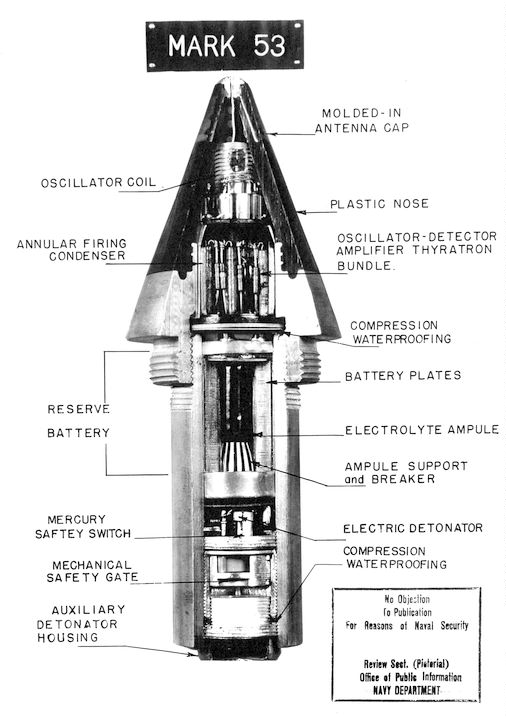
Image gallery
7 Images



How they work
Most common proximity fuzes contain a small transmitter and receiver tuned to detect reflections or changes caused by nearby targets. In radio-based designs a continuous or pulsed signal is emitted and the return or interference pattern is monitored; when a predefined change indicates a target within lethal range, the fuze fires. Optical or laser variants detect reflections of light, while influence types respond to magnetic or acoustic signatures. The core principle is sensing a target's presence and converting that event into an electrical firing pulse for the detonator; modern designs include safety and arming sequences to prevent premature activation.
Components and common types
- Sensor element: radar/radio, laser/optical, infrared, magnetic or acoustic detector.
- Signal processing: circuitry that discriminates target returns from background and decides when to fire.
- Power source: batteries or pyrotechnic/thermal generators that activate on firing or launch.
- Safe/arm and safety interlocks: mechanisms to prevent detonation before launch conditions are met.
- Detonator and firing train: the explosive components that initiate the main charge when triggered.
History and development
Proximity fuzes were developed and refined during the mid‑20th century and saw their first widespread operational use in wartime air-defence and naval artillery. Early systems used radio techniques similar to small radars to detect target echoes; later advances reduced size, improved reliability and expanded the range of sensing methods. The effectiveness of these fuzes in defending against fast, small or distant targets led to rapid adoption and ongoing evolution into modern guided weaponry.
Applications, advantages and limitations
Primary applications include anti-aircraft shells, air-to-air and surface-to-air munitions, naval shells and some types of mines and proximity warheads. Advantages include a higher probability of inflicting damage without a direct hit, reduced ammunition expenditure and greater lethality against maneuvering or small targets. Limitations and concerns include vulnerability to electronic countermeasures, increased complexity and cost compared with simple contact or time fuzes, and the need for robust safety mechanisms to avoid unintended detonations. Proximity systems are often integrated with guidance and fire-control systems to maximise effectiveness.
Notable distinctions
Proximity fuzes differ from contact fuzes (which require physical impact) and timed fuzes (which detonate after a preset delay). Related "influence" fuzes respond to environmental signatures such as magnetic or acoustic fields rather than direct line-of-sight reflections. Modern weapon design blends proximity sensing with other guidance features to adapt activation criteria to particular targets and operational environments; the basic aim remains the same: detonate at a moment that produces the greatest effect on the intended target using technologies related to radar.
Related articles
Author
AlegsaOnline.com Proximity fuze (VT fuze): sensor-triggered detonation device Leandro Alegsa
URL: https://en.alegsaonline.com/art/79773