
Province of Trieste
The Province of Trieste is an Italian coastal province in Friuli-Venezia Giulia, centered on the city of Trieste. It covers 212 km², includes six communes and a rich maritime and multicultural history.
The Province of Trieste occupies a compact, strategically placed area on the northeastern shore of the Adriatic Sea. Its administrative center and largest city is Trieste. The province is part of the autonomous region of Friuli-Venezia Giulia in Italy and is known for its port, historic cross‑cultural links and a coastline of roughly 48 km. In Italian the area is referred to as Provincia di Trieste and in Slovene as Tržaška pokrajina.
Image gallery
3 Images

Geography and municipalities
The territory of the province is relatively small, covering about 212 km². It includes a section of the Karst plateau, low coastal plains, and the Gulf of Trieste. Despite its limited size, the province contains varied landscapes: a maritime frontage with natural harbors, rocky karst hinterlands, and suburban and urban neighborhoods clustered around the city of Trieste.
- There are six communes in the province: Trieste, Muggia, Duino-Aurisina, Monrupino, Sgonico and San Dorligo della Valle.
- Many settlements show bilingual signage and a mixture of Italian and Slovene cultural elements.
History and cultural character
The area around Trieste has a long history as a coastal hub. It was an important port in Roman times and later developed under Habsburg rule into a major Adriatic entrepôt. Over centuries the city and its surroundings absorbed Italian, Slovene, Germanic and Central European influences. In the 20th century the province experienced changing borders and governance around the world wars; its population remains culturally diverse, and a Slovene minority is recognized in regional institutions.
Economy, transport and significance
Trieste's port is the province's economic focal point: it serves as a gateway for freight and shipping to Central Europe and the Balkans. Ship repair, logistics, customs and services related to maritime trade contribute significantly to the local economy. Tourism also plays an important role, with visitors attracted by historic architecture, seaside promenades and cultural festivals.
Notable features and distinctions
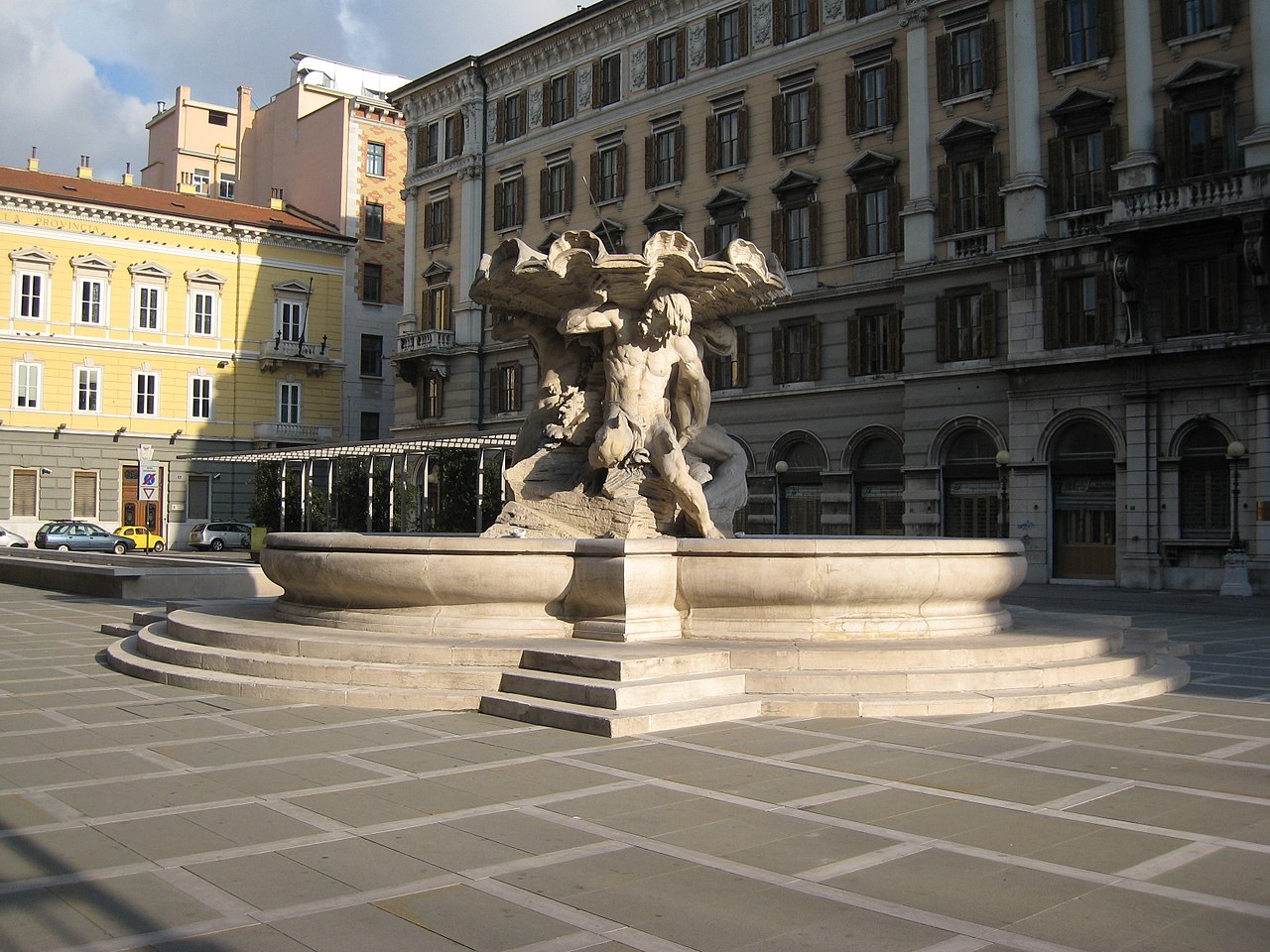
The province contains several notable landmarks and features often highlighted in guidebooks and regional descriptions. Trieste's central piazzas and waterfront promenades are frequently cited among the city's attractions, while nearby castles, caves and the karst landscape offer natural and historical points of interest. The compact size of the province, together with its long coastline and the presence of only six communes, gives it a distinctive administrative and geographic profile within Italy.
Demographically the province had a population recorded around the early 2000s of approximately 242,235 inhabitants; population and economic patterns have continued to evolve since then. Because of its location and history, the Province of Trieste remains an area where maritime commerce, multicultural heritage and regional autonomy intersect, giving it continuing importance in northeastern Italy.
Related articles
Author
AlegsaOnline.com Province of Trieste Leandro Alegsa
URL: https://en.alegsaonline.com/art/79714