
Psittacosaurus: small beaked ceratopsian of the Early Cretaceous
Psittacosaurus is a genus of small, parrot‑beaked ceratopsian dinosaurs from Early Cretaceous Asia, known for many species, preserved quill‑like structures, and fossils that illuminate early ceratopsian evolution.
Psittacosaurus is a genus of small ceratopsian dinosaurs that lived in what is now Asia during the Early Cretaceous period, roughly between 130 and 100 million years ago. The name means "parrot lizard" and refers to the powerful, curved beak that characterizes the group. Unlike later, larger ceratopsians, psittacosaurs were generally bipedal, lacked horns and a large frill, and combined several primitive and derived features that make them important for understanding ceratopsian origins.
Image gallery
10 Images

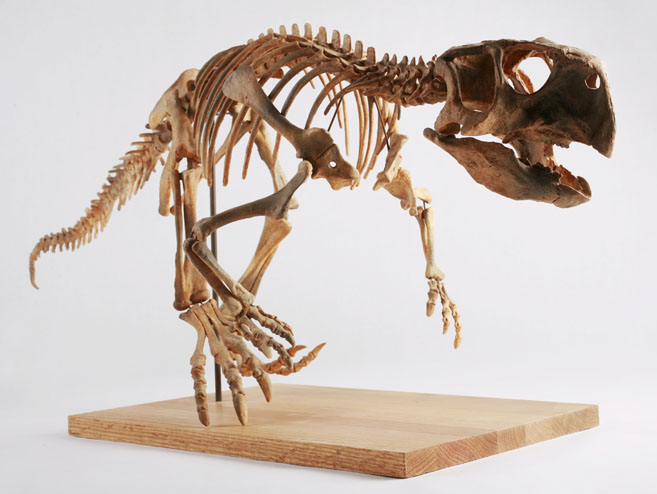


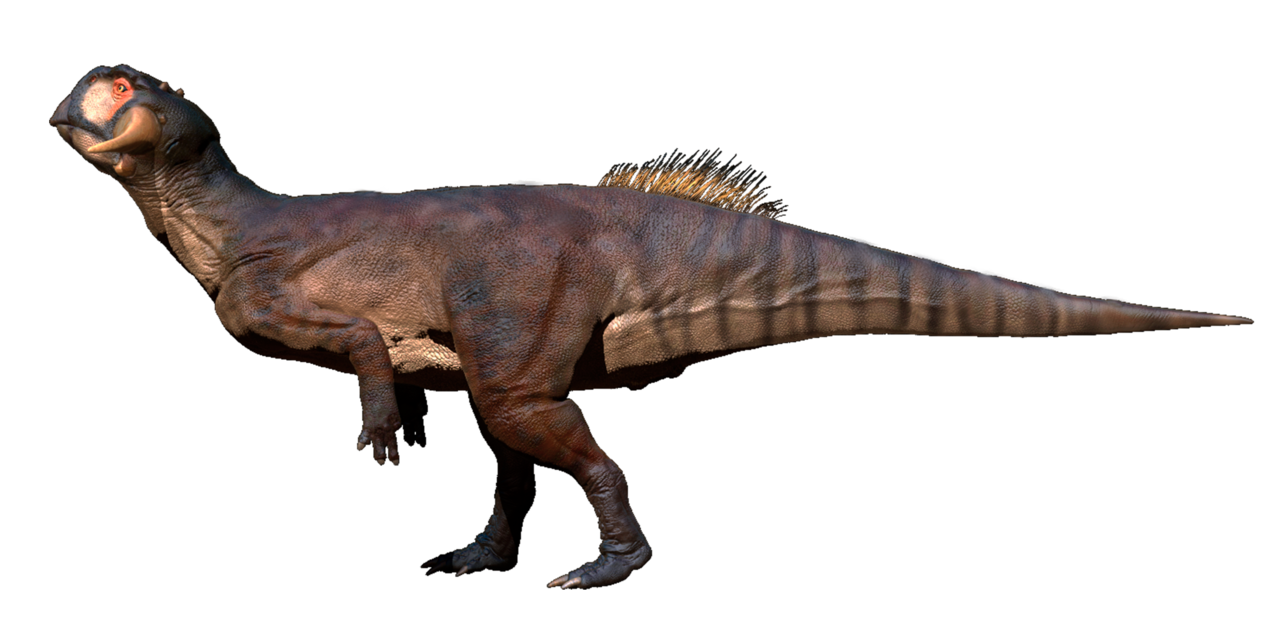

Description and anatomy
Adults of most species were roughly the size of a gazelle: small, lightly built and adapted for an herbivorous diet. The skull carried a strong rostral bone forming a parrot‑like beak on the upper jaw, and cheek teeth adapted for cropping and processing plant material. Limb proportions indicate habitual bipedal locomotion in many specimens, with long hind limbs and shorter forelimbs. The tail was typically long and stiffened by ossified tendons in some specimens, providing balance during running.
Integument and unusual features
Psittacosaurus is among the dinosaurs for which soft‑tissue preservation has revealed unexpected details. At least one species preserves long, bristle‑ or quill‑like structures on the tail and lower back. These filamentous structures appear to have been keratinous and are commonly interpreted as display features rather than insulation. Skin impressions from other specimens show scales and different patterns across the body, suggesting visual signaling and species‑specific ornamentation.
Species diversity and fossil record
Psittacosaurus is unusually species‑rich for a dinosaur genus; approximately nine to eleven species have been named from finds in China, Mongolia and Russia, with possible material reported from other parts of Southeast Asia. The fossils occur in many formations, often in large numbers, and include individuals of different ages. Well‑preserved specimens permit detailed studies of growth, variation and population structure, but paleontologists continue to debate which named forms represent distinct species versus regional or ontogenetic variants.
Growth, behavior and ecology
Evidence from bone histology, limb proportions and juvenile skeletons shows that psittacosaurs grew rapidly and that juveniles may have differed from adults in posture and behavior. Some studies suggest young individuals had a more quadrupedal stance or different feeding strategies before shifting to the adult bipedal form. Their robust beak and cheek teeth indicate a herbivorous diet of tough vegetation, and the combination of running adaptations and possible visual displays points to a life of active foraging and social interactions.
Evolutionary significance
As an early branch of Ceratopsia, Psittacosaurus provides crucial information about the early evolution of the group. It exhibits a mix of primitive traits retained from earlier ornithischians and features that foreshadow later ceratopsians such as Protoceratops and the large, horned forms. Comparative anatomy and phylogenetic analyses using well‑preserved psittacosaur specimens help researchers reconstruct the sequence of character changes that produced the diverse ceratopsian clade.
Research, notable specimens and resources
Many museum collections hold important Psittacosaurus fossils, including nearly complete skeletons and specimens with soft‑tissue preservation. These finds continue to be the subject of active research, from systematics and growth studies to functional anatomy and paleoecology. For further reading and specimen databases, consult curated resources and recent reviews.
- Japanese name and transliteration
- Hepburn romanization reference
- Etymology: "parrot" element
- Etymology: "lizard" element
- Ceratopsia overview
- Lower Cretaceous context
- Paleogeography of Asia in the Early Cretaceous
- Basal ceratopsian traits
- Absence of horns and frill
- Structure of the beak
- Species richness discussion
- Genus-level taxonomy
- Fossil provenance and specimens
- Chinese fossil sites
- Mongolian discoveries
- Russian records
- Possible Thai material
- Size comparisons (gazelle analogy)
- Dietary inferences
- Quill‑like integumentary structures
- Unique adaptations among early ceratopsians
- Comparison with Protoceratops
- Comparison with larger ceratopsians
- Triceratops and later ceratopsian relatives
Note: This article summarizes broadly supported findings about Psittacosaurus based on fossil evidence and peer‑reviewed research. Ongoing discoveries and analyses may refine the details of species limits, behavior and soft‑tissue interpretation.
Questions and answers
Q: What is Psittacosaurus?
A: Psittacosaurus is a small ceratopsian dinosaur from the Lower Cretaceous period in Asia, known for its powerful beak.
Q: Was it similar to other ceratopsians?
A: Psittacosaurus was more basal than other members of the Ceratopsia and had no horns or frill on its head, but it shared some features with later ceratopsians.
Q: How many Psittacosaurus species have been named?
A: Nine to eleven species of Psittacosaurus have been named for fossils found in China, Mongolia, Russia, and with a possible additional species from Thailand.
Q: Were all Psittacosaurus species the same size?
A: All species of Psittacosaurus were gazelle-sized bipedal herbivores, but they may have had different structures on their tails and backs.
Q: Did Psittacosaurus have any unique characteristics?
A: At least one species of Psittacosaurus had long, quill-like structures on its tail and lower back, possibly used for display.
Q: What era did Psittacosaurus live in?
A: Psittacosaurus lived during the Lower Cretaceous period, about 130 to 100 million years ago.
Q: What distinguished Psittacosaurus as a ceratopsian?
A: Although it lacked horns and a frill, Psittacosaurus had a powerful beak that is characteristic of ceratopsians, making it a member of this group.
Related articles
Author
AlegsaOnline.com Psittacosaurus: small beaked ceratopsian of the Early Cretaceous Leandro Alegsa
URL: https://en.alegsaonline.com/art/79830