
Prime Minister of Barbados
Head of government of Barbados, leading the Cabinet and public policy; appointed by the President and usually the leader of the majority in the House of Assembly.
The Prime Minister of Barbados is the head of government and the principal political leader responsible for directing national policy and administration. Operating within a parliamentary system derived from the Westminster model, the prime minister leads the executive branch and chairs the Cabinet. Since Barbados became a republic in 2021 the prime minister is formally appointed by the President of Barbados, though the office continues to function in the same parliamentary traditions that existed under the constitutional monarchy.
Image gallery
10 Images





Powers and responsibilities
The prime minister sets government priorities, selects and presides over Cabinet ministers, and coordinates the actions of government departments. Core responsibilities include national policy-making, proposing legislation to Parliament, representing Barbados in regional and international forums, and advising the head of state on constitutional matters such as the dissolution of Parliament and certain high-level appointments.
- Leads the Cabinet and government decision-making.
- Directs legislative agenda in the House of Assembly.
- Recommends appointments and advises the President on dissolving Parliament.
- Represents Barbados in diplomatic and regional organisations.
Appointment, term and parliamentary confidence
The president appoints as prime minister the member of Parliament who is most likely to command the confidence of the House of Assembly, typically the leader of the party with the majority of seats. There is no fixed term for the prime minister: general elections are held at least every five years unless Parliament is dissolved earlier. If no single party holds a majority, the head of state may appoint a prime minister who can secure support through coalitions or agreements.
The office is usually held by an elected member of the House of Assembly; ministers are collectively responsible to Parliament and must retain the confidence of the elected chamber to continue governing.
History and notable holders
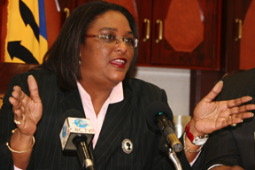
Barbados achieved independence in 1966, establishing the office of prime minister as the head of government of an independent state. The first post-independence prime minister was Errol Barrow, a central figure in the island's transition to self-government and founder of the Democratic Labour Party. Subsequent leaders have included figures such as Tom Adams, Owen Arthur and Freundel Stuart. In 2018 Mia Mottley became Barbados's first female prime minister; her administration later oversaw the formal transition from a constitutional monarchy to a parliamentary republic in 2021.
Official residence and distinctions
The official residence of the prime minister is Ilaro Court, a colonial-era house used for official functions and entertaining. The prime minister's role is distinct from that of the head of state: the president serves as ceremonial head of state while the prime minister exercises executive authority. The office remains central to Barbados's political life and to its engagement with regional bodies such as CARICOM.
For more on the political system and institutions of the country, see the Government of Barbados and the general context of Barbados.
Questions and answers
Q: Who is the head of government of Barbados?
A: The Prime Minister of Barbados is the head of government.
Q: How is the Prime Minister of Barbados selected?
A: The Prime Minister of Barbados is picked by the Queen of Barbados.
Q: Who is responsible for holding parliamentary elections in Barbados?
A: The Governor-General is responsible for holding the parliamentary elections.
Q: What is the role of the Governor-General in choosing the Prime Minister of Barbados?
A: The Governor-General decides which one of the electors is the Prime Minister of Barbados.
Q: Can you provide a list of the prime ministers of Barbados?
A: Yes, the text mentions that there is a list of prime ministers of Barbados, though it doesn't provide this list.
Q: Does the Prime Minister of Barbados represent the Queen of Barbados?
A: No, the Prime Minister of Barbados is the head of government and does not represent the Queen of Barbados.
Q: Are parliamentary elections held regularly in Barbados?
A: Yes, parliamentary elections are held regularly in Barbados, and it is the responsibility of the Governor-General to ensure they are held.
Related articles
Author
AlegsaOnline.com Prime Minister of Barbados Leandro Alegsa
URL: https://en.alegsaonline.com/art/79047