
President of Hungary
The President of the Republic of Hungary is the country's ceremonial head of state: a constitutional office with representative duties, limited checks on legislation, and formal powers in appointments and honours.
The President of the Republic of Hungary is the national head of state whose functions are defined by the country's constitution. The office combines ceremonial and reserve powers: most day-to-day executive authority is exercised by the government and the Prime Minister, while the president performs representative roles, signs and promulgates legislation, and can use specific constitutional tools to check parliamentary action. In Hungarian the title is often rendered as Magyarország köztársasági elnöke.
Image gallery
9 Images


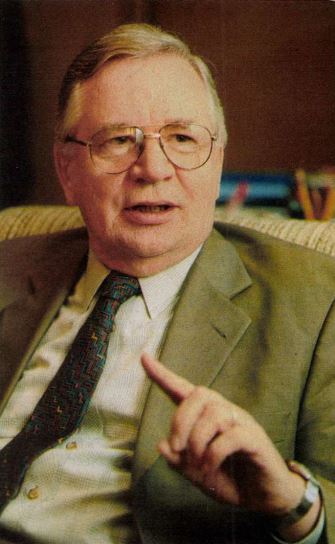
Constitutional role and powers
Under Hungary's constitutional framework, the president is primarily a unifying, non-partisan figure. The office holds a number of formal powers that are exercised either directly or through established procedures. These include the ability to:
- promulgate laws and, in certain cases, return legislation to the National Assembly for reconsideration;
- refer laws to the Constitutional Court to test their constitutionality before promulgation;
- formally nominate and appoint the prime minister and, on the prime minister's recommendation, other senior state officials and ambassadors;
- grant pardons and confer state honours and decorations;
- serve as the formal commander-in-chief of the armed forces, exercising symbolic and constitutional leadership in defence matters.
Election, term and accountability
The president is elected by the National Assembly rather than by direct popular vote. The selection process is designed to produce a candidate acceptable to the parliamentary majority; voting is secret and governed by rules intended to ensure legitimacy. The constitution also limits terms of service and provides mechanisms for removal: the National Assembly may impeach a president suspected of violating the constitution, and judicial procedures are available to resolve constitutional disputes. For most practical matters, however, executive initiative and political leadership rest with the government led by the Prime Minister.
Public duties and examples
As head of state, the president represents Hungary in international relations, receives foreign envoys, and undertakes state visits. Domestically, the president hosts official ceremonies, opens sessions of the National Assembly on special occasions, and can use public addresses to influence debate or call for consensus on major issues. The capacity to refer legislation to the Constitutional Court gives the president a significant, if limited, safeguard role in protecting constitutional order.
History and notable features
The modern office dates from the transition to a democratic republic in the early 1990s; since then it has evolved into a constitutional balance between symbolic leadership and targeted constitutional responsibilities. The president's influence depends largely on personal authority, political background, and relationships with parliament and the government. The incumbent as of 2022 is Katalin Novák, the first woman to hold the presidency and a notable example of the office's contemporary public profile.
Distinctions and comparative notes
The President of Hungary differs from executive presidents in systems where the head of state also directs government policy. In Hungary, the separation concentrates political leadership in the parliamentary majority and the prime minister, while the president performs reserve powers intended to ensure continuity, legality and international representation. For further basic terminology and the Hungarian-language form of the office see the Hungarian title and references to the head of state role at head of state and national context at Hungary.
Related articles
Author
AlegsaOnline.com President of Hungary Leandro Alegsa
URL: https://en.alegsaonline.com/art/78832