
President of Georgia (country)
The President of Georgia is the republic's head of state. The post is largely ceremonial under a parliamentary system; this article explains its constitutional role, history, selection, and notable holders.
Overview
The President of Georgia (Georgian: საქართველოს პრეზიდენტი) is formally the head of state and the supreme commander-in-chief of the armed forces. In practice the office has been shaped by constitutional reforms and political developments that have made Georgia a parliamentary republic in which the president performs mainly representative and guarantor functions rather than day-to-day governance. The president represents the unity of the state and performs ceremonial duties while the executive power is exercised primarily by the government.
Image gallery
10 Images
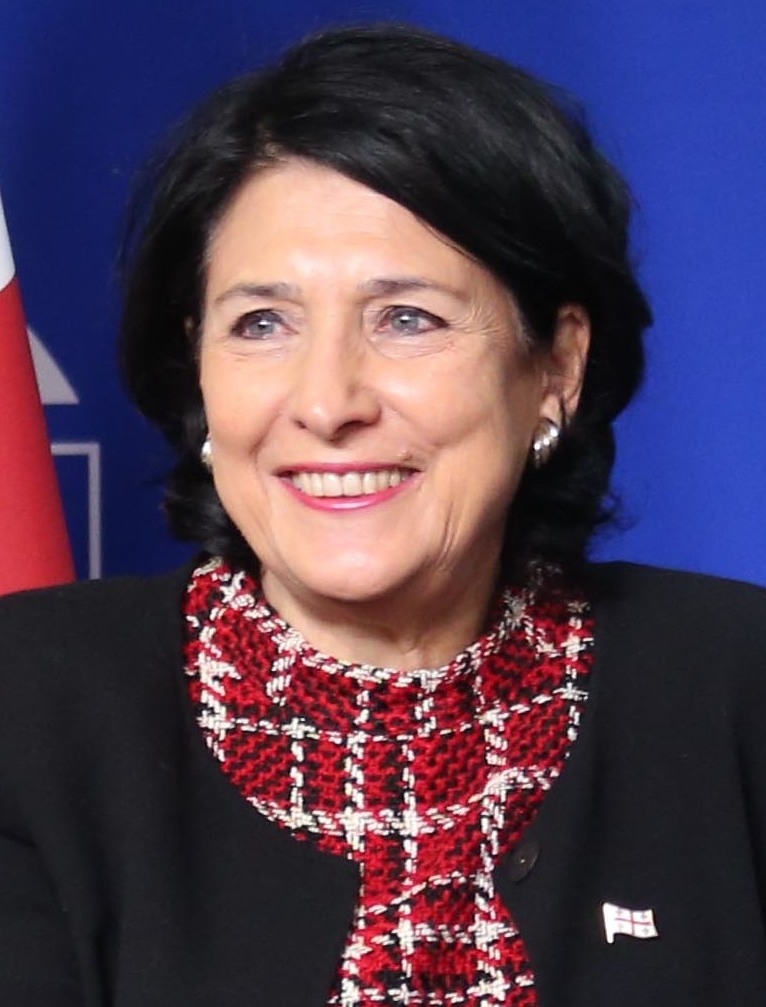


Constitutional role and powers
Under the current constitutional framework the president's responsibilities include: representing Georgia internationally, accrediting and receiving diplomatic envoys, signing and promulgating laws, granting pardons, and conferring state awards. The president is named commander-in-chief in title, but direct operational control of the armed forces rests with government institutions. The office also has limited legislative interaction, for example the ability to return bills to parliament for reconsideration; such measures are generally suspensive rather than absolute.
These powers contrast with the authority of the Prime Minister, who is the head of government and leads the executive branch. The president must work with parliament and the government, and many presidential acts require countersignature or are subject to parliamentary oversight. This balance emphasizes a parliamentary system in which the president acts as a constitutional moderator more than a policy maker.
Selection, term and reforms
The presidency was established in the modern independent Georgian state shortly after the declaration of independence from the Soviet Union on 9 April 1991; the office was formally created in April 1991 by the Supreme Council. Traditionally the president has been chosen by popular vote for a multi‑year term, and terms have commonly lasted five years. Constitutional changes during the 2010s progressively reduced presidential authority, transferring many powers to the government and parliament and reshaping the political balance of the state.
Historical development and notable holders
From the early 1990s the presidency went through turbulent periods reflecting Georgia's post‑Soviet transition. Key figures who held the office include Zviad Gamsakhurdia in the first post‑Soviet years, Eduard Shevardnadze in the 1990s and early 2000s, and Mikheil Saakashvili after the 2003 political changes. More recent presidents have served under the reformed constitutional arrangements that limit the office's autonomous powers. For background on the country's independence and early presidency see historical summaries linked below.
Functions in practice and public importance
Although largely ceremonial, the presidency retains important symbolic and moderating roles: safeguarding the constitution, representing Georgia abroad, and serving as a focal point in times of crisis. The office can influence public debate, appoint some high officials, and act as a moral authority. The relationship between the president and the government often reflects the broader political landscape—cooperation or rivalry can affect the effectiveness of governance.
Further reading and references
- For the Georgian-language title and formal style see Georgian-language sources.
- For constitutional descriptions and the president's legal status consult official documents summarized at constitutional resources.
- On the role of the Prime Minister and the shift to a parliamentary system see analyses at executive branch profiles and governmental studies.
- Background on Georgia's 1991 independence and the origins of its presidency can be found in historical overviews: independence timeline.
- Biographical information about recent occupants of the presidency is available from electoral and biographical summaries: presidential biographies.
Related articles
Author
AlegsaOnline.com President of Georgia (country) Leandro Alegsa
URL: https://en.alegsaonline.com/art/78825