
President of Bangladesh
The President of Bangladesh is the country's head of state. Since 1991 the office has been largely ceremonial within a parliamentary system, but it retains constitutional duties, symbols and occasional reserve powers.
The President of Bangladesh is the nation's formal head of state and a constitutional office established after independence. The role is distinct from the head of government: Bangladesh has been a parliamentary democracy since 1991, and the presidency functions primarily as a ceremonial and unifying institution.
Image gallery
10 Images
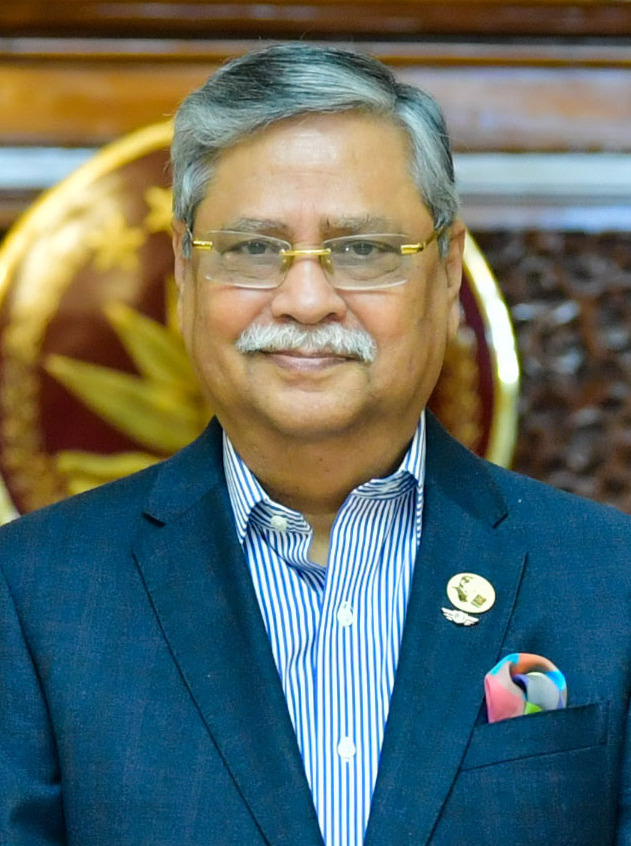


Constitutional role and functions
The constitution defines the president's position and responsibilities. In everyday practice the office carries out ceremonial tasks: receiving foreign dignitaries, representing the state at official functions, and performing formal acts such as assenting to bills and administering oaths. The president is expected to act on the advice of the prime minister and the Council of Ministers in most matters.
Election, term and eligibility
The president is chosen by the national parliament rather than by direct popular vote. Under the constitutional framework the office is held for a specified term and is subject to conditions of eligibility set out by law. The holder of the office takes an oath to preserve the constitution and discharge duties impartially.
Powers and exceptional responsibilities
Although largely ceremonial today, the president retains certain constitutional powers that can be important in exceptional circumstances. These include the formal appointment of a prime minister (typically the leader of the majority in parliament), assent to legislation, and roles connected with declarations of emergency or other contingency measures where the constitution provides. Historically, the scope of presidential authority has varied according to changes in the political system.
Residence, symbols and protocol
The presidential residence and office is the Bangabhaban Palace, which serves as the formal seat where state ceremonies and official receptions are held. The president is also associated with state symbols and a presidential standard used on official occasions, and holds precedence in state protocol as the ceremonial head of state.
Historical development
The office was created in the aftermath of Bangladesh's independence and the adoption of its early constitutions. Over time the balance of power between president and prime minister has shifted: the country experienced periods of strong presidential authority and military rule in earlier decades, and a return to parliamentary arrangements in 1991 reduced the president's day-to-day political role, leaving the office principally as a constitutional guardian and symbol of national unity.
Importance and public role
Beyond formal duties, the presidency serves as a unifying figure above party politics, providing continuity and representing the state domestically and abroad. While most policy and governance are handled by the elected government, the president's actions in times of crisis, constitutional questions or ceremonial occasions retain public and institutional significance.
Related articles
Author
AlegsaOnline.com President of Bangladesh Leandro Alegsa
URL: https://en.alegsaonline.com/art/78804
Sources
- state.gov : Background Note: Bangladesh