
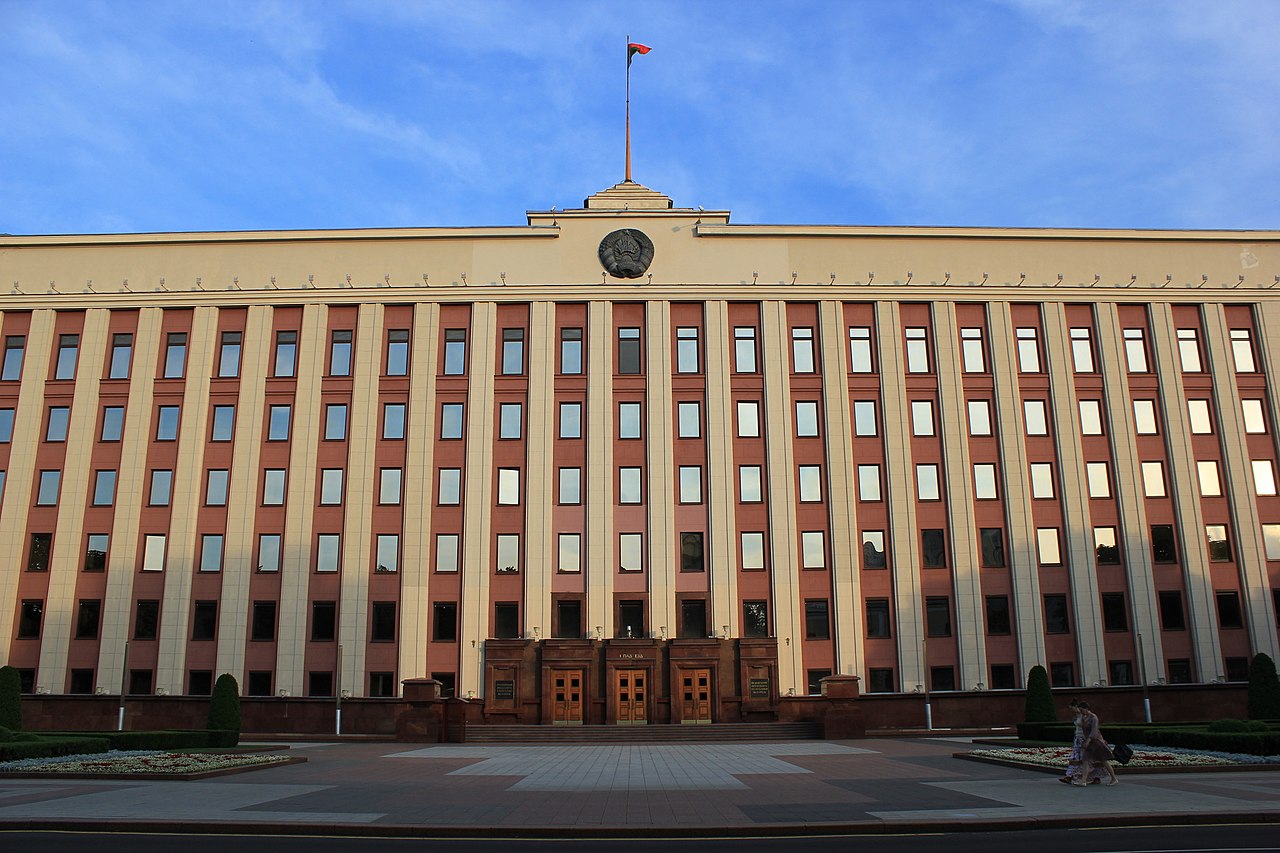
President of the Republic of Belarus
The president of Belarus is the country's head of state, elected by popular vote. The office, created in 1994, holds broad executive responsibilities and has been held continuously by one individual since its founding.
Overview
The president of the Republic of Belarus is the country's head of state. The office title appears in both Belarusian and Russian forms. As head of state the president represents Belarus at home and abroad and is the highest official in the national political system. The position was established after the Soviet period and first filled following elections in the mid-1990s.
Image gallery
6 Images



Roles and responsibilities
Constitutional provisions assign the president several core functions. Typical duties include:
- Setting broad directions for domestic and foreign policy and representing the state internationally.
- Appointing or proposing senior officials such as the prime minister, cabinet members and key judicial or administrative figures, subject to constitutional procedures.
- Acting as commander-in-chief of the armed forces and overseeing national security matters.
- Signing or vetoing legislation and issuing decrees within the framework of the constitution and laws.
Election, term and legal development
The presidency is filled by national popular vote for a term that has been set at five years in current law. Since the office was created in 1994, legal amendments and political developments have affected how authority is exercised and how terms are counted. These changes altered the balance of powers between state institutions and the presidency.
History and notable incumbency
After independence from the Soviet Union, Belarus established the presidential institution to provide a single head of state. The first person elected to the office has remained in office since those first elections; international attention to Belarusian politics has often focused on the continuity of that incumbency and its implications for governance and political life in the country. See further coverage on specific officeholders and events for more detail.
Political context and international views
The conduct of presidential elections and the wider political environment in Belarus have been subjects of commentary and criticism from foreign governments, international organizations and domestic actors. Observers often discuss topics such as electoral procedures, civil liberties and the interaction between the executive and other branches of government. These debates shape how the presidency is perceived both inside Belarus and abroad.
Significance and distinctions
The Belarusian presidency is a central institution in the country's political system, combining representational, executive and security responsibilities. Compared with some parliamentary systems where the head of state is largely ceremonial, the Belarusian president holds substantive decision-making authority. For further reading on language, institutions and the current officeholder, consult resources linked to the terms above and specialized analyses of Belarusian governance and law.
Related articles
Author
AlegsaOnline.com President of the Republic of Belarus Leandro Alegsa
URL: https://en.alegsaonline.com/art/78805