
Prédefin — commune in Pas-de-Calais, northern France
Prédefin is a small commune in the Pas-de-Calais department of northern France, historically part of Nord-Pas-de-Calais. This article summarizes its setting, administration, name and local character.
Overview
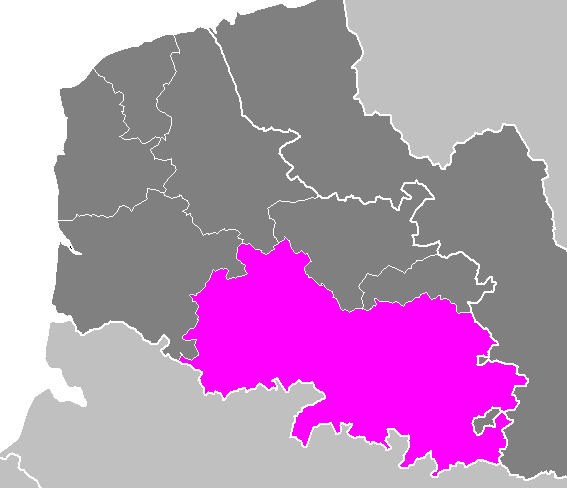
Prédefin is a small French commune located in the historic region of Nord-Pas-de-Calais. It lies within the administrative boundaries of the Pas-de-Calais department in the north of France. Like many communes in this area, Prédefin forms the lowest tier of local government and provides a focus for rural community life.
Image gallery
2 Images
Geography and government
The landscape around Prédefin is characteristic of Pas-de-Calais: open fields, small woodlands and villages linked by local roads. As with other French communes, local affairs are managed by a mayor and a municipal council elected by residents. Services typically include local schooling arrangements, civil registration and maintenance of communal infrastructure.
History and name
Specific historical records for Prédefin are limited in general summaries, but its development follows patterns common in northern France: medieval settlement, agricultural consolidation and later 19th–20th century rural change. The place-name likely contains the French element pré (meadow), suggesting an origin tied to farmland; such etymologies are common but should be treated cautiously without archival confirmation.
Economy and local life
Economically, communes of this scale normally rely on agriculture, small businesses and commuting to nearby towns. Community life often centers on a village church, a town hall (mairie), a war memorial and occasional local fêtes. Preservation of rural heritage and adaptation to modern services are recurring themes for these communities.
Features and distinctions
- Administrative status: a French commune with municipal governance.
- Region: historically in Nord-Pas-de-Calais, now part of the wider Hauts-de-France administrative region.
- Departmental affiliation: Pas-de-Calais, one of France's northern departments.
For more detailed information about local demographics, heritage sites or municipal services consult departmental records or regional guides maintained by Pas-de-Calais authorities and local archives. General resources on French communes and regional history can also provide broader context.
Related articles
Author
AlegsaOnline.com Prédefin — commune in Pas-de-Calais, northern France Leandro Alegsa
URL: https://en.alegsaonline.com/art/78689