
Precancerous condition (premalignant): overview, examples, diagnosis and management
A precancerous (premalignant) condition is tissue change that is not yet cancerous but has increased risk of progressing to malignancy. Overview, characteristics, common examples, diagnosis and treatment.
A precancerous condition, also called a premalignant condition, describes tissue changes that are not themselves malignant but carry an increased risk of developing into invasive cancer over time. These changes can affect skin, mucous membranes, glands and internal organs. The term encompasses both clinical syndromes and localized premalignant lesions that are visible or detectable by medical examination.
Image gallery
2 Images
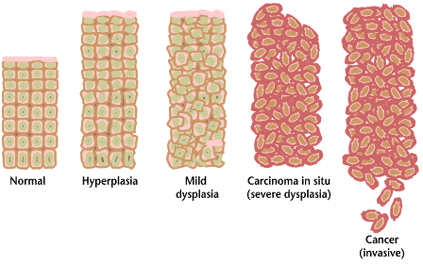
Key characteristics
Precancerous states are usually identified by alterations in cellular structure and organization (for example, dysplasia), changes in cell number (hyperplasia), or replacement of one mature cell type by another (metaplasia). Such morphological alterations are detected by visual inspection, cytology or histopathology. Not every dysplastic change will progress to cancer; many lesions remain stable or regress, particularly if causal factors are removed.
Common examples
- Actinic keratosis of the skin (sun-related precancerous lesion)
- Cervical intraepithelial neoplasia identified by Pap smear and colposcopy (HPV-related)
- Adenomatous polyps of the colon (can precede colorectal cancer)
- Oral leukoplakia and erythroplakia (smoking and alcohol associated)
- Barrett's esophagus (acid reflux–associated glandular change)
Diagnosis and management
Evaluation typically involves targeted examination and tissue sampling. Biopsy with histologic assessment establishes the degree of dysplasia and guides management. Surveillance, removal of the lesion (excision, ablation), and treatment of underlying causes are common strategies. Preventive measures — for example, smoking cessation, sun protection, vaccination against oncogenic viruses, and regular screening — reduce progression risk.
The clinical approach balances the risk of progression against the risks of intervention. Some precancerous conditions require long-term monitoring, while others are removed promptly to prevent invasive disease.
Historically, the concept of premalignancy emerged in 19th-century pathology; Romanian Victor Babeş, a notable physician, is credited with early descriptions of such tissue changes in 1875. Understanding and managing precancerous states remain central to cancer prevention and early-detection strategies in modern medicine. For further reading see clinical guidelines and specialist resources: malignancy overview, cancer prevention, lesion classification, pathology terms, historical notes, biographical context.
Related articles
Author
AlegsaOnline.com Precancerous condition (premalignant): overview, examples, diagnosis and management Leandro Alegsa
URL: https://en.alegsaonline.com/art/78672