
Praseodymium
Praseodymium is a soft, silvery lanthanide metal (atomic number 59) used in alloys, glass coloration, lighting electrodes and specialized optical materials.
Overview
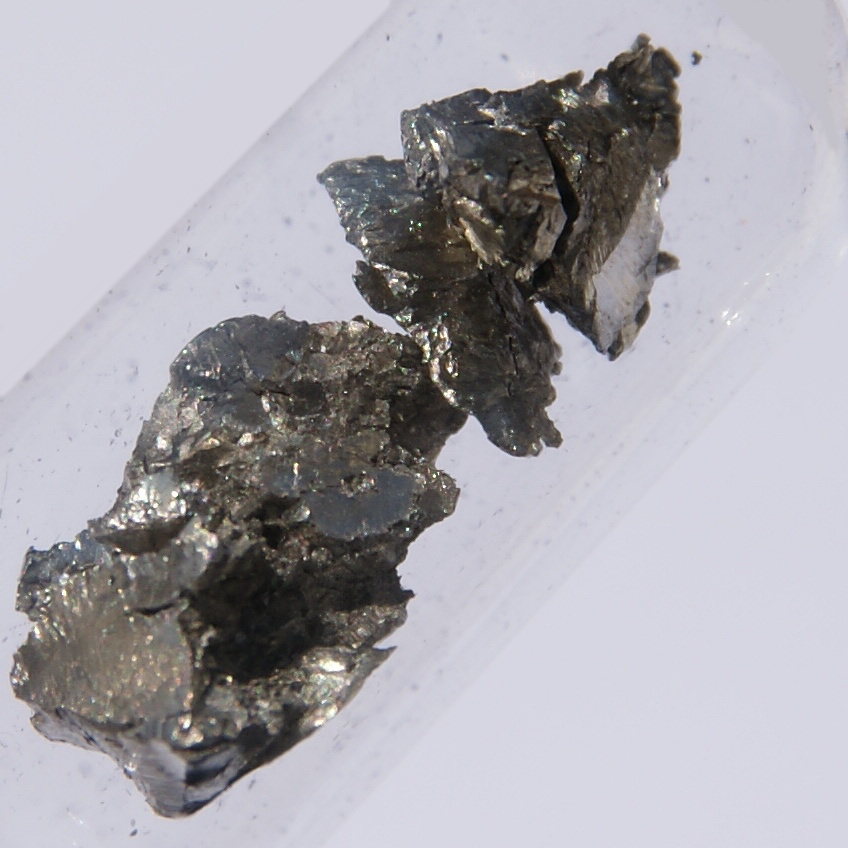
Praseodymium is a chemical element with the symbol Pr and atomic number 59. It belongs to the lanthanide series of the periodic table and is classified as a rare‑earth metal. In bulk it is a soft, silvery metal that oxidizes slowly in air and produces colored compounds, often yellowish or green.
Image gallery
4 Images


Key characteristics
Chemically, praseodymium most commonly shows a +3 oxidation state and is considered an f‑block element because its chemistry is governed by partially filled 4f orbitals. Its compounds include oxides and salts that can impart green or yellow hues to glass and ceramics. The metal is malleable and can be worked into alloys; it forms a protective oxide layer when exposed to air.
History and discovery
Praseodymium was separated in the 19th century from a mixture then called didymium. The element was isolated and named for its characteristic green salts — from Greek roots meaning "green twin." For historical context, see general element summaries on the periodic table and references to its atomic placement at lanthanide entries.
Occurrence and production
Praseodymium is not found free in nature but occurs in several rare‑earth minerals such as monazite and bastnäsite. Commercial extraction uses mineral processing followed by solvent extraction or ion‑exchange to separate it from other lanthanides. Known deposits of praseodymium‑bearing sands occur in places like Florida, parts of India and Brazil; further reading on natural occurrence is available via mineral sources and extraction summaries at industrial references.
Uses and applications
- Glass and ceramics: small amounts of praseodymium give glass a yellow‑green tint and are used in specialty filters and art glass.
- Alloys: when combined with magnesium and other metals it helps form high‑strength alloys used in aerospace and other engineering applications.
- Lighting and electrodes: praseodymium compounds are used in carbon‑arc lighting and in electrodes for certain lamps.
- Optics and magnets: praseodymium is used in some laser materials and in alloyed form with neodymium for permanent magnets and other magnetic materials.
Manufacturers and researchers can consult technical datasheets and material guides at product literature and scholarly overviews at academic sources.
Notable distinctions
Praseodymium is often discussed alongside neodymium because both were once lumped together as didymium; they are now recognized as distinct elements with different optical and magnetic behaviors. While many of its applications overlap with other rare earths, praseodymium's particular ability to color glass and to enhance certain alloy properties makes it commercially valuable despite being relatively scarce.
Related articles
Author
AlegsaOnline.com Praseodymium Leandro Alegsa
URL: https://en.alegsaonline.com/art/78627