
Port of Manchester
Historic customs port formed with the Manchester Ship Canal that turned Manchester into a seaport; its geography, development, trade role and later legacy in north-west England.
Overview
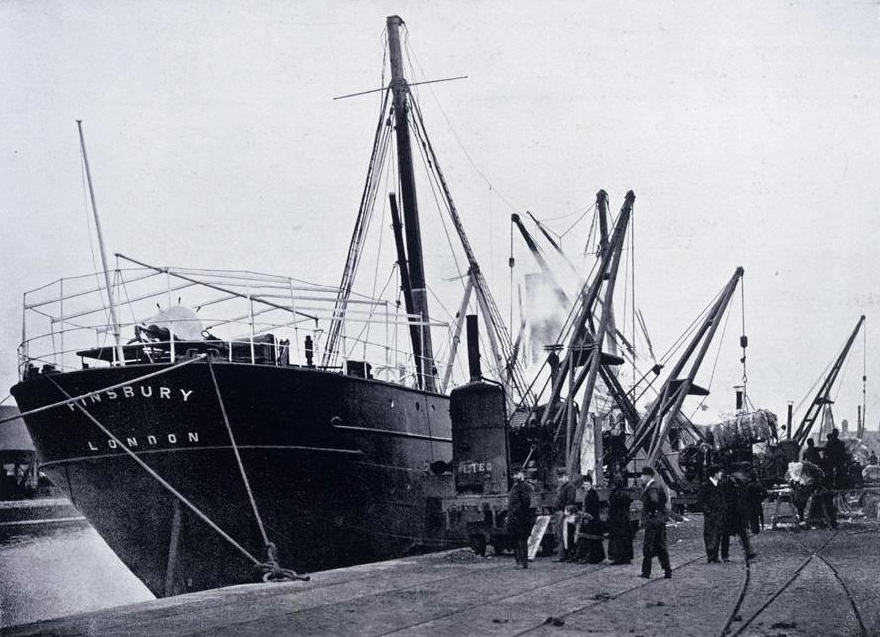
The Port of Manchester is the formal maritime customs port created to administer shipping along the Manchester Ship Canal in the north-west of England. The port was established on 1 January 1894 to coincide with preparations for the new canal and the redefinition of local port boundaries. Its creation converted Manchester from a landlocked industrial city into an inland seaport, allowing ocean-going and coastal vessels to reach the city and nearby inland towns.
Image gallery
2 Images
Geography and extent
The port extended for the full length of the Manchester Ship Canal, a waterway that links the Mersey estuary at Eastham with inland Manchester. The canal runs roughly 36 miles from west to east, and the port authority's jurisdiction covered that entire corridor from Eastham to Manchester. In practical terms the port serviced not only the city itself but also a corridor of towns and industrial districts along the canal.
History and development
The port was constituted shortly before the ship canal opened to traffic in 1894. The new waterway and port absorbed earlier local facilities, including the Port of Runcorn which had been recognised from 1862, and it required neighbouring authorities to redefine their limits; the creation of the Port of Manchester moved the Port of Liverpool's administrative boundary further to the west. The availability of direct water access to Manchester transformed the city’s links with international shipping and reduced dependence on neighbouring coastal ports.
Trade, cargo and transport links
The canal and port enabled a wide range of goods to move between seagoing ships and inland factories and warehouses. Typical traffic included raw materials arriving for Manchester's textile and engineering industries and manufactured goods sent outward. Once offloaded into the port and onto canal or rail connections, cargoes could be distributed inland to towns such as Warrington, to northern centres such as Leeds, and further afield to industrial cities like Birmingham. The canal also linked directly with the Mersey at Eastham, where maritime transfer and coastal transshipment occurred near the north-west of England seaward approaches.
Significance and later changes
The establishment of the Port of Manchester is an important chapter in late Victorian industrial infrastructure: it is closely tied to the opening of the Manchester Ship Canal, which effectively transformed Manchester by providing deep-water access for longer voyages. Over the twentieth century the scale and pattern of maritime trade changed with containerisation and improvements in road and rail freight; some traditional canal-side handling and manufacturing declined, while other river and dock areas were redeveloped for industry, warehousing and later regeneration projects.
Notable facts and legacy
- The port's jurisdiction ran the full recorded length of the canal, a stretch often cited as about 36 miles in documents describing the waterway.
- It incorporated pre-existing ports, including Runcorn (from 1862), and affected neighbouring port boundaries.
- Although the peak era of dockside industry has passed, the canal and port infrastructure played a decisive role in the economic geography of the region and remain a focus for conservation, industrial archaeology and riverside redevelopment.
Today the story of the Port of Manchester is referenced in discussions of Victorian engineering, regional trade history and the adaptive reuse of former industrial waterfronts. For further reading, consult local archives and specialist histories of the Manchester Ship Canal and north-west England maritime infrastructure.
Related articles
Author
AlegsaOnline.com Port of Manchester Leandro Alegsa
URL: https://en.alegsaonline.com/art/78218