
Awal — the pre-Islamic name and deity associated with Bahrain
Awal was an ancient name and deity linked to the islands now known as Bahrain. It refers to a pre-Islamic ox-headed god and persisted as a place-name for many centuries in the Persian Gulf region.
Overview
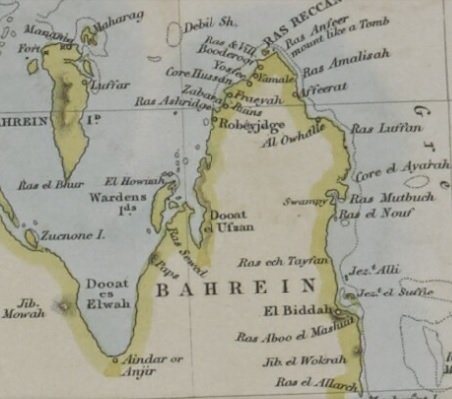
Awal is an archaic name formerly applied to the island territory now called Bahrain. The term appears in accounts of the islands' pre-Islamic past and persisted in local memory and external reports for many centuries. As a cultural label it combined geographic, religious and symbolic meanings before being largely replaced by later Arabic and Islamic names.
Image gallery
2 Images
Name and depiction
The word "Awal" is also associated with a cult figure or protective deity once venerated on the islands. Traditional descriptions portray this figure with bovine characteristics—often summarized as an ox-like or bull-headed image. Such an animal form linked the deity to common ancient themes of fertility, strength and guardianship, though precise rituals and beliefs are not fully documented.
Historical context
Awal was prominent in the islands' collective identity during the pre-Islamic era in the Persian Gulf. After the spread of Islam in the region, the religious significance of local pagan gods diminished. Nevertheless, the name continued to be used in external descriptions and maps for several centuries, and some older local traditions and place-names retained echoes of the older designation.
Cultural significance and comparisons
Scholars and travelers have long noted similarities between the Awal figure and other bovine cult images known from neighboring cultures. Comparisons are often made to the Hindu bull figure Nandi, which serves as a companion and mount of the god Shiva; while not implying direct connection, the resemblance highlights a widespread motif of bovine symbolism across ancient societies.
Characteristics and legacy
- Associated with a bull or ox-like head in visual descriptions.
- Functioned as a regional tutelary or fertility symbol in pre-Islamic times.
- Persisted as a place-name and element of local lore even after religious change.
Notable facts
Although Awal no longer serves as an official name, its memory is part of the islands' layered history: it illustrates how religious imagery, place-names and identity can survive cultural transformations. Modern archaeological and textual research continues to refine understanding of how such pre-Islamic beliefs fit into the wider history of the Persian Gulf and the communities that lived there.
Tags
Related articles
Author
AlegsaOnline.com Awal — the pre-Islamic name and deity associated with Bahrain Leandro Alegsa
URL: https://en.alegsaonline.com/art/7809