
Pomelo (Citrus maxima): description, origin, uses and varieties
Pomelo (Citrus maxima) is the largest citrus fruit, native to Southeast Asia. This article covers its appearance, history, cultivation, culinary uses and important distinctions from related citrus.
The pomelo (Citrus maxima or Citrus grandis), also called pummelo, pommelo or shaddock, is a large citrus fruit noted for its thick spongy rind and sweet, pale flesh. Native to Southeast Asia, pomelos are the largest members of the citrus family and can reach diameters far greater than most other citrus. Their skin ranges from pale green to yellow when ripe, and the flesh varies from white to pink depending on the variety.
Image gallery
10 Images

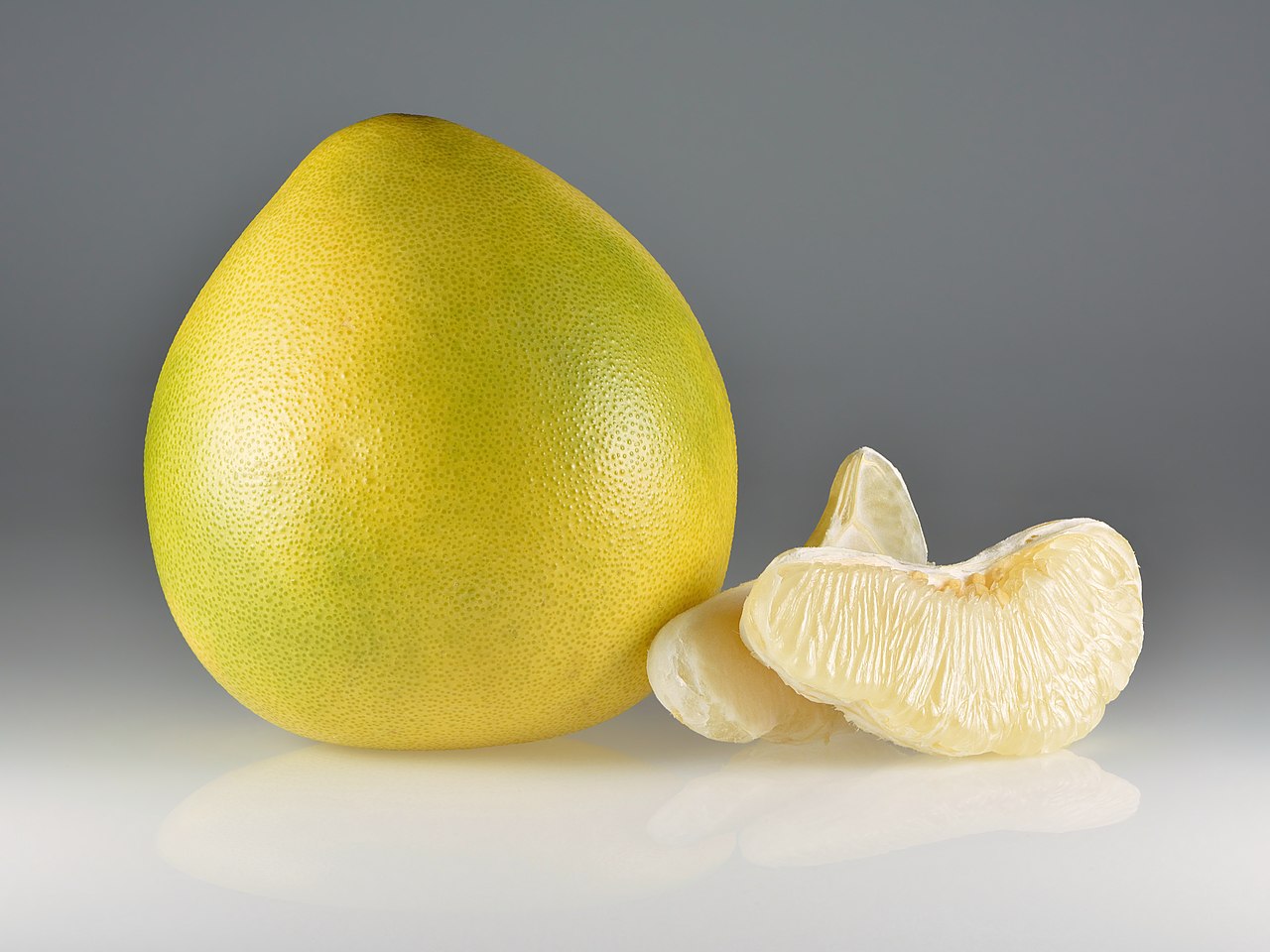


Characteristics
Pomelos have a distinct anatomy compared with oranges or lemons: a thick albedo (white pith) surrounds relatively large, firm segments. The flavor is mildly sweet with subtle floral notes and less acidity than grapefruit. The fruit's size and weight, combined with its firm rind and large segments, make it easy to peel and segment by hand, though the pith is often removed for eating. Many people choose pomelos for their volume of flesh and fragrant zest.
Origins, naming and botanical notes
Botanically categorized as Citrus maxima (or sometimes Citrus grandis), the pomelo originates from mainland and island Southeast Asia. The English name "shaddock" comes from historical trade routes, while "pomelo" and its variants are used worldwide. Pomelo is also important botanically because it contributes to several hybrid citrus fruits: grapefruit, for example, is believed to be a natural hybrid between pomelo and sweet orange.
Cultivation favors tropical and subtropical climates with warm growing seasons and well-drained soils. Fruit matures at different times depending on climate and local varieties. For practical cultivation and classification details see botanical resources and regional growing guides at cultivation pages.
Uses and importance
- Food: Eaten fresh, tossed into salads (notably in Southeast Asian cuisines), or used in desserts and preserves.
- Processing: Peel can be candied, rind used for marmalades, and zest provides aromatic oils for flavoring.
- Cultural: Pomelos are featured in certain festivals and offerings in parts of Asia, symbolizing prosperity and good fortune.
Nutritionally, pomelos are valued for vitamin C, dietary fiber and a high water content while being relatively low in calories. A cautionary note: like grapefruit, pomelo contains compounds that can affect the metabolism of some medications. People taking prescription drugs that advise avoiding grapefruit should consult a healthcare professional before consuming pomelo.
Selection and storage: Choose fruits that feel heavy for their size and have a fragrant skin. Store at room temperature for short periods or refrigerate to extend freshness. Simple preparation involves cutting away the thick rind and pith, then separating and trimming the segments for salads or eating fresh.
Distinctive for its size, mild sweetness and versatile rind, the pomelo remains an important fruit in regional cuisines and in the broader study of citrus genetics.
Related articles
Author
AlegsaOnline.com Pomelo (Citrus maxima): description, origin, uses and varieties Leandro Alegsa
URL: https://en.alegsaonline.com/art/77898
Sources
- jw.org : "The Shock-Absorbent Skin of the Pomelo"
- sfgate.com : Growing the granddaddy of grapefruit
- wikidata.org : Q80024
- species.wikimedia.org : Citrus maxima
- ville-ge.ch : 90373
- id.biodiversity.org.au : 203535
- eol.org : 488254
- gd.eppo.int : CIDGR
- eunis.eea.europa.eu : 181680
- efloras.org : 242412666
- gbif.org : 3190160
- npgsweb.ars-grin.gov : 10744
- inaturalist.org : 54299
- ipni.org : 30075266-2
- irmng.org : 11011636