
Pokémon Pinball (Game Boy Color pinball video game)
Pokémon Pinball is a pinball-style video game for the Game Boy Color that blends classic pinball mechanics with Pokémon capture and a built-in rumble feature; it inspired a later GBA sequel.
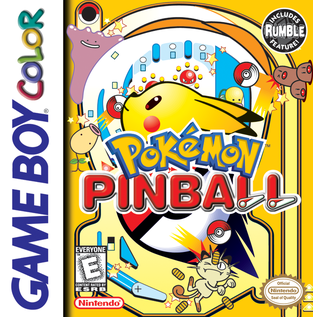
Pokémon Pinball is a pinball-themed video game developed by Jupiter and published by Nintendo for the Game Boy Color. Released in 1999, the title adapts the core collecting goal of early Pokémon games so that players use a pinball table to encounter, catch and evolve Pokémon. The cartridge is notable for including a rumble motor — one of the few cartridges for the platform to provide vibration feedback.
Image gallery
3 Images
Overview and objective
The game places familiar franchise elements into a pinball framework. Players control flippers, hit bumpers and trigger targets to light up capture opportunities. Encounters with wild Pokémon are handled through table-specific mechanisms; once a capture sequence begins the player must score the right shots to complete the catch. The long-term aim mirrors the original pocket monsters titles: discover and record all 150 Generation I creatures in the in-game Pokédex.
Gameplay and mechanics
Pokémon Pinball uses two themed playfields that affect which Pokémon appear and how certain features behave. Standard pinball elements — lanes, bumpers, ramps and spinners — combine with special modes that reward accuracy and timing. Hitting particular switches can start mini-modes such as "Catch" and "Evolution" challenges that temporarily alter the table and offer opportunities to add a new Pokémon to your collection.
- Tables: Two distinct tables with different layouts and Pokémon sets.
- Capture system: Sequence-based catches where scoring decisions determine success.
- Rumble feedback: The cartridge includes a small motor to vibrate the Game Boy Color during impacts.
- Progression: Filling the Pokédex unlocks higher-level encounters and replay value.
The interface keeps controls simple to suit the handheld: flipper buttons, nudging (tilt), and timing shots for bonuses. A mixture of chance and skill determines which species appear; rarer Pokémon generally require more elaborate conditions to trigger.
Development, release and legacy
Created by Jupiter with Nintendo handling publishing, Pokémon Pinball was intended to broaden the franchise by merging arcade pinball with monster collecting. Its rumble feature was a distinctive selling point, adding tactile feedback uncommon on the Game Boy Color. The game was widely recognized for successfully translating Pokémon mechanics into a different genre while remaining approachable for fans and pinball newcomers alike.
In 2003 the concept was revisited with Pokémon Pinball: Ruby & Sapphire on the Game Boy Advance, which updated visuals and Pokémon from the third generation. The original remains a notable experiment in crossover design that introduced pinball fans to Pokémon and gave series collectors a compact, arcade-like experience.
For more context on pinball as a genre and related releases, see resources on pinball history and video game adaptations: pinball overviews, broader Pokémon Red and Blue franchise information, and platform details for the Game Boy Color and Game Boy Advance. Additional documentation on the publisher and developer is available via Nintendo and developer profiles linked above.
Related articles
Author
AlegsaOnline.com Pokémon Pinball (Game Boy Color pinball video game) Leandro Alegsa
URL: https://en.alegsaonline.com/art/77670