
Game Boy Color
Nintendo's 1998 handheld that introduced a reflective color LCD and backward compatibility to the Game Boy line; a late-era 8‑bit portable that shaped handheld gaming until the Game Boy Advance.
Overview
The Game Boy Color (GBC) is a handheld video game console manufactured by Nintendo. Announced and launched in late 1998—first in Japan in October and shortly after in North America, Europe and Australia—the GBC upgraded Nintendo's long-running Game Boy family with a compact color display and modest hardware improvements while retaining the platform's signature battery life and broad cartridge library. It succeeded the original Game Boy and was itself succeeded by the Game Boy Advance.
Image gallery
10 Images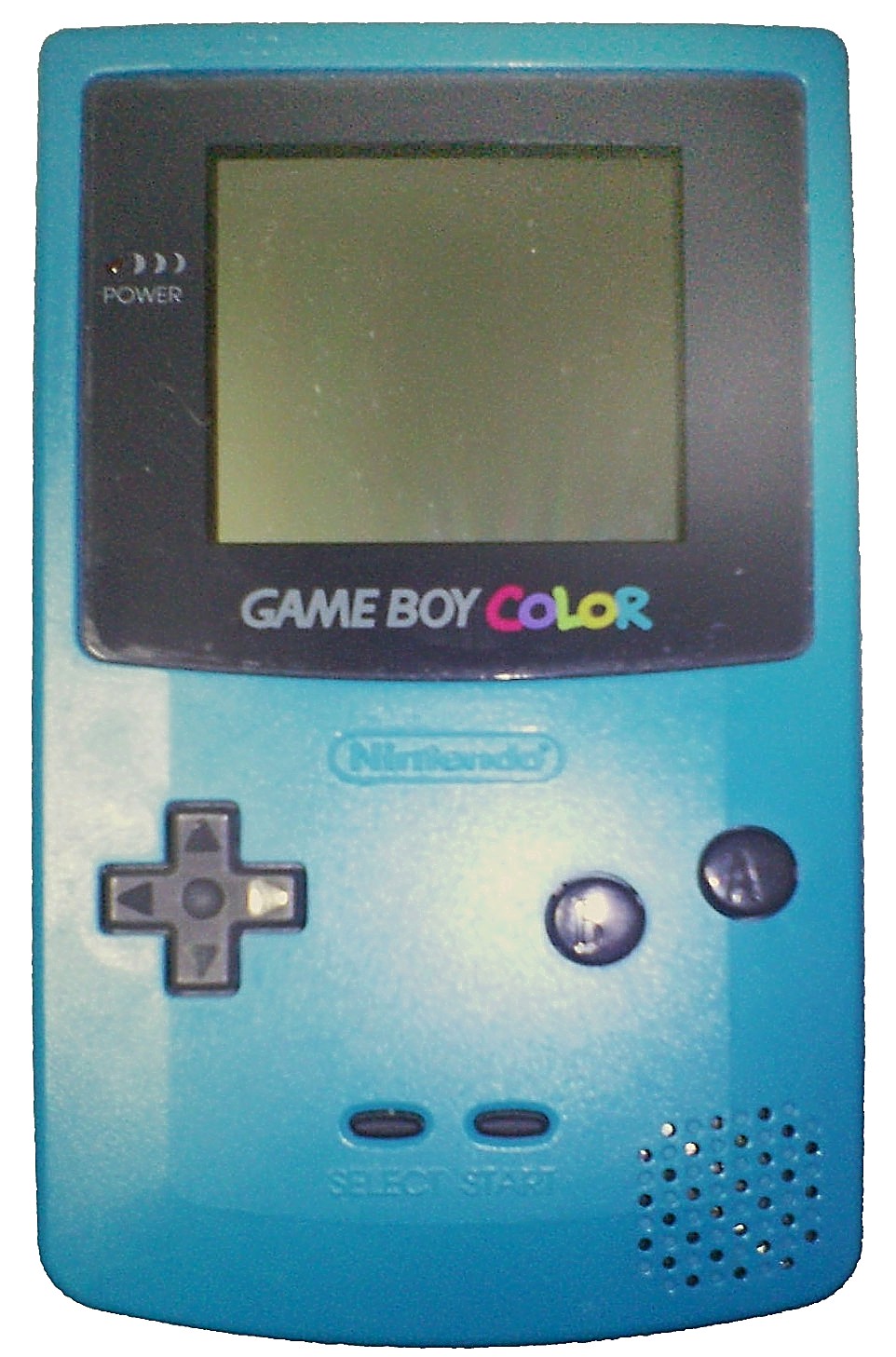


Design and hardware
The Game Boy Color kept the familiar button layout and overall handheld form factor of earlier Game Boy models but introduced a reflective color LCD capable of displaying multiple colors simultaneously from a larger palette. The screen was not backlit, so play required ambient light or accessories for illumination. Internally, the system used an 8‑bit Sharp processor related to the Z80 family and provided more processing headroom than the original monochrome Game Boy, allowing developers to create games with more detailed graphics and color usage while maintaining efficient power consumption comparable to older handhelds and some early home consoles such as the Nintendo Entertainment System.
Technical notes
Key technical characteristics included a reflective color LCD, an 8‑bit CPU with slightly higher clock speed than the original Game Boy, and a similar cartridge interface that preserved compatibility with previous titles. Memory and video arrangements were conservative by later standards but optimized for battery life and a wide software catalog. Sound was provided by the same basic channel-based audio as earlier Game Boy hardware, and many existing audio routines and developer tools carried over from prior models.
Software, cartridges and compatibility
One of the GBC's most important strengths was its backward compatibility. Almost all original Game Boy cartridges ran on the Game Boy Color, often with limited color palettes automatically applied. Developers could also create cartridges specially coded for the GBC that detected the hardware and unlocked expanded color schemes or minor enhancements. This compatibility extended the life of existing software libraries and helped Nintendo maintain a large, diverse catalog of titles during the handheld's lifespan. The later Game Boy Advance continued Nintendo's emphasis on compatibility with earlier Game Boy and GBC games in many cases.
Launch, market performance and competition
The Game Boy Color entered a market where several companies were attempting color handhelds, including systems such as the Neo Geo Pocket and the WonderSwan in Japan. Nintendo's combination of a massive installed base, an affordable price point, and extensive first- and third-party developer support allowed the GBC to outsell many competitors by a wide margin. The Game Boy line—including the original Game Boy and the Game Boy Color—became one of the highest-selling portable families in gaming history. Nintendo continued to evolve the platform with later hardware such as the Game Boy Advance and the Game Boy Advance SP.
Variations, accessories and services
During its commercial life the GBC was offered in a range of color schemes and limited-edition designs that appealed to different markets. Common accessories included a wired link cable for multiplayer and trading functions, various light attachments or magnifiers to compensate for the non-backlit display, and licensed peripherals that expanded photography or input possibilities. Some accessories and add-ons were region-specific or bundled with particular games.
Notable games
Many established franchises released important entries on the Game Boy Color. Chief among these were the Pokémon titles, which became cultural phenomena and were major drivers of GBC sales; titles such as Pokémon Gold and Silver are often cited among the console's best-selling games. Other notable releases included role-playing games, puzzle titles, platformers and ports of popular series from home consoles. The platform was also used for inventive original handheld experiences that took advantage of the GBC's color capabilities and modest performance increases over the original Game Boy.
Legacy and influence
The Game Boy Color demonstrated how relatively small hardware upgrades—principally the addition of a color screen—could rejuvenate an existing platform and extend its commercial and creative lifespan. It helped transition many players to the next generation of handheld gaming while preserving backward compatibility that protected consumers' game libraries. The GBC's success reinforced Nintendo's long-term strategy of prioritizing gameplay, battery life and software support over cutting-edge specifications, an approach that influenced Nintendo's later portable designs.
Collecting and preservation
Today the Game Boy Color is a popular subject for collectors and retro gamers. Enthusiasts seek out different shell colors and limited editions, original packaging and boxed games. Preservation efforts include documentation of hardware revisions, cartridge pinouts and save formats, and emulation and archival projects that aim to keep the platform's software accessible. When researching or collecting, readers should consult reputable hardware retrospectives, verified sales summaries and community-maintained compatibility lists.
Further reading and references
- Manufacturer and historical retrospectives: Nintendo corporate histories and platform overviews.
- Hardware and technical comparisons: reflective display and processor discussions often compare the GBC to earlier handhelds and consoles such as the NES.
- Platform timelines and release details: regional launch information and commercial context can be found in archived industry reports and platform timelines (regional release overviews).
- Catalogs and software lists: curated game lists, including compatibility notes between Game Boy, GBC and GBA titles.
- Technical resources and preservation projects: developer notes and archival work on cartridges and accessories (platform references).
Readers interested in learning more about handheld hardware comparisons, market strategy, or technical specifics can consult the resources above and follow specialist publications and preservation groups. For discussions of color versus monochrome display design and the trade-offs in battery life and readability, see introductory hardware analyses such as monochrome vs color comparisons. For broader platform context and sales histories, consult overviews of Nintendo's handheld lineage and comparative studies that place the Game Boy Color alongside contemporaries such as the Neo Geo Pocket Color and the WonderSwan family.
Questions and answers
Q: What is the Game Boy Color?
A: The Game Boy Color (often referred to as GBC) is a video game console manufactured by Nintendo. It was first released in Japan in October 1998 and later released in North America, Europe and Australia in November 1998.
Q: How does the Game Boy Color compare to the original Game Boy?
A: The biggest innovation of the Game Boy Color was its colorful graphics, making it almost as powerful as the Nintendo Entertainment System. It is thicker and bigger than the original Game Boy with a slightly smaller screen, but it is not backlit.
Q: What type of processor does it use?
A: The GBC uses an 8-bit processor made by Sharp Corporation that is a hybrid between the Intel 8080 and Zilog Z80 processors.
Q: Who were its competitors when it was released?
A: When it was first released, its competitors in Japan were grayscale 16-bit handhelds such as Neo Geo Pocket and WonderSwan. In the United States, its only competitor was its predecessor, the original Game Boy until Neo Geo Pocket Color was made in August 1999.
Q: How successful has it been compared to other consoles?
A: The combination of both versions of the Game Boy have sold 118.69 million units worldwide making it one of the best-selling systems ever created. Its most popular game being Pokémon Gold & Silver which sold 23 million units worldwide.
Q: When did production for this console end?
A: Production for this console ended on March 23rd 2003 shortly after production began for its successor -the Gameboy Advance SP-.
Q: What spelling do they use for "color" around world?
A:The spelling used around world for "color" remains "Color" with American English spelling being used throughout
Related articles
Author
AlegsaOnline.com Game Boy Color Leandro Alegsa
URL: https://en.alegsaonline.com/art/37379