
Poi: traditional taro paste of Polynesia and Hawaiʻi
Poi is a starchy paste made from cooked taro corms, central to Polynesian and Hawaiian diets and ceremonies. It varies in texture and flavor from fresh-sweet to mildly fermented and serves culinary and cultural roles.
Overview
Poi is a soft, starchy paste prepared from cooked taro and water. It is a foundational food across Polynesian cultures and is especially associated with Hawaiʻi. Traditionally eaten with the fingers or a utensil, poi acts as both everyday staple and ceremonial dish.
Image gallery
4 Images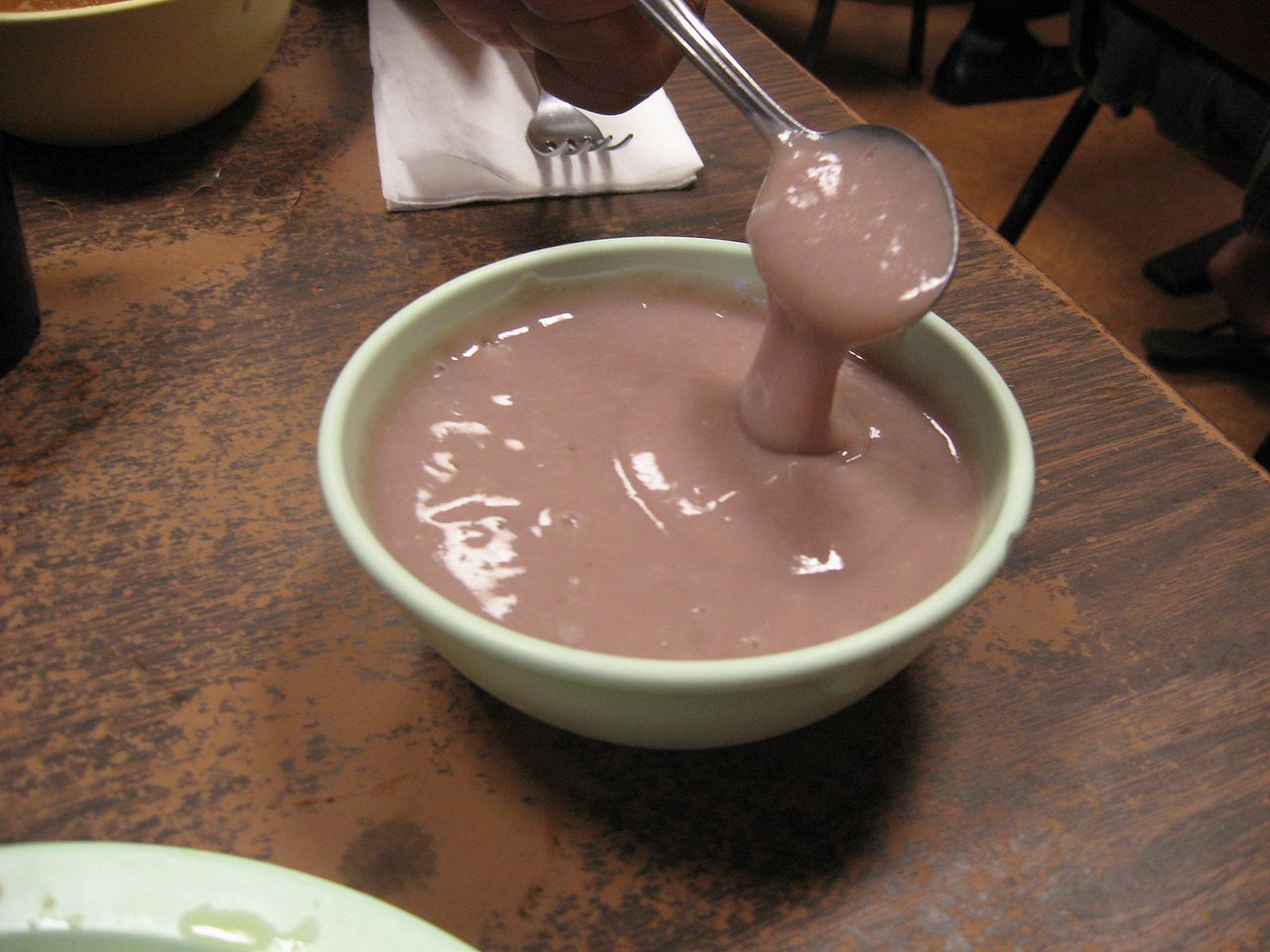



Preparation and characteristics
To make poi, taro corms are cooked until tender and then mashed or pounded into a smooth mass. Water is added to reach a desired thickness. Fresh poi tastes mildly sweet and starchy; when left to rest it ferments slightly and develops a sour tang. Texture ranges from thick enough to pick up with one finger to thinner pourable consistencies.
History and cultural importance
Poi traces its origins to the wider Polynesian world and was carried to the Hawaiian Islands with early voyagers; see broader Polynesian context at Polynesia and regional practices in Hawaiʻi. In Hawaiian language and custom, poi has deep symbolic value and is often present at family gatherings, rites of passage and traditional meals.
Uses and nutrition
Poi is eaten alone or served alongside fish, meat, and vegetables. It is commonly used as a first solid food for infants because of its smooth texture and digestibility. Nutritionally, poi provides carbohydrates and is naturally gluten-free; fermentation can increase digestibility and produce a subtle sourness. Typical uses include everyday meals, communal feasts and offerings.
Variations and notable facts
- Consistency names—informal terms such as "one-finger" or "three-finger"—refer to how thick the poi is.
- Home-made poi and commercially prepared poi differ in freshness and flavor; refrigeration slows fermentation.
- Poi remains a living culinary tradition: contemporary chefs and households adapt it in savory and sweet recipes.
Related articles
Author
AlegsaOnline.com Poi: traditional taro paste of Polynesia and Hawaiʻi Leandro Alegsa
URL: https://en.alegsaonline.com/art/77609
Sources
- hanaleibayresort.com : "3 Common Myths about Hawaiian Food"