
Plymouth Rock: history, evidence, and its place in American memory
Plymouth Rock is a boulder in Plymouth, Massachusetts long associated with the Mayflower Pilgrims' 1620 landing. Its story mixes tradition, shifting physical history, and debate about documentary evidence.
Overview
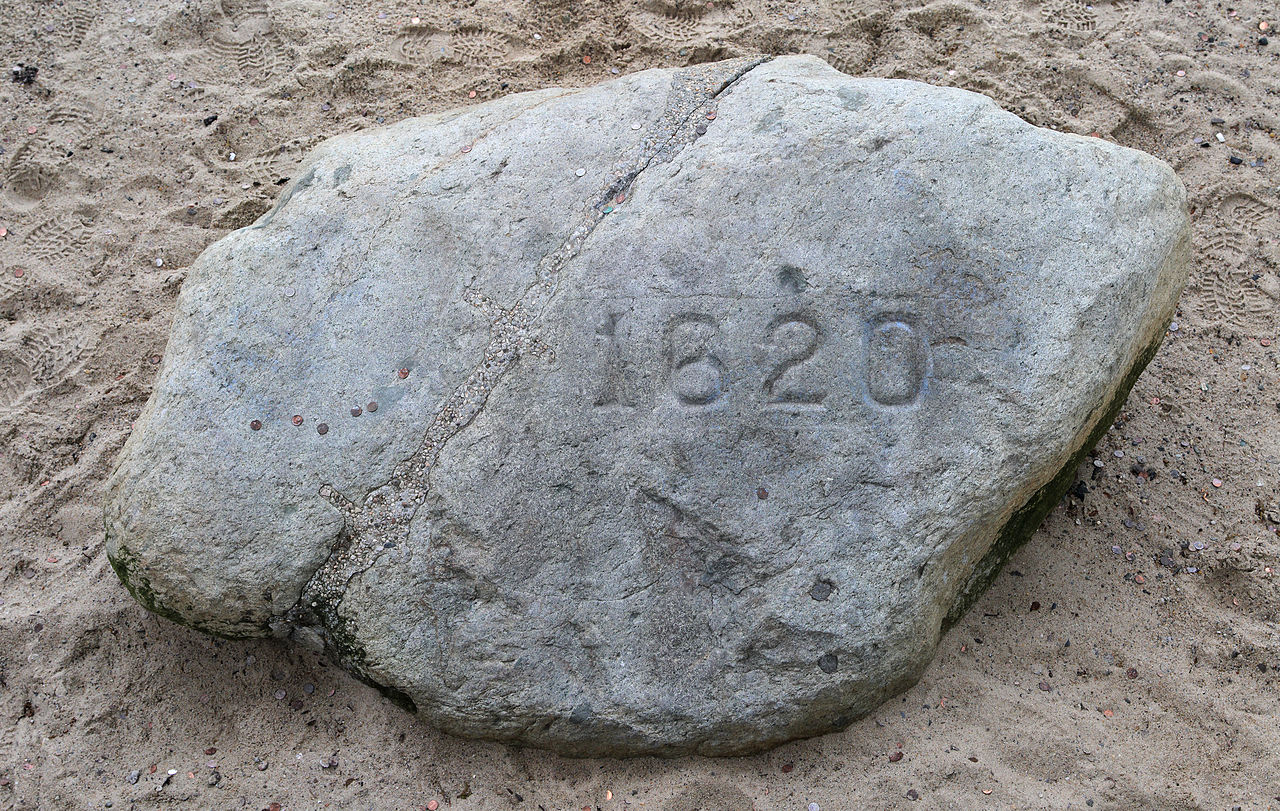
Plymouth Rock is a large boulder long identified by tradition as the spot where the Mayflower Pilgrims first set foot in what is now Massachusetts. It stands near the harbor in Plymouth and has become a focal point for tourism, commemorations, and national mythmaking. The conventional year associated with the rock is 1620, and that date is often inscribed on the stone.
Image gallery
5 Images



Historical evidence and questions
Despite its cultural prominence, the documentary record is sparse. Important contemporary accounts of the Pilgrims' arrival, such as Mourt's Relation and the journals kept by leaders of the colony, do not describe a landing on a particular rock. Likewise, the journal of William Bradford, often published as Of Plymouth Plantation, contains no explicit reference identifying a single boulder as the exact landing spot. The first written claim tying the Pilgrims to a specific rock appears only about 121 years after 1620, and historians therefore treat the identification as a later local tradition rather than a contemporaneous record.
Physical characteristics and changes
Plymouth Rock is a glacial erratic of modest size compared with many natural landmarks. Over the centuries it has been moved, quarried, chipped, and otherwise altered for display and preservation. Pieces of the original stone have at times been separated and later reassembled or held in different local collections. Today the remaining portion is sheltered to limit weathering and to provide public access; the visible face bears a commemorative inscription that reinforces its link to 1620.
Significance, uses, and public memory
The rock functions less as a strictly documented archaeological artifact and more as a civic and cultural symbol. It has been used in patriotic ceremonies, school lessons about early colonial history, and annual observances tied to the Pilgrim story and Thanksgiving narratives. For many visitors the emotional and symbolic value of the site outweighs the historical uncertainty about its exact role in 1620.
Notable facts and distinctions
- The specific association of the Pilgrims with the rock grew in local tradition well after the landing, rather than in contemporary accounts.
- Because primary sources from 1620 do not mention the stone, scholars emphasize caution when presenting it as literal proof of where the first people stepped ashore.
- Conservation efforts and protective structures reflect the rock's status as a tourist and heritage object rather than as a pristine archaeological specimen.
- Plymouth Rock has been reproduced, referenced, and relocated in various ways in museums and public displays, contributing to its symbolic reach beyond the original site.
In short, Plymouth Rock occupies a distinctive position in American history: it is at once a tangible object visitors can see and touch and a later-generated emblem of a foundational story. Its importance lies in how communities have remembered and used it, even as historians continue to emphasize the limits of the contemporary evidence linking it directly to the first landing.
Related articles
Author
AlegsaOnline.com Plymouth Rock: history, evidence, and its place in American memory Leandro Alegsa
URL: https://en.alegsaonline.com/art/77537
Sources
- nrhp.focus.nps.gov : "National Register Information System"
- pilgrimhallmuseum.org : "Plymouth Rock"