
Pocahontas County, Iowa
Pocahontas County is a small, rural county in the U.S. state of Iowa. Its county seat is the city of Pocahontas; the county had 7,310 residents at the 2010 census.
Overview
Pocahontas County is a county in the U.S. state of Iowa. It is a predominantly rural jurisdiction whose administrative center is the city of Pocahontas, the county seat. According to the 2010 census, the county had 7,310 residents, reflecting the small-population character common to many agricultural counties in the region.
Image gallery
2 Images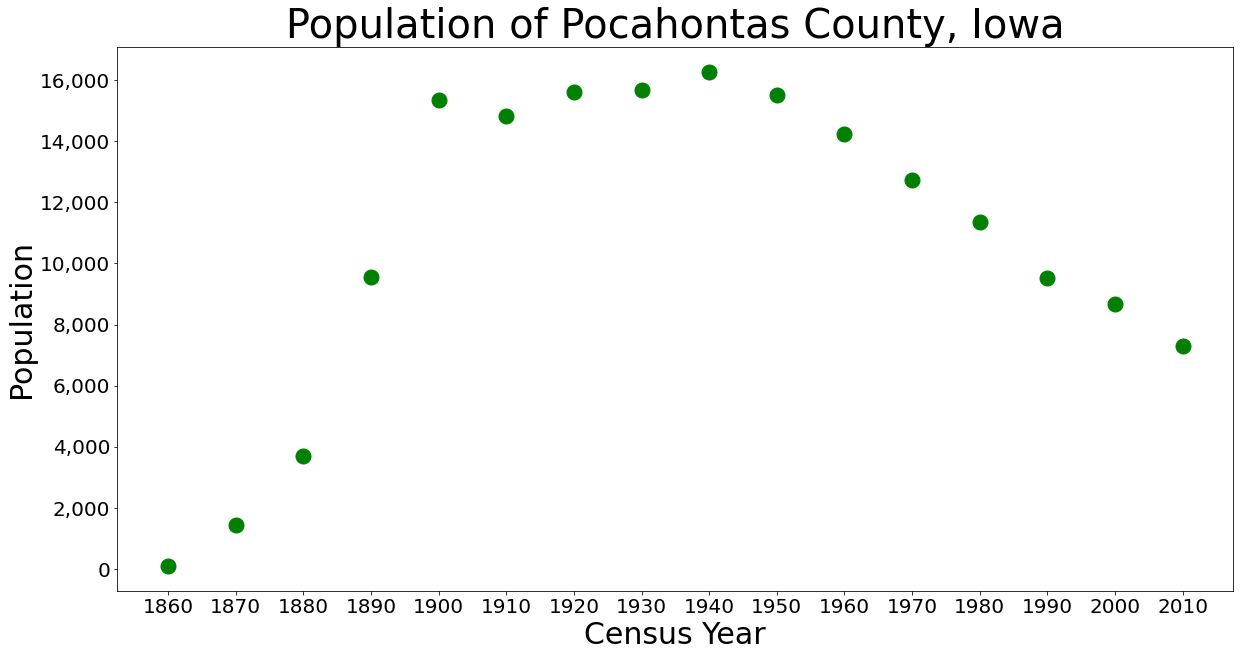

Geography and Demographics
The county encompasses a landscape of fields, small towns and patches of woodland typical of interior Iowa. Population density is low; settlements are concentrated in a few towns and the surrounding countryside is largely devoted to crop and livestock farming. The demographic profile skews toward long-established rural families and older age groups, and community life centers on schools, local businesses and civic institutions.
History and Name
Pocahontas County was organized during the 19th century as European-American settlement expanded across Iowa. The county takes its name from the historical Native American figure Pocahontas, a common naming practice of the era. Local historical societies and small museums preserve records and artifacts that document settlement, farming life and the county's development.
Economy, Government and Services
The county economy is dominated by agriculture, with farms producing commodities sold regionally and nationally. County government provides core services including roads and bridges, public safety, land records and local courts. Typical community facilities include public schools, libraries and health clinics that serve residents across dispersed townships.
Culture, Recreation and Notable Facts
Community events, high school sports and seasonal fairs are important social fixtures. Outdoor recreation may include hunting, fishing and small parks. Visitors and residents may explore local historic sites, civic landmarks and community museums that reflect the county's agricultural heritage.
Related articles
Author
AlegsaOnline.com Pocahontas County, Iowa Leandro Alegsa
URL: https://en.alegsaonline.com/art/77562