
Pirate code (Articles of Agreement)
Rules and shipboard agreements used by historical pirates to regulate conduct, discipline, shares of plunder, and compensation; also the romanticized versions seen in literature and film.
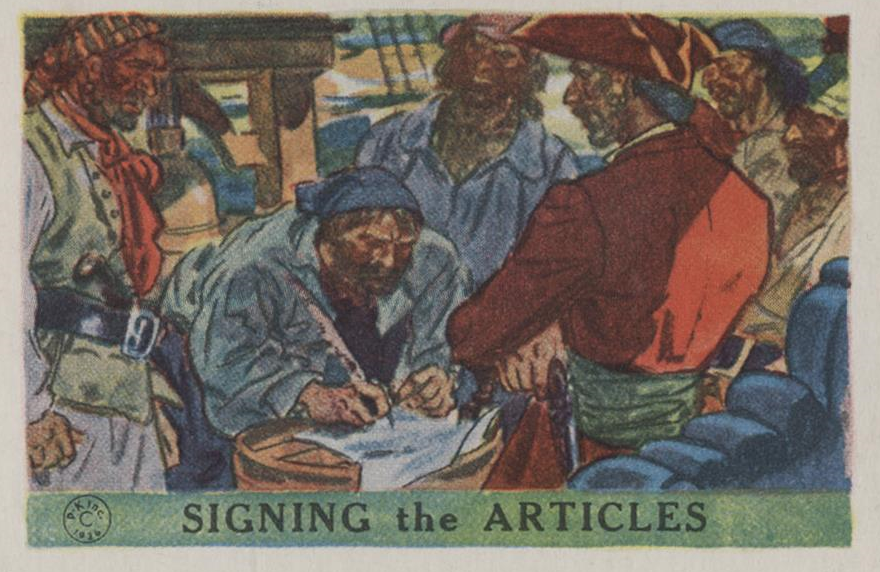
The term "pirate code" commonly refers to a set of written or agreed rules—often called articles or the articles of agreement—that pirate crews used to organize life aboard a vessel. Far from the lawless free-for-all sometimes depicted in fiction, many pirate ships operated under explicit rules that governed division of spoils, behavior, discipline, and injury compensation. These codes blended practical seafaring needs with the self-interest of crews operating far from legal authority.
Image gallery
3 Images

Typical provisions
- Division of plunder: clear shares for captain, officers, and ordinary crew to avoid dispute and encourage cooperation.
- Compensation for wounds: fixed payments or allowances for loss of limb, blindness, or other injuries sustained in action.
- Discipline: penalties for theft, cowardice, fighting aboard ship, or desertion—ranging from fines to marooning or execution in extreme cases.
- Decision making: procedures for electing or removing captains and officers, and limits on unilateral authority outside combat.
- Behavioral rules: bans or restrictions on gambling, bringing certain persons aboard, or trading with enemies; rules governing watches, shares, and repairs.
Origins and historical context
Most surviving examples date from the so-called Golden Age of Piracy (late 17th to early 18th century). Articles functioned as concise contracts: prospective recruits signed to accept terms, and courts often used captured articles as evidence in trials. Well-known surviving sets of articles are associated with a few captains from that period and show considerable variety between crews and regions.
Enforcement and shipboard organization
Enforcement relied on collective consent. The quartermaster often represented crew interests, overseeing distribution and discipline, while captains held authority primarily during battle. Because crews depended on one another for survival and profit, clear rules reduced internal conflict and made cooperation more reliable than coercion alone.
Importance and legacy
Pirate articles illustrate how outlaw groups developed internal governance where state law was absent. Their emphasis on shared risk, elected leadership, and compensation for injury has attracted attention from historians and political theorists. Popular culture, including novels and films, has further shaped the image of a single "pirate code," sometimes smoothing over the historical diversity of real agreements.
Related articles
Author
AlegsaOnline.com Pirate code (Articles of Agreement) Leandro Alegsa
URL: https://en.alegsaonline.com/art/77073
Sources
- buccaneer.boourns.net : Really Bad Eggs: Pirates of the Caribbean
- piratedocuments.com : Pirate Articles of Capt. John Phillips 1724
- books.google.com : Under the Black Flag: Exploits of the Most Notorious Pirates