
Phnom Penh: Capital and largest city of Cambodia
Phnom Penh is Cambodia's political, cultural and economic center, located at the confluence of the Mekong, Bassac and Tonlé Sap rivers. It combines historic sites, markets and rapid urban change.
Phnom Penh (Khmer: ភ្នំពេញ; Romanized Phnum Pénh) is the capital and largest city of Cambodia. Located where the Mekong, Bassac and Tonlé Sap rivers meet, it serves as the national seat of government and the principal hub for commerce, culture and transport. Its popular name is often translated as "Penh's hill," referring to the founding legend associated with Wat Phnom. The cityscape mixes riverfront boulevards, colonial-era architecture and modern developments, reflecting layers of historical change.
Image gallery
10 Images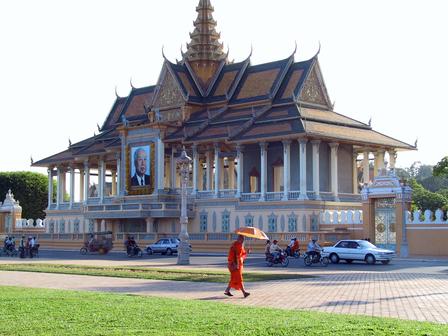


Geography and climate
Phnom Penh occupies a riverside site on low, flat terrain. Seasonal flooding affects some districts during the rainy season and the rivers shape trade and transport routes. The climate is tropical with a distinct wet season and a dry season; temperatures remain warm year-round, and monsoon rains drive much of the city's annual rainfall.
Administration and urban structure
The city is divided into administrative districts and communes that manage residential neighborhoods, commercial zones and industrial areas. The central riverfront and several market districts act as major commercial cores. Public transport is dominated by motorcycles, tuk-tuks and buses, while river ferries provide local crossings and connections. For administrative information see general resources on the capital city.
History
Local tradition attributes the city's founding to a woman named Penh who raised a shrine on a hill; over time the settlement grew into an important regional port. Phnom Penh expanded under successive Cambodian administrations and during the French colonial period, acquiring wide boulevards and public buildings. The city experienced a major rupture when it fell to the Khmer Rouge on 17 April 1975 and its population was forcibly evacuated. Viet Namese forces retook the city in January 1979, after which Phnom Penh underwent decades of reconstruction and gradual reurbanization.
Economy and development
As the main economic engine of the country, Phnom Penh concentrates government ministries, diplomatic missions, financial services, manufacturing and tourism activity. Since the late 20th century the city has attracted foreign investment and experienced rapid construction and population growth. This expansion has brought new infrastructure and jobs but also pressures on housing, traffic, public services and heritage sites.
Culture, landmarks and tourism
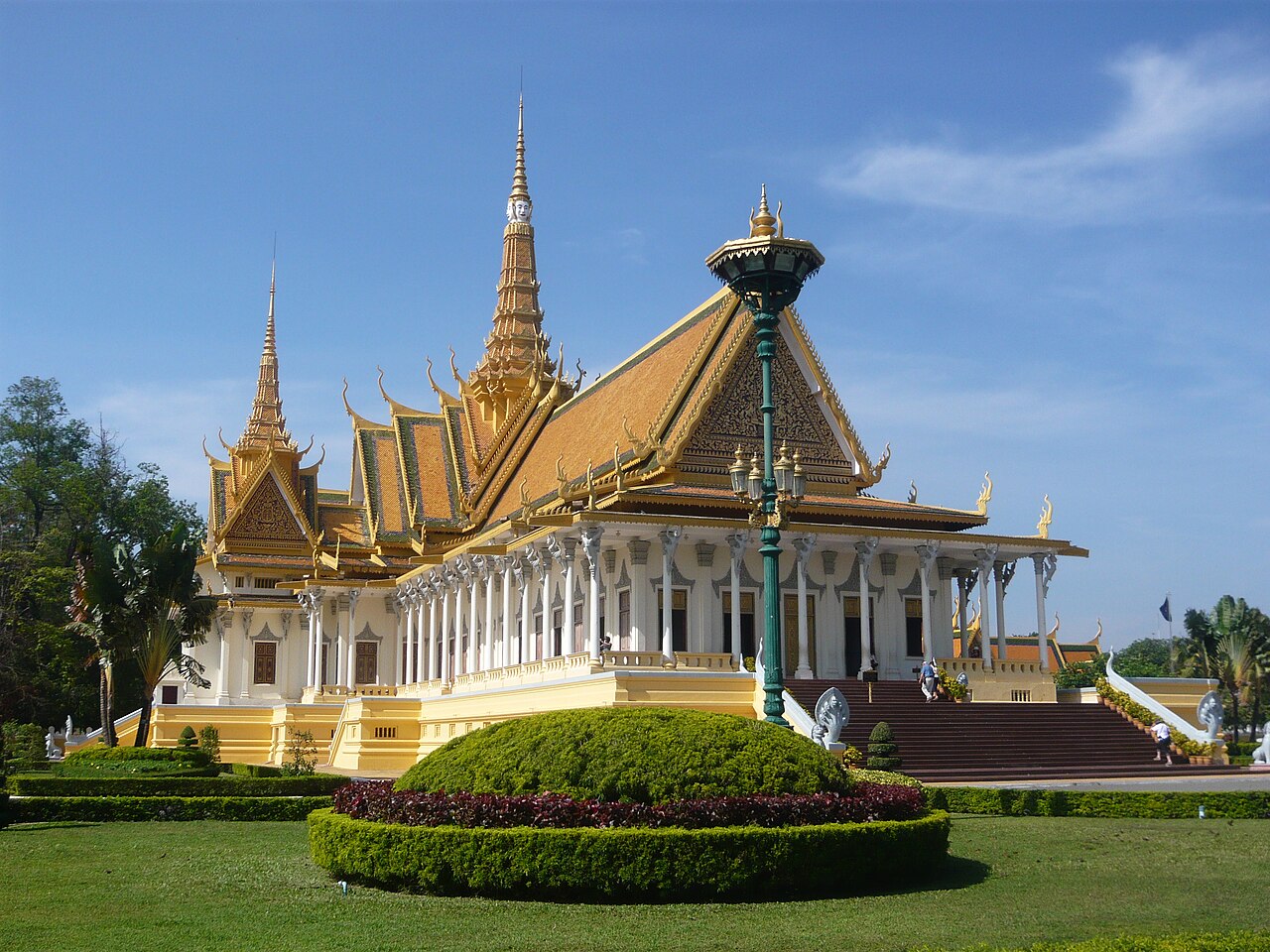
- Royal Palace and Silver Pagoda: ceremonial center and historic architecture.
- National Museum: important collections of Khmer sculpture and artifacts.
- Wat Phnom: the small hill and temple tied to the founding legend.
- Central Market (Phsar Thmei) and Russian Market (Toul Tom Poung): bustling markets for crafts, textiles and daily goods.
- Tuol Sleng Genocide Museum (S-21) and the Choeung Ek memorials (Killing Fields): sites commemorating the victims of the Khmer Rouge era.
Transport, education and services
Transport in the city relies on a mix of informal and formal systems: taxis, tuk-tuks and motorbikes are common, and buses serve major routes while river ferries connect riverside districts. Phnom Penh hosts national universities, cultural institutions and major hospitals, making it a focal point for higher education, research and specialized health care.
Challenges and planning
Urban planners and civic groups debate how best to balance modernization with protection of historic neighborhoods, affordable housing and riverfront environments. Rapid development poses challenges for traffic management, flood resilience, sanitation and preservation of cultural heritage. International partners and local authorities continue to work on infrastructure, environmental management and inclusive urban policies.
For map coordinates and geographic reference see 11.5694°N, 104.9211°E. For language and cultural context consult materials on the Khmer language, and for broader national information refer to resources about Cambodia and the capital city.
Related articles
Author
AlegsaOnline.com Phnom Penh: Capital and largest city of Cambodia Leandro Alegsa
URL: https://en.alegsaonline.com/art/76524