
Philosophy of Mathematics: Nature, Major Views, and Significance
An introduction to the philosophy of mathematics: what mathematical objects are, main positions (Platonism, formalism, intuitionism, structuralism), history, key questions, and practical significance.
The philosophy of mathematics is the branch of philosophy that examines the nature, scope, and foundations of mathematical thought. It asks whether numbers, sets, and geometric forms are discovered or invented, how mathematical truths relate to logic and physical reality, and what counts as a satisfactory mathematical proof or explanation.
Image gallery
3 Images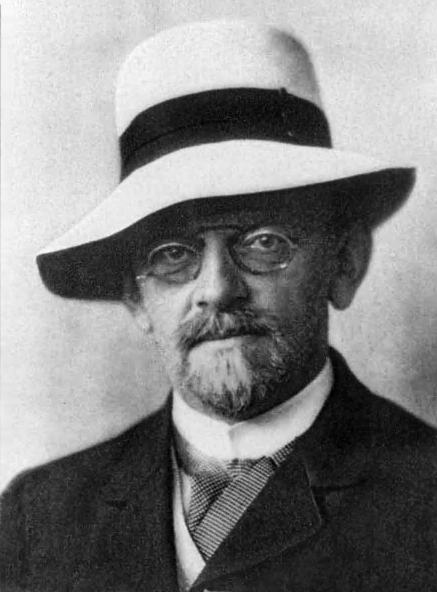
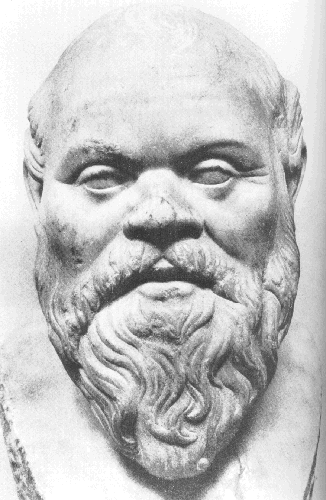

Overview
This field combines questions of metaphysics (what kind of things mathematical entities are), epistemology (how we know mathematical truths), and logic (the structure of mathematical reasoning). It also studies the language and methods mathematicians use and the justification for accepting abstract concepts such as infinite sets or idealized objects.
Main positions
- Platonism (mathematical realism): mathematics discovers objective, nonphysical entities and facts about them.
- Formalism: mathematics is manipulation of symbols according to rules; meaning is secondary to formal systems.
- Intuitionism / Constructivism: mathematical objects are mental constructions; existence requires a method to construct an example.
- Logicism: mathematics reduces to logic and logical concepts provide its foundations.
- Structuralism: mathematics studies structures and relations rather than individual objects; identity is given by position in a structure.
- Nominalism: denies commitment to abstract mathematical objects, treating mathematics as talk about concrete proxies or syntactic devices.
History and development
Roots trace to ancient philosophical concerns about number and form, but modern debates intensified in the late 19th and early 20th centuries with the rise of rigorous analysis, set theory, and alternative geometries. Key figures include Frege and Russell (logicist programs), Hilbert (formalism and axiomatic methods), Brouwer (intuitionism), and Gödel, whose incompleteness theorems reshaped thinking about formal systems and provability.
Questions, uses, and notable distinctions
Philosophers of mathematics address concrete questions such as: Do infinite sets exist? What is the status of nonconstructive existence proofs? Why is mathematics so effective in describing the physical world? The answers influence foundations of mathematics, the practice of proof, and related areas like theoretical computer science and mathematical education. Distinctions to note include metaphysical realism vs anti-realism and constructive vs nonconstructive methods.
Beyond academic debate, this field informs how mathematicians justify new axioms, how logicians formalize reasoning, and how educators present mathematical certainty. For further reading on central topics and arguments, follow introductory resources indexed under the discipline and its subfields.
Related articles
Author
AlegsaOnline.com Philosophy of Mathematics: Nature, Major Views, and Significance Leandro Alegsa
URL: https://en.alegsaonline.com/art/76507