
Phidippus audax — the bold (daring) jumping spider
A North American jumping spider (Salticidae) known for bold hunting, distinctive abdominal spots that change color with age, strong vision, and metallic chelicerae; common in gardens and buildings.
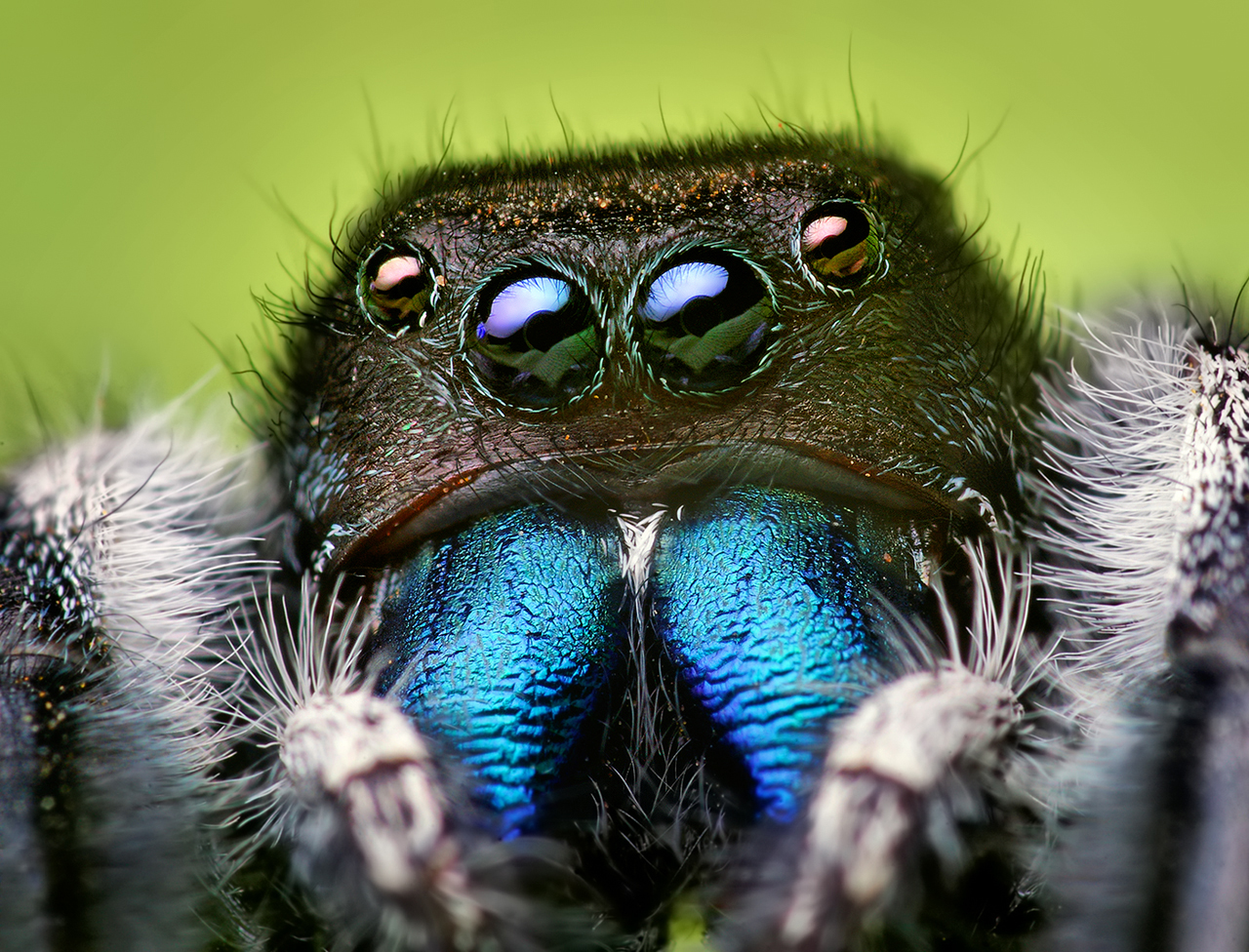
Phidippus audax is a well-known species of jumping spider native to much of North America. Common English names include the daring jumping spider and the bold jumping spider. Members of this species are active daytime hunters rather than web-trapping predators. They are recognized by a stout, compact body, relatively large forward-facing eyes, and conspicuous spots on the upper surface of the abdomen that change color as the animal matures.
Image gallery
10 Images


Physical characteristics
Adults are typically about 13–20 millimetres in body length, with females generally a bit larger than males. The basic body coloration is dark—often black or very dark brown—with one or more contrasting dorsal spots. Juveniles commonly show orange, red, or yellow spots that fade to white in many adults. Many individuals, particularly males, have iridescent or metallic chelicerae (mouthparts) that can appear green, blue, or coppery in certain light. Like other salticids, they have four pairs of eyes; the large anterior median eyes provide acute vision.
Behavior, hunting and diet
Phidippus audax are agile, visual hunters. They stalk or ambush small insects and other arthropods, using rapid leaps to capture prey. Jumping is powered by sudden changes in internal hydraulic pressure of the legs rather than by specialized muscles alone. Although they do not build capture webs, they produce silk to lay draglines for safety and to construct retreats or egg sacs.
Habitat, range and life cycle
This species is widespread across much of North America and adapts readily to a variety of settings, including fields, wood edges, and human-altered areas such as gardens, fences, and the exterior walls of buildings. Their life cycle is typical of temperate jumping spiders: eggs are laid in silken sacs, juveniles undergo multiple molts, and development proceeds through the warm season. Many individuals live for about a year, with some overwintering in immature stages depending on local climate.
Human interactions and notable facts
Phidippus audax is largely harmless to people; bites are rare and generally cause only minor, short-lived localized effects if they occur. Because they prey on insects, they can be beneficial in controlling garden pests. Their conspicuous appearance and daytime activity make them a common subject for natural history observation and photography. For additional species information see the species profile or browse an image gallery.
- Family: Salticidae (jumping spiders).
- Hunting style: active visual predator, uses silk for draglines.
- Distinctive features: changing spot coloration, large anterior eyes, metallic chelicerae.
Related articles
Author
AlegsaOnline.com Phidippus audax — the bold (daring) jumping spider Leandro Alegsa
URL: https://en.alegsaonline.com/art/76382