
Pearl Harbor (2001 film)
Pearl Harbor is a 2001 American epic war film directed by Michael Bay combining large-scale action, a fictional love triangle, and a dramatized depiction of the December 7, 1941 attack and its aftermath.
Overview
Pearl Harbor is a 2001 American epic war film directed by Michael Bay and produced by Michael Bay and Jerry Bruckheimer. Released in May 2001, the film blends large-scale action sequences with a central romantic storyline to dramatize events surrounding the December 7, 1941 attack on the U.S. naval base at Pearl Harbor. The principal cast includes Ben Affleck, Josh Hartnett and Kate Beckinsale in leading roles. The production emphasized spectacle and period production design to recreate the assault and its immediate consequences.
Image gallery
2 Images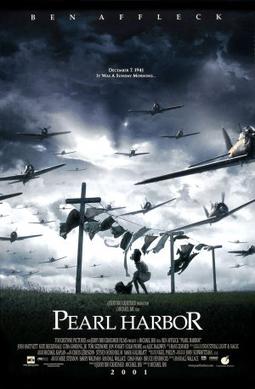

Plot
The story centers on two friends who become Army Air Forces pilots and a nurse who becomes the focus of a love triangle. The narrative moves from the pilots’ training and personal relationships to the surprise attack, on-site rescue efforts, and a later airborne retaliatory mission portrayed in the film. The central romance is fictional, deliberately interwoven with scenes meant to convey the chaos, loss and heroism of the historical moment.
Cast and performances
Ben Affleck, Josh Hartnett and Kate Beckinsale headline the ensemble cast; supporting roles include veteran character actors and performers cast as military personnel, family members and medical staff. Performances were received with mixed notice: some reviewers praised the lead actors’ commitment to the emotional elements, while others found the melodramatic aspects less convincing.
Production and visual effects
The film employed a mixture of practical effects, large-scale sets, miniatures and computer-generated imagery to stage extensive aerial and naval sequences. Stunt coordination, period costume and set design were major components of the production effort. For production credits, technical details and studio materials see the official production notes and related studio resources.
Music and soundtrack
The score and soundtrack aim to underscore both intimate drama and epic action. Music cues are used to heighten the emotional moments of the romance as well as the tension of combat sequences; soundtrack releases and composer credits are listed among the film’s production details.
Release, reception and historical accuracy
Upon release the film drew a wide public audience and provoked substantial critical discussion. Reviewers commonly praised the scale of the special effects and the ambition of the battle scenes, while critiquing the screenplay, pacing and melodramatic elements. Historians and commentators have noted that the film prioritizes cinematic storytelling over strict accuracy: events and timelines are often condensed or altered to serve dramatic structure. For context on the historical event consult authoritative historical accounts.
Legacy and further reading
Pearl Harbor remains a notable example of early-21st-century blockbuster filmmaking that mixes spectacle with a dramatized version of a real wartime event. It prompted discussion about responsible depiction of history in popular cinema. Readers seeking production credits, interviews or retrospective analyses can consult production materials and archival sources, such as studio pages and film archives at official studio pages and archival links.
Further resources
Related articles
Author
AlegsaOnline.com Pearl Harbor (2001 film) Leandro Alegsa
URL: https://en.alegsaonline.com/art/75357
Sources
- content.time.com : "Pearl Harbor's Top Gun"
- boxofficemojo.com : "Total Lifetime Grosses"
- rottentomatoes.com : "Pearl Harbor"
- imdb.com : "Academy Awards, USA: 2002"
- jstor.org : "The Journal of Military History, Vol. 65, No. 4 (Oct. 2001), pp. 1138-1140"