
Pee-wee's Big Adventure
1985 comedy film starring Paul Reubens as Pee-wee Herman, directed by Tim Burton with music by Danny Elfman. A whimsical, surreal road story about recovering a stolen bicycle that became a cult favorite.
Overview
Pee-wee's Big Adventure is a 1985 American comedy film built around the eccentric character Pee-wee Herman, created and performed by Paul Reubens. The film follows Pee-wee's cross-country quest to recover his beloved bicycle after it is stolen. Combining slapstick, visual gags and a deliberately stylized presentation, the picture marked an early mainstream feature for its director while showcasing its star's stage-born persona to a wide audience.
Image gallery
3 Images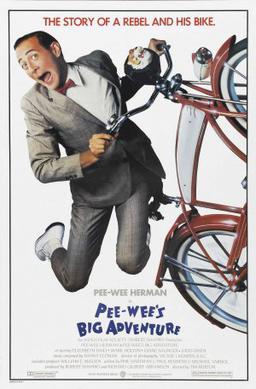


Plot
The central plot is intentionally simple: the theft of Pee-wee's treasured bicycle propels him into a series of episodic encounters and set pieces. Rather than a tightly plotted drama, the film reads as a sequence of comedic adventures—some broad and some surreal—through towns and locales that emphasize the character's childlike determination and comic obliviousness. The bicycle functions as both a literal object to be recovered and as a sentimental symbol around which character motivation and humor revolve; see general bicycle-related references for context at bicycle.
Production and creative team
The film was directed by Tim Burton and features a screenplay credited to Paul Reubens, Phil Hartman and Michael Varhol. The musical score was composed by Danny Elfman, beginning a long-running collaborative relationship with the director. The production brought together influences from stage comedy, television sketch work and a developing cinematic visual style that distinguished the film from mainstream comedies of its time.
Style and themes
Stylistically the film mixes family-friendly slapstick with offbeat and occasionally darkly comic touches. Its visual approach leans toward theatricality and heightened design, using framing, set decoration and music to create a playful sense of unreality. Themes include obsession, attachment to objects, and an affectionate satire of American small-town and popular culture, all filtered through the persona of Pee-wee Herman.
Reception and legacy
On release the film found modest commercial success and a growing positive critical reception; over time it developed a devoted following and is often cited as a cult favorite. It is remembered for bringing Paul Reubens's character to a wider audience and for serving as an early feature that signalled Tim Burton's visual sensibilities. Danny Elfman's score for the picture is also frequently noted as a memorable contribution to the film's tone and to later Burton–Elfman collaborations.
Notable aspects
- Star vehicle for Paul Reubens's Pee-wee Herman persona, translating a stage/TV character to feature film.
- Directed by Tim Burton, the film showcases an imaginative visual style that would recur in the director's later work.
- Music by Danny Elfman contributed a playful, memorable score that helped define the film's whimsical mood.
- The simple quest—recovering a stolen bicycle—provides a flexible framework for episodic comedy and character encounters; see bicycle references for background on the object's cultural role.
- Screenplay credits include Paul Reubens and Phil Hartman, reflecting roots in sketch comedy and collaborative writing.
Today the film is considered an important early entry for its principal creators and a notable example of 1980s American comedy that mixes family appeal with eccentric, auteur-driven visual style. For further information consult dedicated film histories and retrospective essays linked above.
Related articles
Author
AlegsaOnline.com Pee-wee's Big Adventure Leandro Alegsa
URL: https://en.alegsaonline.com/art/75434
Sources
- imdb.com : "Pee-wee's Big Adventure (1985)"