
Patiala and East Punjab States Union (PEPSU)
PEPSU was a short-lived Indian state formed in 1948 by merging several princely states; headquartered at Patiala, it existed until reorganization in 1956 and influenced later Punjab–Haryana boundaries.
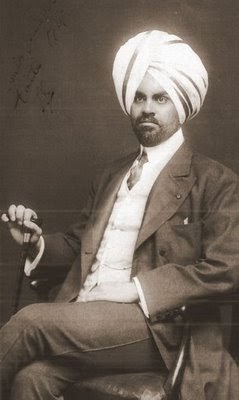
The Patiala and East Punjab States Union, commonly abbreviated PEPSU, was a political entity established after Indian independence to integrate a group of princely territories in the Punjab region. Formed on 15 July 1948, it brought together several autonomous polities under a single administrative framework and had its capital at Patiala. The last ruling Maharaja of Patiala, Yadvindra Singh, served in the state’s highest ceremonial office during its brief existence. Contemporary overviews and archival references describe the union as an intermediate arrangement used to streamline governance as India moved from princely sovereignty into democratic statehood; see Patiala and East Punjab States Union for a general reference.
Image gallery
5 Images


Formation and background
PEPSU was created by the merger of a number of small and medium-sized territories in the eastern Punjab region. These were historically autonomous or semi-autonomous princely states with their own ruling families, administrations and legal customs. The consolidation followed negotiations between those rulers and the government of independent India, part of a wider program to absorb princely states into the Indian Union. Public administration and law were gradually regularized: PEPSU took shape administratively in 1948 and was treated as a constituent state after the republic was formed in 1950.
Territory and composition
Geographically, PEPSU covered areas in what is today eastern Punjab and adjoining regions. Its territory included the important city and administrative center of Patiala and several surrounding districts that had been under separate rulers. Parts of the former union lie within the modern state of Punjab, while some southeastern portions—most notably areas around Jind and the Narnaul enclave—were later attached to Haryana. The arrangement reflected both historical patterns of princely jurisdiction and the later redrawing of state boundaries on linguistic and administrative grounds.
Government and politics
PEPSU combined traditional and democratic institutions. The head of the state was appointed by the President of India and the same period saw the establishment of a representative legislature. A 60-member elected state assembly first convened after elections held on 6 January 1952. In that election the Indian National Congress emerged as the largest party while regional parties such as the Akali Dal also won significant representation, reflecting political currents in the Punjabi heartland.
Dissolution and legacy
The union had a relatively short life. As part of the States Reorganisation that rationalized India's internal borders, PEPSU was merged into the state of Punjab on 1 November 1956. A further reorganization in 1966 carved out the new state of Haryana from eastern parts of Punjab, transferring some areas that had formerly been in PEPSU into Haryana’s territory. The brief existence of PEPSU is notable for how it eased the transition from princely rule to democratic state administration and for its role in shaping the modern map and political alignments of northern India.
Notable aspects and further reading
- PEPSU illustrates the post‑1947 process by which princely states were integrated into the Indian Union; see broader discussions of princely integration and regional reorganization at Punjabi princely states.
- Its capital, Patiala, remained an important cultural and administrative center after the merger and continues to be a major city in the region.
- For archival materials, electoral details and biographical information about its rulers and politicians, consult specialist sources and regional histories that cover the decade of the 1940s–1960s in northern India.
Related articles
Author
AlegsaOnline.com Patiala and East Punjab States Union (PEPSU) Leandro Alegsa
URL: https://en.alegsaonline.com/art/75008