
Park Güell — Antoni Gaudí's public park and architectural ensemble in Barcelona
A public park and architectural ensemble on Carmel Hill in Barcelona, designed by Antoni Gaudí. Known for trencadís mosaics, organic structures and colonnaded spaces; built 1900–1914 and now a UNESCO World Heritage Site.

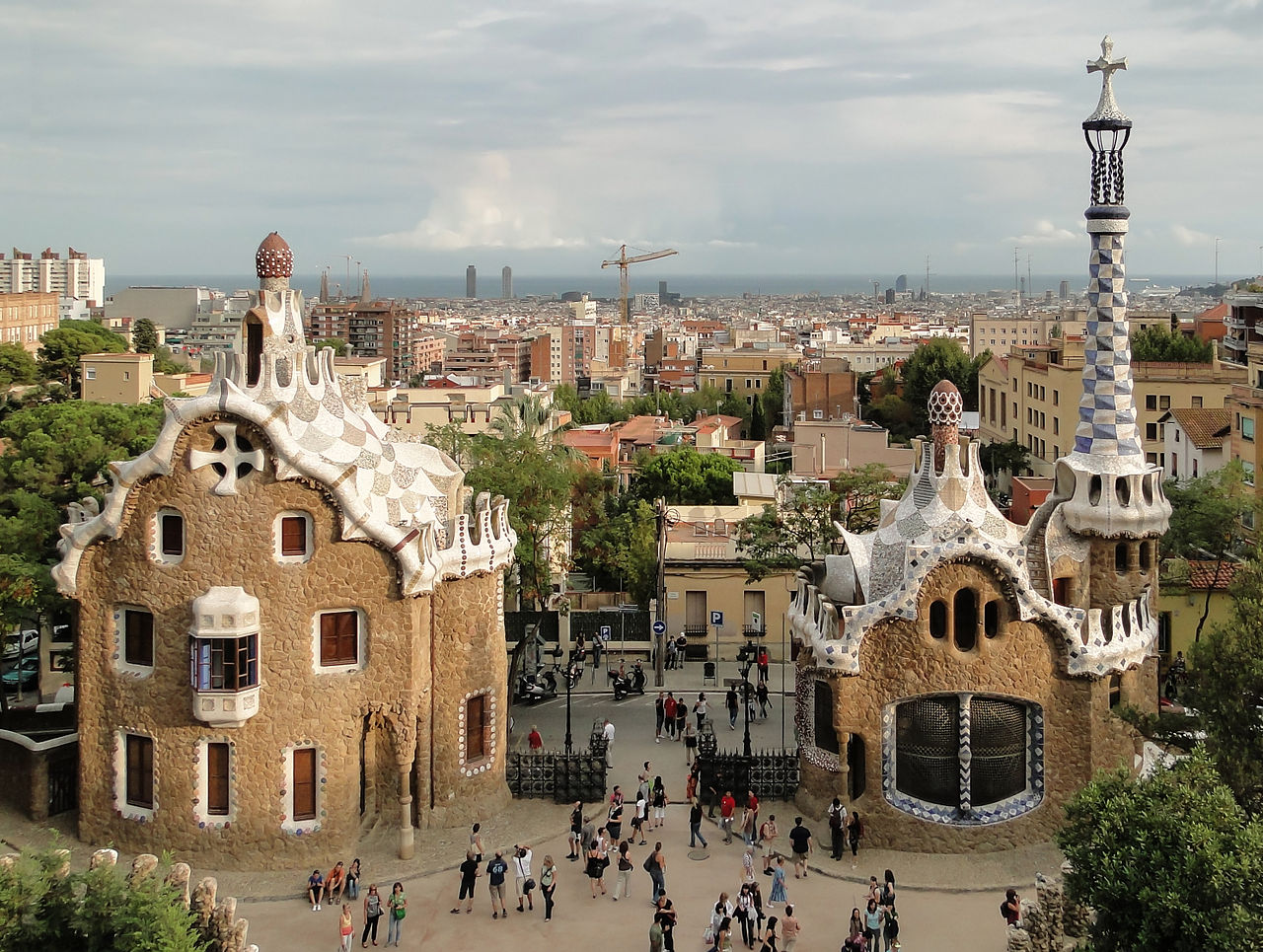
Park Güell is a landscaped public park and architectural complex perched on Carmel Hill (Turó del Carmel) in the Gràcia district of Barcelona. Commissioned by industrialist Eusebi Güell and realized under the direction of architect Antoni Gaudí, the project blends garden planning, engineered structures and exuberant decoration. The site was conceived as a residential garden-city experiment but evolved into a municipal park; its construction took place between 1900 and 1914 and it opened to the public in 1926.
Image gallery
10 Images



Design, materials and principal features
Gaudí applied principles of Catalan Modernisme and an organic, nature-inspired vocabulary throughout the site. Key elements include:
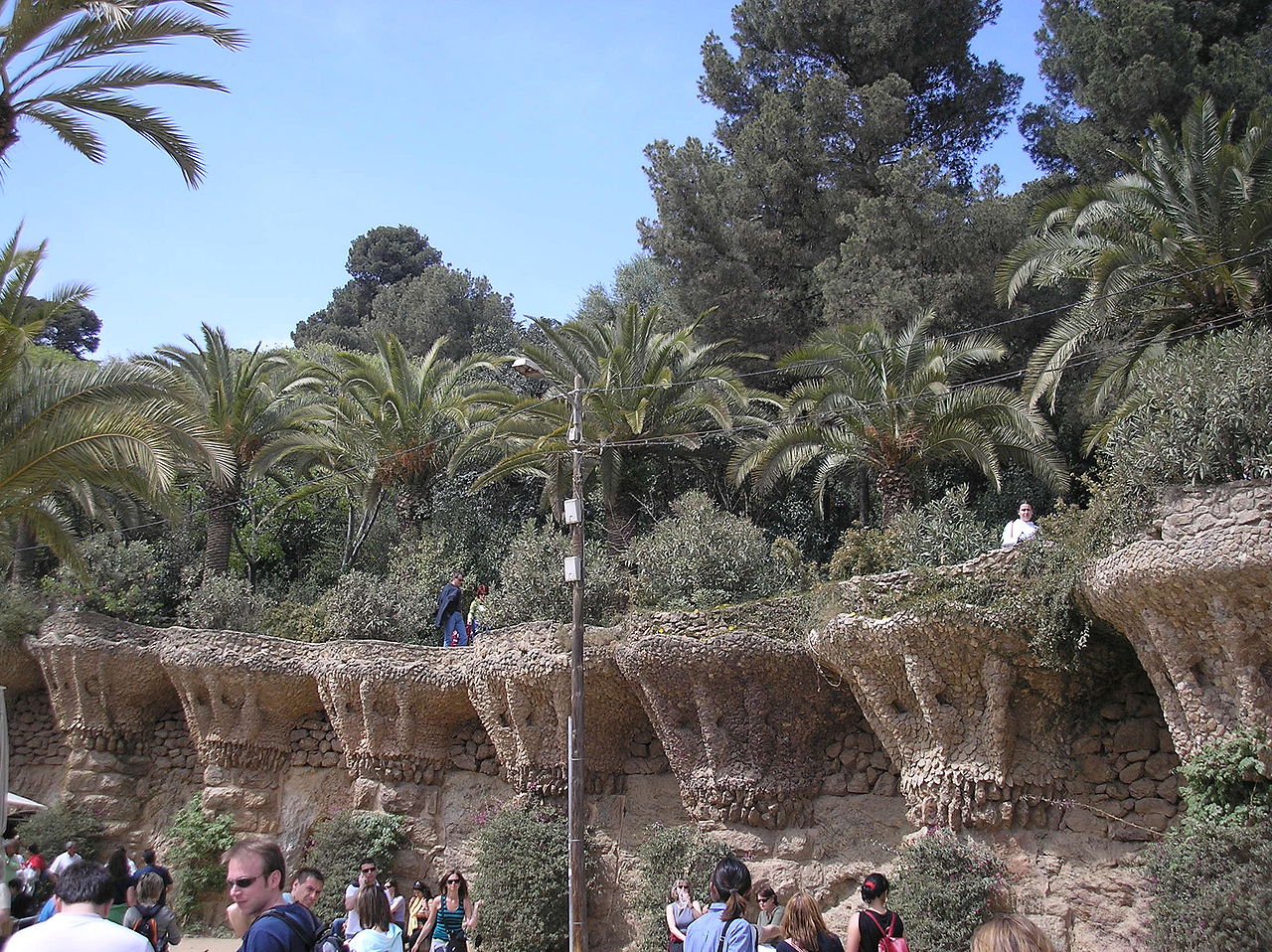
- Hypostyle Hall (often called the Hall of Columns): a forest of slanted columns that support the large, undulating public terrace above.
- The serpentine bench that encircles the main terrace, covered in colorful broken-tile mosaic called trencadís.
- Monumental stairway with fountains and the famous mosaic salamander (popularly called “the dragon”).
- Viaducts and pergolas designed to fit circulation routes into the steep slopes while using local stone and load-bearing masonry.
- Integrated drainage and retaining systems that reveal Gaudí’s attention to practical engineering as well as aesthetics.
The park’s decorative approach mixes sculptural forms, ceramic shards and ceramic tile mosaics with careful shaping of landforms and vegetation. Several buildings within or adjacent to the park served as show homes for the original development and some are now occupied by museums and cultural spaces.
History and evolution
The park began as a speculative residential project for Barcelona’s elite, promoted by Eusebi Güell. Gaudí supervised the layout, combining architecture and landscaping to create a cohesive environment. The housing scheme achieved little commercial success and the area subsequently passed into municipal hands, becoming a public amenity in the 1920s. In 1984 UNESCO inscribed it as part of the "Works of Antoni Gaudí" group of sites, recognizing its outstanding contribution to modern architecture and urban design; the inscription is recorded under the broader UNESCO designation and listed as a World Heritage Site.
Importance, use and visitor experience
Park Güell is regarded as one of Barcelona’s emblematic landmarks and an important example of early 20th‑century landscape architecture. Visitors encounter an interplay of open public spaces, intimate covered passages and sculpted viewpoints that afford sweeping views of the city and the Mediterranean. The site illustrates techniques such as the use of local materials, inventive structural solutions (including catenary arches) and the extensive application of mosaic decoration.
Conservation and cultural recognition
The park’s conservation raises the familiar challenges of preserving richly ornamented surfaces and balancing heavy visitor demand with long‑term care. It has been the subject of restoration efforts and management plans intended to protect both its physical fabric and its setting. Park Güell was also included among contenders in national popularity lists; for example, it was one of the 100 finalists in a 2007 competition for the 12 Treasures of Spain (see).
For further reading on the site’s architectural vocabulary and specific features, consult references that focus on Gaudí’s oeuvre, Catalan Modernisme and urban park design. The park’s entry in municipal guides and curated museum materials provides visitor information and details about the buildings and exhibitions found on the grounds. Additional architectural and historical resources are available through general links about its architectonic elements, the city of Barcelona and Spain.
Questions and answers
Q: What is Park Güell?
A: Park Güell is a public park with gardens and architectonic elements located on Carmelo Hill in Barcelona, Spain.
Q: Where is Carmelo Hill located?
A: Carmelo Hill is located in the mountain range of Sierra de Collserola, and the Parque del Carmelo is located on the northern face.
Q: What neighborhood is Park Güell located in?
A: Park Güell is located in La Salut, a neighborhood in the Gràcia district of Barcelona.
Q: Who designed Park Güell and in what style?
A: Architect Antoni Gaudí was given the design of Park Güell by Eusebi Güell, and he designed the park in the Catalonian modernism style.
Q: When was Park Güell built?
A: Park Güell was built between 1900 and 1914.
Q: When did Park Güell open as a public park?
A: Park Güell opened as a public park in 1926.
Q: What is the significance of Park Güell being declared a World Heritage Site?
A: In 1984, UNESCO declared Park Güell a World Heritage Site under “Works of Antoni Gaudí”, recognizing its cultural and architectural significance.
Related articles
Author
AlegsaOnline.com Park Güell — Antoni Gaudí's public park and architectural ensemble in Barcelona Leandro Alegsa
URL: https://en.alegsaonline.com/art/74698
Sources
- sobreturismo.es : "Lista de 100 finalistas de Nuestros 12 Tesoros de España"