
Parlour (parlor): its origin, historical roles, and modern uses
A parlour is a room for receiving guests and performing specialized services. This article surveys its linguistic origin, biblical and monastic history, domestic evolution, and commercial adaptations.
Overview and etymology
The word parlour (also spelled parlor) derives from the French parloir, itself from the verb meaning to speak. Historically the term described a room set aside for conversation and receiving visitors. As a concept it appears in a variety of settings—religious, domestic and commercial—and in some languages and cultures it is expressed by different architectural forms; for example, in Turkey analogous small reception structures are sometimes compared to a kiosk.
Image gallery
3 Images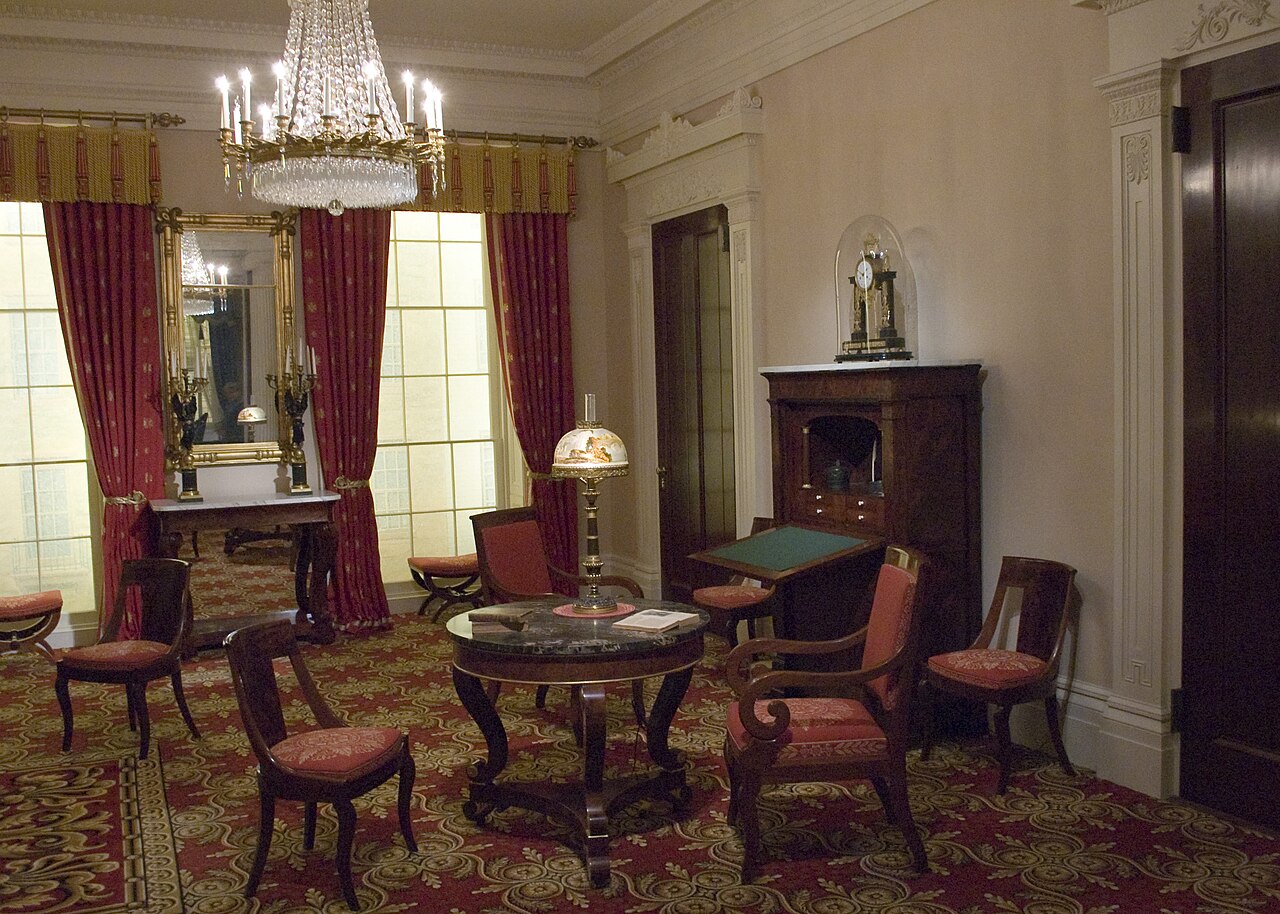


Early and biblical references
The idea of a cool, breezy retreat used for visiting has ancient attestations. A "summer parlour" appears in biblical description (see Judges 3:20) as a small roof chamber with open windows designed to catch the air. Later scriptural passages also refer to interior chambers that functioned as private rooms: the "inner parlours" cited in 1 Chronicles and paralleled in accounts of Solomon and the Temple suggest specialized rooms built around sacred complexes for particular uses rather than general lodging.
Medieval monastic use
In the medieval Christian tradition the parlour had a clearly codified role within a monastery. Monastic buildings commonly contained two parlours with distinct purposes. The "outer parlour" faced the outside world and was the authorized place for monks or nuns to meet visitors, transact business, and receive deliveries; it was often located near the main entrance and the cloister. The "inner parlour" lay beside communal areas such as the chapter house and provided a controlled environment where religious members could speak without breaking the rule of silence that governed much of cloistered life.
Domestic parlours: 18th–20th centuries
As domestic architecture evolved, the parlour became a formal sitting room in larger houses and mansions. By the late 19th century many middle-class homes maintained a parlour used only on Sundays and for special occasions. Families displayed their best furniture (furniture) and works of art there, and important social rituals were staged in that room; historically it was also the space where the body of a deceased person might lie in state while arrangements for a funeral were made. Changes in social customs and open-plan domestic design during the 20th century reduced the parlour's centrality, and in many homes it was replaced by a more informal living room.
Commercial and cultural adaptations
Beyond private houses, the term "parlour" acquired commercial meanings in English-speaking countries. In parts of Great Britain and the United States, parlour denotes establishments that offer a particular product or service—examples include the pizza parlour and the ice cream parlour. Other specialized uses include coffee parlours, tattoo parlours and historic labels such as beer or wine parlours and even single-theme eateries. The commercial parlour borrows the connotation of a semi-private space for consumption or consultation while emphasizing a trade or craft.
Types, distinctions and contemporary relevance
Today "parlour" can indicate a domestic reception room, a business offering an artisanal or personal service, or a historical architectural feature. Distinctions to note include whether the parlour is public or private, seasonal (as in rooftop summer parlours), or ritualized (funerary uses). Regional vocabulary and building traditions continue to shape how the term is applied: the architectural footprint of a parlour in a 19th-century townhouse differs markedly from that of a small commercial parlour signposted on a high street.
- Origins: French parloir and Latin roots of speech and meeting.
- Religious use: biblical summer rooms (Judges) and monastic inner/outer parlours (monastery).
- Domestic ritual: display of furniture and art, lying in state before a funeral.
- Commercial forms: ice cream, pizza, coffee and tattoo parlours in Great Britain and the United States.
Understanding the parlour requires attention to social customs, architectural layout and changing notions of privacy and display. Whether as a shaded roof chamber in antiquity, an inner room of a monastery, or a branded storefront in a modern city, the parlour remains a flexible term that tells us about how societies organize conversation, commerce and ceremony.
Questions and answers
Q: What does the word "parlour" mean?
A: Parlour is a room in a house where people can meet and talk. It comes from the French word parloir, which means "to speak".
Q: How was the parlour used in medieval Christian monasteries?
A: In medieval Christian monasteries, there were two rooms called the outer and inner parlours. The outer parlour was where monks or nuns could meet visitors and do business with people from outside of the monastery. The inner parlour was where they could talk without disturbing others in the cloister.
Q: What are some other uses for the word "parlor"?
A: The word "parlor" is also used to describe certain types of restaurants such as ice cream parlor, pizza parlor, beer parlor, wine parlor or spaghetti parlor. It can also be used to describe a special service business such as a tattoo parlor or coffee shop as a coffee parlor.
Q: Where did Solomon build inner chambers according to 1 Chronicles 28:11?
A: According to 1 Chronicles 28:11, Solomon built small rooms or chambers all round two sides and one end of the Temple (1 Kings 6:5). These were known as inner chambers or inner parlours.
Q: What is a summer parlour mentioned in Judges 3:20?
A: A summer parlour mentioned in Judges 3;20 is a small room built on top of the house with open windows to catch breezes and has an entrance door leading outside so visitors can enter.
Q: How has use of the room changed during 20th century?
A: During 20th century architects and decorators have changed how people use this room . In most homes it has been replaced by living room instead .
Related articles
Author
AlegsaOnline.com Parlour (parlor): its origin, historical roles, and modern uses Leandro Alegsa
URL: https://en.alegsaonline.com/art/74770
Sources
- books.google.com : What the Crow Said
- sfiwineparlor.com : sfiwineparlor.com/
- books.google.com : Mamma Mia!: Good Italian Girls Talk Back
- thecoffeeparlor.com : thecoffeeparlor.com/