
Paris Opera (Opéra National de Paris) — institutions, history, and repertoire
France’s principal opera company, the Opéra National de Paris, operates the historic Opéra Garnier and modern Opéra Bastille and houses a world‑renowned ballet company and school.
Overview
The Opéra National de Paris, commonly called the Paris Opera, is France's leading opera institution and one of the world's most prominent centers for operatic and ballet production. It combines an opera company, a permanent orchestra and chorus, an internationally renowned ballet company, and associated training schools. The institution presents a wide spectrum of works ranging from baroque and classical repertoire to contemporary creations and large-scale productions.
Image gallery
10 Images




Venues and components
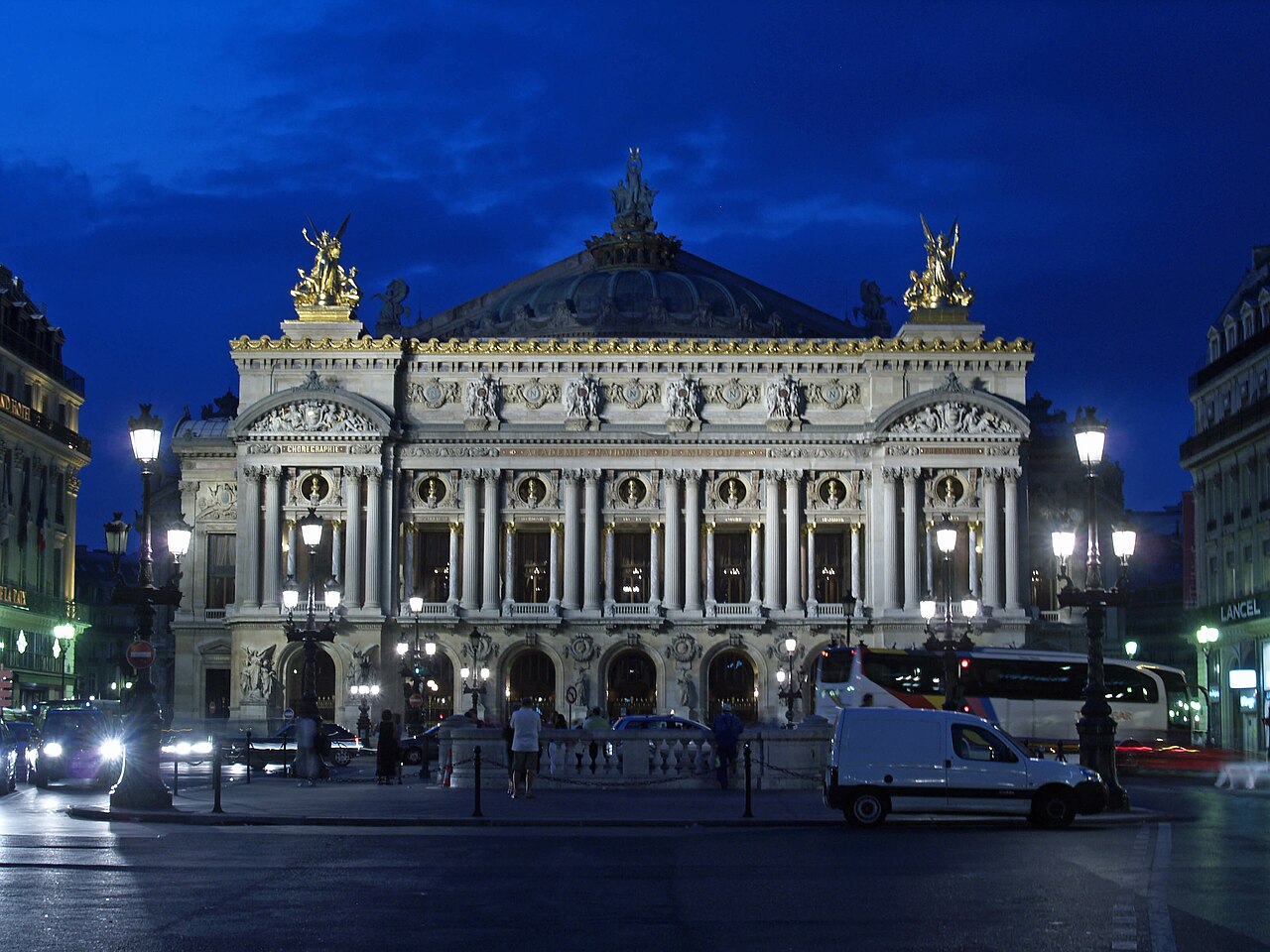
The organization stages performances primarily at two main venues in Paris. The 19th‑century grand theatre known as the Opéra Garnier is famed for its opulent architecture, foyers, and historical archives, while the late 20th‑century Opéra Bastille offers a modern, flexible auditorium designed for large-scale stagings. Together these sites accommodate opera, ballet and related events.
- Company elements: orchestra, chorus, soloists, technical and stagecraft teams.
- Ballet: the Paris Opéra Ballet and its training school are integral parts of the institution, providing daily performances and dancer education.
- Facilities: rehearsal halls, workshops, costume and set construction facilities that support complex productions.
History and development
The Paris Opera's origins reach back to royal and court theater traditions that were gradually institutionalized in the 17th and 18th centuries. Over time it developed into a national company responsible for shaping France's operatic and ballet practices. The Garnier building, completed in the 19th century, became an architectural emblem, while the Bastille, opened in the late 20th century, reflected modern approaches to staging and audience access.
Repertoire, education and public role
Its programming spans grand opera, lyric works, baroque revivals, contemporary commissions and dance seasons. The company also places emphasis on education and outreach through lectures, guided visits and youth programs. The Opéra's dance school trains generations of dancers who often join the Paris Opéra Ballet or perform internationally.
Related houses and notable distinctions
Paris supports several other distinguished venues that contribute to the city's musical life. These include the historic Opéra‑Comique, known for a repertoire mixing spoken drama and music; the Théâtre du Châtelet, a stage for concerts, operetta and musicals; and the Théâtre des Champs‑Élysées, notable for early 20th‑century premieres. The Opéra National de Paris remains a benchmark institution for production values, dancer training and contributions to France's cultural identity.
As a national institution, it balances preservation of historic works with innovation in staging and commissioning new pieces, maintaining a year‑round schedule of performances and cultural activities that attract both local audiences and international visitors.
Questions and answers
Q: What is Paris Opéra?
A: Paris Opéra is the most important opera company of France which stages performances in two theatres in Paris, the Opéra Bastille and the Opéra Garnier.
Q: What is the difference between the two theatres where Paris Opéra stages its performances?
A: Paris Opéra stages its performances at two theatres in Paris, the Opéra Bastille and Opéra Garnier. While the Opéra Bastille is a modern opera house with a capacity of 2700 seats, the Opéra Garnier is a historic building with a seating capacity of 1979 seats.
Q: Is Paris Opéra only about opera performances?
A: Paris Opéra is not only about opera performances. The theatre is also the home of the Paris Opéra Ballet.
Q: What are some of the other opera houses in Paris?
A: Other opera houses in Paris include the Théâtre du Châtelet, Opéra-Comique and Théâtre des Champs-Élysées.
Q: How many seats does the Opéra Garnier have?
A: The Opéra Garnier, one of the two theatres where Paris Opéra stages its performances, has a seating capacity of 1979 seats.
Q: What kind of theatre is Opéra Bastille?
A: Opéra Bastille is a modern opera house with a capacity of 2700 seats in Paris.
Q: Does Paris Opéra only perform in Paris?
A: Paris Opéra performs in Paris at the Opéra Bastille and Opéra Garnier in Paris.
Related articles
Author
AlegsaOnline.com Paris Opera (Opéra National de Paris) — institutions, history, and repertoire Leandro Alegsa
URL: https://en.alegsaonline.com/art/74676