
Parathyroid glands — anatomy, function, development, and clinical importance
Small endocrine glands located behind the thyroid that secrete parathyroid hormone to regulate calcium balance; variable in number and clinically important for bone, kidney, and neuromuscular health.
Overview
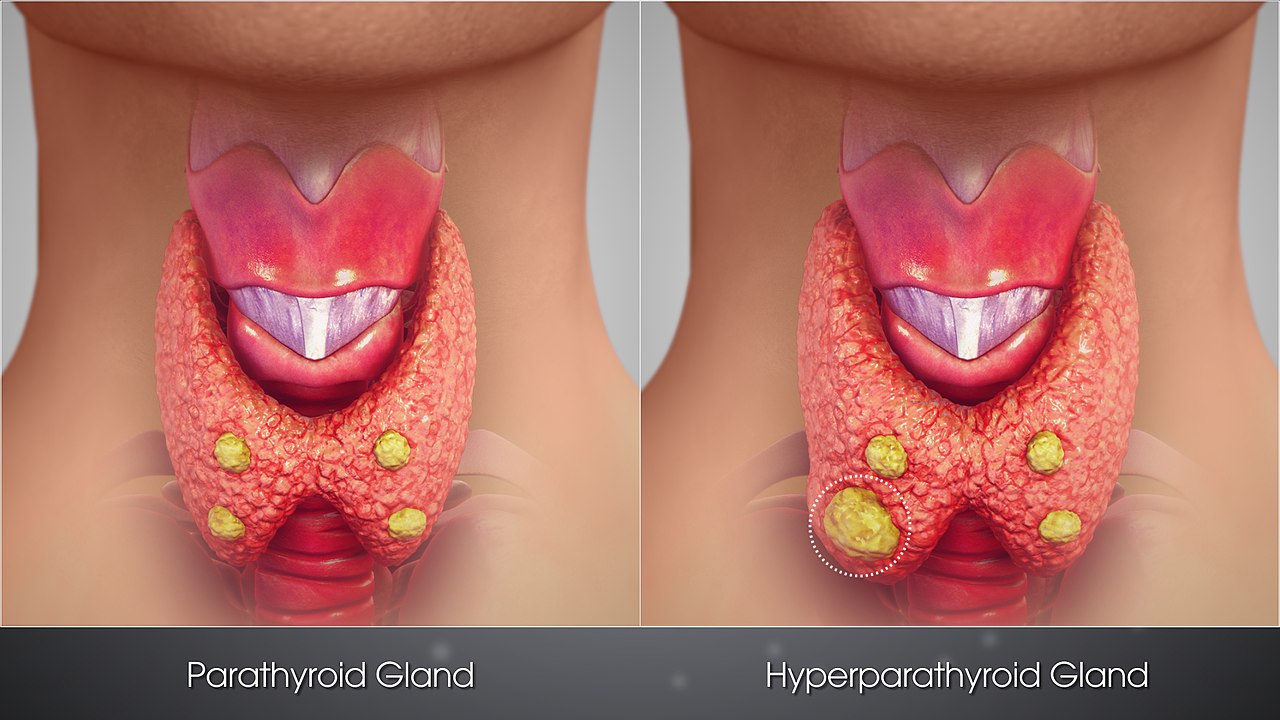
The parathyroid glands are tiny endocrine organs usually found on the posterior surface of the thyroid gland. They secrete parathyroid hormone (PTH), a principal regulator of circulating calcium and phosphate. Although most people have four parathyroid glands, number and position vary between individuals, and ectopic glands may occur along migratory paths.
Image gallery
7 Images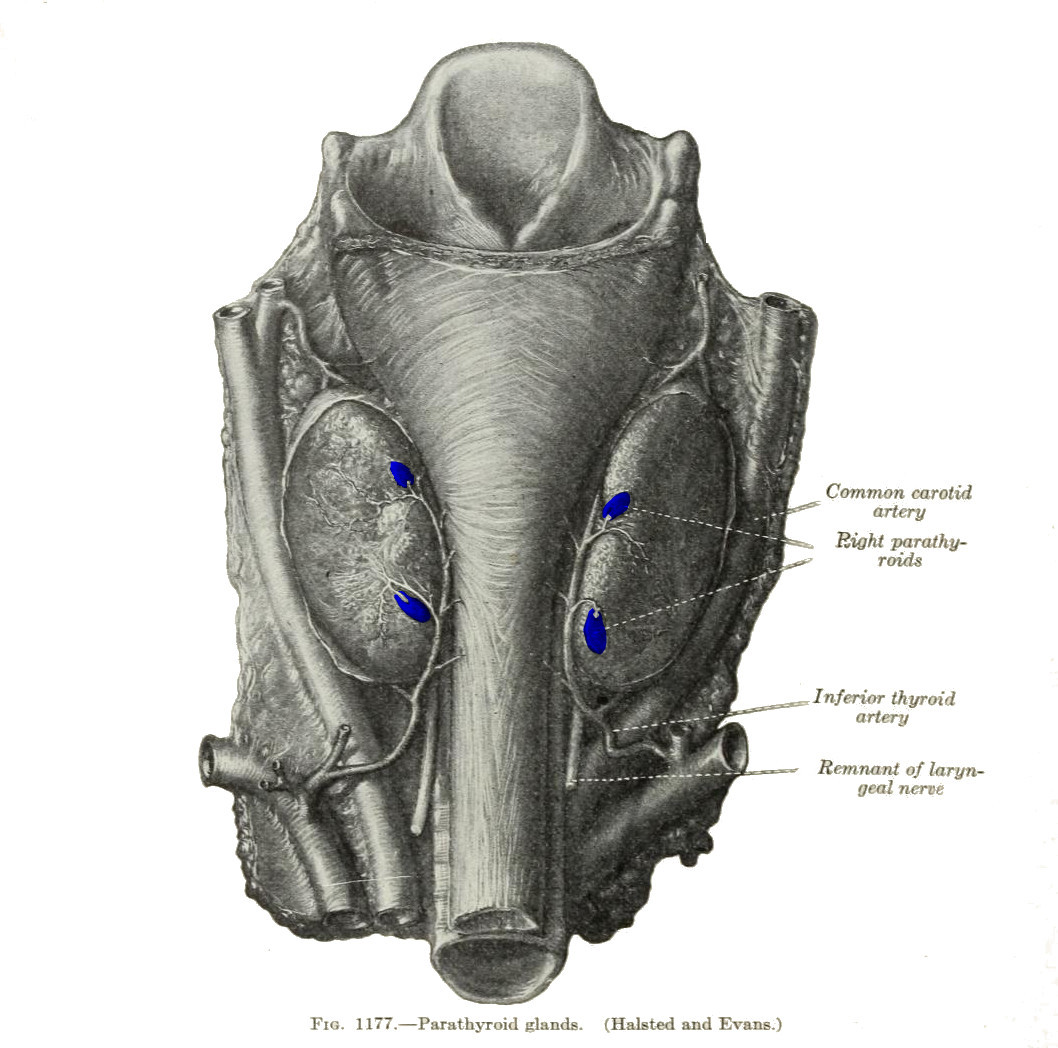


Structure and function
Each gland is composed primarily of chief cells, which produce PTH, and oxyphil cells of uncertain function. PTH raises blood calcium by stimulating bone resorption, increasing renal calcium reabsorption, and promoting activation of vitamin D to enhance intestinal calcium uptake. These actions work in concert with other regulators such as calcitonin and vitamin D.
Development and anatomical variation
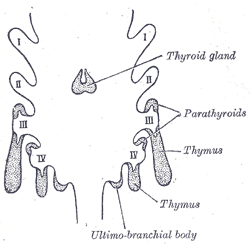
Embryologically the parathyroids arise from the pharyngeal pouches and migrate during development; this explains why some glands are found in atypical locations, including within the thyroid, mediastinum, or along the carotid sheath. Their blood supply is typically from branches of the inferior thyroid arteries, and surgical awareness of this anatomy is important.
Clinical significance
- Hyperparathyroidism: Excess PTH, often from an adenoma, causes hypercalcaemia with symptoms such as kidney stones, bone pain, fatigue, and neurocognitive changes. Treatment can include surgery (parathyroidectomy), medical therapy, and targeted agents.
- Hypoparathyroidism: Insufficient PTH, commonly after neck surgery or autoimmune injury, leads to low calcium and symptoms ranging from tingling and muscle cramps to severe tetany; replacement with calcium and active vitamin D is a cornerstone of management.
- Diagnostics and imaging: Biochemical tests measuring serum calcium and PTH guide diagnosis, and localization may use ultrasound, radionuclide scans, or other imaging prior to surgery.
Additional notes
The parathyroids are distinct from the thyroid gland despite their proximity; they are part of the wider endocrine system and are usually embedded near or on the back of the thyroid gland. Their small size belies major importance for skeletal integrity, renal function, and neuromuscular stability. Surgical teams often take care to identify and preserve parathyroid tissue during neck operations, and when removal is necessary, autotransplantation or careful replacement strategies may be employed.
Related articles
Author
AlegsaOnline.com Parathyroid glands — anatomy, function, development, and clinical importance Leandro Alegsa
URL: https://en.alegsaonline.com/art/74593